Hey there, if you’ve ever spun up a power tool, zipped around on an e-bike, or even just had your fridge adjust its compressor speed smoothly, you’ve got a little hero hiding in that circuit board: the MOSFET. Let’s cut through the textbook jargon and talk about what this tiny part actually does in motor control circuits—especially since I’m the guy supplying these things, and I see way too many folks skimping on the right MOSFET for their motor projects and wondering why things overheat or die early. MOSFET
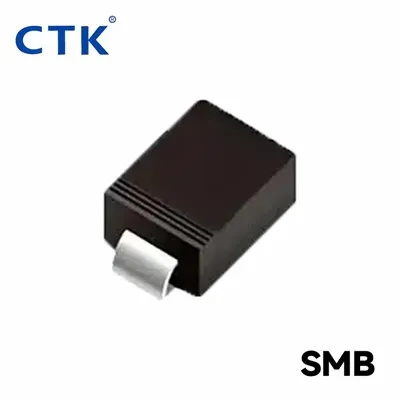
First off, let’s start with the basics that most new engineers skip when they’re prototyping: motors aren’t simple on/off switches. Yeah, a small DC motor in a toy car works if you just hook it straight to a battery, but try running a 1kW motor for an e-scooter like that, and you’ll pop the battery, fry the wiring, and maybe even burn your fingers. Motors are inductive loads—their coils store and release energy, and they draw way more current when they start up than when they’re steady running. That’s where MOSFETs come in. Unlike old relays or bipolar junction transistors (BJTs), MOSFETs are designed to handle high currents and switch super fast without wearing out in a week.
Wait, let’s break down what a MOSFET is, super simply, no “metal-oxide-semiconductor field-effect transistor” nonsense that makes your eyes glaze over. Think of it like a digital light switch, but way better. A regular light switch can only be on or off, right? A MOSFET has a little gate pin that tells it when to turn on and off. When you send a tiny voltage (like 3.3V or 5V) to the gate, it opens a path for big current to flow through the other two pins (source and drain). Flip that gate voltage, and it cuts the current off instantly. The big win here is that MOSFETs switch in nanoseconds—way faster than a relay, which clicks and takes milliseconds. For motor control, that speed is everything.
Now, the main role of a MOSFET in a motor control circuit is actually two big jobs: switching the motor power on and off at super high speeds, and regulating how much power gets to the motor so you can control its speed and torque. Let’s tie that to a real example. Take a brushless DC (BLDC) motor, which is the standard for almost everything now—e-bikes, drones, power tools. A BLDC has three coils, right? You can’t just send constant voltage to them because the coils need to be energized in sequence to spin the motor. That’s where something called Pulse Width Modulation (PWM) comes in. Here’s how it works: the motor controller pulses the power to each coil, turning the MOSFETs on and off thousands of times per second. If you pulse it 10,000 times a second, the motor can’t tell the difference between being on full time and being on half the time—it just runs at half speed. No stuttering, no big power gaps. The MOSFET is the one doing that pulsing, flawlessly, millions of times if you pick the right one.
But wait, what if you’re using a brushed DC motor, the kind with a little commutator and brushes? MOSFETs still play a key role here, even if it’s simpler. A brushed motor only needs two power inputs, and the MOSFET acts as the switch that lets you reverse the direction too—this is called an H-bridge circuit. Imagine two MOSFETs on each side of the motor. If you turn on the top-left and bottom-right MOSFETs, current flows one way, spinning the motor forward. Turn on the other two, and current flips, spinning it in reverse. That’s way more efficient and reliable than old relay-based H-bridges, which would arc and burn out all the time. I’ve seen a lot of small startups trying to make their own e-scooter controllers with relays and they come to me 6 months later asking why all their prototypes failed. MOSFETs solve that problem because they don’t have physical contacts that wear out.
Here’s where being a MOSFET supplier gives me a unique perspective that most blog posts won’t tell you: not all MOSFETs are made the same, and picking the wrong one for a motor control circuit is the #1 reason for overheating, low efficiency, and short motor life. Let’s get into the nitty-gritty that actually matters for people designing these circuits. First, there’s Rds(on)—that’s the “on-resistance” of the MOSFET when it’s fully open. If your motor is drawing 20A and your MOSFET has an Rds(on) of 0.05 ohms, that’s a power loss of I²R = 20² * 0.05 = 20W, which turns into heat. If you pick a MOSFET with an Rds(on) of 0.02 ohms, that power loss drops to 8W—way less heat, less strain on your battery, longer life. I can’t tell you how many times a young engineer will go for the cheapest MOSFET on Digikey, check the price, and skip checking Rds(on), then their prototype overheats so much the case melts. That’s avoidable.
Then there’s the whole inductive load problem I mentioned earlier. Motors don’t just take power—they give it back when they slow down, right? That’s called back EMF (electromotive force), and it’s like a reverse voltage that can blow through a regular MOSFET if you don’t account for it. Most MOSFETs have an integrated body diode that acts like a safety valve for this back EMF. But the body diode has its own voltage drop, which means more power loss if you’re using it a lot. That’s why I push engineers to look for MOSFETs with fast recovery body diodes for motor control—they discharge that back EMf way quicker, so less heat and better efficiency. I once had a client who was making a high-torque lawnmower motor that kept frying MOSFETs. We swapped their standard MOSFETs for ones with a fast body diode, and their failure rate dropped from 20% to 0.5% overnight. That’s the kind of win that makes my job worth it.
Another big role people miss is thermal management, which ties directly to the MOSFET’s specs. When a MOSFET is switching power, it generates heat, and if that heat doesn’t get away, it will degrade the semiconductor over time, leading to early failure. A good motor control MOSFET will have a low thermal resistance (the amount of heat it lets through) so you can mount a heatsink or use the PCB as a heat sink without extra work. I always recommend looking for MOSFETs that are rated for the specific voltage and current your motor needs—don’t get a MOSFET rated for 100V if your system only needs 60V, that’s overkill and more expensive, but don’t get one rated for 60V if your motor’s peak voltage is 72V either, that’s a guaranteed blowout. Peak current is super important too—motors draw 2-3x their rated current when starting, so your MOSFET needs to handle that surge current for short periods, not just the steady running current.
Let’s also talk about modern applications because that’s where MOSFET tech has come a long way in the last 5 years. We’re seeing a lot of automotive motor control, like for electric power steering, HVAC blowers, and even traction motors in small EVs. Those systems need MOSFETs that are not only efficient but also super reliable, since you can’t pull over if your power steering fails. We’re also seeing industrial motor drives, where efficiency is key to cutting energy costs—if every motor in a factory uses an efficient MOSFET, that adds up to huge savings on electricity bills. Even consumer stuff like robot vacuums and air conditioners rely on MOSFETs to run their motors quietly and save power.
Wait, let’s clear up a common myth I hear all the time: people think IGBTs are replacing MOSFETs for motor control. No, not for most low to medium power applications (up to like 100kW, which is most consumer, automotive, and light industrial motors). IGBTs are great for very high power, but they’re slower and less efficient for switching speeds that modern BLDC motors need. MOSFETs still hold the majority of the market here, and the tech is getting better every year—we now have trench MOSFETs, super junction MOSFETs, and even gallium nitride (GaN) MOSFETs that can switch even faster and have lower Rds(on) than traditional silicon ones. GaN is a game-changer for small, high-power density designs—like a drone that needs a lightweight motor controller that doesn’t get hot. I’ve been working on GaN MOSFET samples for drone makers, and they’re blown away by how much smaller their controllers can get now.
So putting it all together, the role of a MOSFET in a motor control circuit boils down to four core functions: first, acting as a high-speed switch to turn motor power on and off for PWM control of speed and torque. Second, regulating power delivery to match the motor’s needs, preventing waste and overloading. Third, handling the reverse back EMF from inductive motor loads to protect the rest of the circuit. Fourth, enabling directional control for brushed motors via H-bridge configurations. And all of this has to be done efficiently, reliably, and without generating too much heat— which is why picking the right MOSFET isn’t just a part choice, it’s the foundation of a good motor control design.
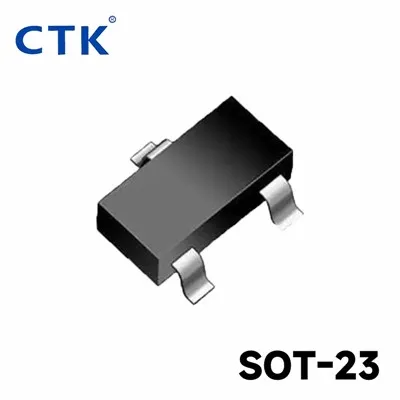
Now, as someone who supplies MOSFETs for motor control, I’ll be real with you: it’s not just about selling parts. I’ve been in this game long enough to know that a lot of engineers don’t have time to dig through datasheets, or don’t realize that a $0.10 difference in MOSFET cost can save them thousands in prototype failures and warranty claims. If you’re designing a motor control circuit—whether it’s for a new e-bike, a power tool, an industrial pump, or whatever—don’t cut corners on the MOSFET. If you have questions about what type of MOSFET you need, what specs to prioritize, or even samples to test, reach out. I don’t do automated sales pitches, I actually talk through your project with you to make sure you get the right part for your needs, not just the cheapest one.
Low Voltage Mosfet References:
- Rashid, M. H. (2011). Power Electronics: Circuits, Devices, and Applications (3rd ed.). Pearson Education.
- Mohan, N., Undeland, T. M., & Robbins, W. P. (2003). Power Electronics: Converters, Applications, and Design (3rd ed.). John Wiley & Sons.
- Semiconductor Industry Association. (2022). Global Power MOSFET Market Analysis and Trends.
- Horowitz, P., & Hill, W. (2015). The Art of Electronics (3rd ed.). Cambridge University Press.
Tongke Electronic Co., Ltd
Tongke Electronic Co., Ltd. is one of the most experienced mosfet manufacturers and suppliers in China, featured by quality products and low price. Please rest assured to wholesale advanced mosfet made in China here from our factory. Contact us for pricelist.
Address: No.3,Chayuan Rd, Street 3, AilingKan, Dalingshan, Dongguan, Guangdong, China.
E-mail: jack@ctk-elec.com
WebSite: https://www.ctkchip.com/
