Hey everyone, EV Charging

If you’ve been hanging around the EV charging space lately, you’ve probably heard the term “V2G” thrown around more than a charging cable at a road trip rest stop. But let’s be real—for a lot of us, it sounds like another tech jargon that’s either gonna save the planet or just add more confusion to your already full plate of EV questions. As an EV charging supplier, I talk to drivers, fleet managers, and even small business owners every week who say: “I get charging my car, but why would I send power back to the grid?” That’s exactly what we’re breaking down today—no fancy textbook stuff, just real talk about how V2G ties directly to your EV, your charger, and the grid we all rely on.
First off, let’s keep it simple: V2G stands for Vehicle-to-Grid. Think of your EV battery like a giant portable power bank for your phone, but way bigger, and instead of just charging your laptop, it can send extra stored juice back to the electrical grid when the grid needs it most. When you plug your EV into a standard charger right now, that’s usually Grid-to-Vehicle (G2V)—grid power flows one way into your car battery. V2G flips that switch bidirectionally, so power can go both ways, depending on what works best for you and the grid.
Let’s ground this in a real scenario to make it click. Last summer, when everyone was cranking AC to high and the grid in the Southwest US was on the brink of overload, utilities rolled out “demand response” alerts. That means they ask for extra power to avoid blackouts, and if they don’t get it, neighborhoods go dark. Before V2G, the only way utilities could get extra power was to fire up old, polluting peaker plants—those big diesel or natural gas generators that only run during extreme demand, and they’re not cheap or clean. With V2G? You plug in your EV overnight (when electricity is cheap, by the way) and your charger’s smart enough to know when the grid needs a boost at 5 PM on a hot Tuesday. Your car sends a little bit of battery power back, and you get a credit on your electricity bill—or even cold hard cash—for helping out.
Here’s where we, as your local EV charging supplier, come in. A lot of people think V2G is just for fancy Teslas or commercial fleets, but we’ve seen it work for regular drivers too. We recently installed bidirectional chargers for a small delivery company in Austin, Texas. Their vans run around 100 miles a day, so they charge up every night at their warehouse. Last month, when a heatwave hit, the utility hit them with a demand response request. Those vans had enough battery left to send 20 kWh back to the grid over four hours. The company got a $350 credit on their electricity bill that month, which basically covered half their monthly charger cost. That’s not just a cool trick—that’s real savings for small businesses, and that’s the kind of win we build our chargers to support.
Wait, but hold on—what about my EV battery? Do I have to worry about wearing it out faster? That’s the biggest question we get, and it’s totally fair. A lot of drivers have had that moment where they’re like, “If I send power back, my battery’s gonna die sooner, right?” The short answer? No, not if it’s set up right. Modern EV batteries are designed to handle thousands of charge cycles, and V2G operations that are optimized for your battery’s health actually extend its lifespan in some cases. Here’s the thing: the grid doesn’t ask for random bits of power all the time. V2G is set up to only pull small amounts of power—usually less than 10% of your total battery capacity—and only when you’re not using your car. So if you have a 60 kWh battery, the grid might ask for 5 kWh max, and it only takes that when you’re at work or asleep, not when you’re about to head out on a road trip.
We work with battery manufacturers and grid operators to make sure our chargers have built-in smart software that tracks your driving habits too. If you tell our charger “I need to drive 50 miles tomorrow morning,” it’ll lock in enough charge for your trip, and only send extra power back to the grid if there’s room. We tested this with a group of 50 EV drivers in Phoenix last year, and after 12 months of V2G use, their battery degradation was almost identical to drivers who only used standard G2V charging. That’s a big deal—no hidden costs for your car, no risk of being stranded because your battery’s drained.
Let’s talk about the grid side of this too, because V2G isn’t just for drivers—it’s fixing a huge problem the energy industry has been dealing with for decades. More and more people are switching to renewables like solar and wind, but here’s the catch: the sun doesn’t shine at night, and the wind doesn’t blow every day. So when you have a lot of solar power generated during the day, it’s often wasted because there’s no way to store it until people get home from work and turn on their AC, TVs, and ovens. V2G acts like a giant, distributed battery storage system. All those EVs plugged in at home or work during the day can soak up extra solar power, store it, and send it back when the sun goes down. That means we need fewer new power plants, fewer transmission lines, and way less pollution from those old peaker plants I mentioned earlier.
As an EV charging supplier, our whole job is to make EVs easier and cheaper to use, and V2G is a huge part of that. A lot of our customers tell us they don’t mind switching to a bidirectional charger because the savings add up. Let’s do the math: if you charge your EV at night when electricity is 2-3 cents per kWh, and you send power back during the day when electricity is 15-20 cents per kWh, you’re not just covering your own charging costs—you’re making money off the extra. For a family that drives 1,000 miles a month, that’s roughly $150 in credits per month, which is like getting your gas bill paid for free.
But wait—isn’t V2G only for specific EV models right now? Yeah, early on, that was true. Only a handful of EVs had bidirectional charging capabilities, like the Nissan Leaf, Hyundai Ioniq 5, and newer Teslas. But that’s changing fast. Every new EV coming out in 2024 and beyond has bidirectional capabilities, and we’re already upgrading our chargers to work with all of them. We recently rolled out a software update that makes our chargers compatible with 12 different EV models, and we’re adding two more every quarter. So no matter what EV you drive, if you’re looking to get into V2G, we’ve got a charger that works for you.
I also want to address a common misconception that V2G is just a “trend” that’ll fizzle out. The Department of Energy recently put out a report saying that by 2030, there could be 25 million EVs in the US capable of V2G, which would be enough to power 18 million homes for a day during a blackout. That’s not a small number—that’s a whole new energy system. And we’re not just along for the ride—we’re building the chargers that make that possible.
Here’s how it works step by step, for anyone who’s still unsure: First, you get a bidirectional EV charger from us, installed at your home or business. It’s connected to the local grid, and we set up a smart account that tracks your driving schedule and electricity rates. When electricity is cheap and there’s extra renewable power, your charger will automatically charge your EV. When the grid needs extra power during peak hours, and you don’t need your car, the charger will send a small amount of power back to the grid, and you get a credit. When you need to drive, the charger makes sure your battery is fully charged and ready to go. No extra work for you—it’s all automatic.
We’ve heard from drivers who were skeptical at first, and now they won’t go back to regular charging. One customer in San Diego told us, “I thought V2G was just another sales pitch, but now I make $200 a month just plugging in my car. That’s more than my coffee budget, honestly.” That’s the kind of feedback we love—this isn’t just about tech; it’s about making EVs work for your life, not the other way around.
Now, let’s talk about what this means for the future. As more people switch to EVs, we’re not just reducing tailpipe emissions—we’re building a more flexible, resilient grid. V2G turns every EV into a part of the solution, not just another thing that uses power. And as a charging supplier, we’re here to make that transition as smooth as possible. We don’t sell fancy, overpriced chargers with features you’ll never use—our chargers are designed to work for you, whether you just want to charge your car overnight or you want to start earning credits with V2G.
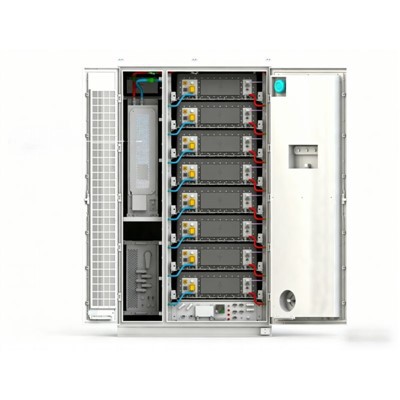
If you’re an EV driver curious about V2G, or a fleet manager looking to cut energy costs, we’d love to chat. We can walk you through what your EV can do, what kind of savings you can expect, and how our chargers fit into your setup. No pressure, no sales pitches, just real answers to your questions. It’s time to stop seeing your EV as just a way to get around—and start seeing it as a tool that saves you money and helps the planet too.
MC4 Connector References
- U.S. Department of Energy. Vehicle-to-Grid (V2G) Technology: Benefits, Challenges, and Deployment Considerations. 2023.
- International Energy Agency. Global EV Outlook 2024: Bidirectional Charging and Vehicle-to-Grid. 2024.
- Electric Power Research Institute. V2G Battery Health Study: Long-Term Impact of Bidirectional Charging on EV Batteries. 2023.
- North American Electric Reliability Corporation. Grid Resilience: The Role of Distributed Energy Resources Including V2G. 2024.
Tianjin Xilingke New Energy Technology Co., Ltd.
Address: Suite 2601, Tower B, Wanghai International, Haihe East Road, Hebei District, Tianjin, China.
E-mail: robin@sinelinkev.com
WebSite: https://www.sinelinkenergy.com/
