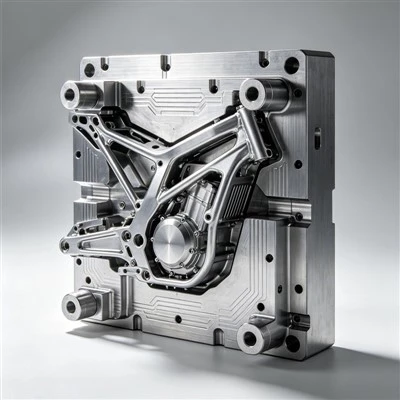
Hey there! As a supplier of automotive parts die casting molds, I’ve seen my fair share of issues with mold cracking. It’s a real pain in the neck, and it can cost a ton of money if not handled right. So, I thought I’d share some tips on how to prevent mold cracking in automotive parts die casting molds. Automotive Parts Die Casting Mold
First off, understand the causes of mold cracking
Mold cracking doesn’t just happen out of the blue. There are a few common reasons behind it, and if you know what they are, you can take steps to avoid them.
Thermal stress
One of the biggest culprits is thermal stress. When you’re die casting, the mold goes through some serious temperature changes. It gets super hot when the molten metal is poured in, and then it cools down quickly. This constant heating and cooling can cause the mold to expand and contract, which puts a lot of stress on it. Over time, that stress can lead to cracks.
Mechanical stress
Another cause is mechanical stress. This can happen when the mold is being clamped in the die casting machine. If the clamping force is too high or uneven, it can cause the mold to crack. Also, when the part is being ejected from the mold, if there’s too much resistance, it can put stress on the mold and lead to cracking.
Material defects
Sometimes, the problem is with the mold material itself. If there are impurities or defects in the steel used to make the mold, it can weaken the structure and make it more prone to cracking.
How to prevent mold cracking
Now that we know what causes mold cracking, let’s talk about how to prevent it.
Choose the right mold material
The first step is to choose the right material for your mold. You want a material that can handle the high temperatures and stresses of die casting. Some common materials for automotive parts die casting molds include H13 tool steel. It has good thermal conductivity and can withstand thermal cycling without cracking easily. Make sure you source your materials from a reliable supplier to avoid any quality issues.
Optimize the mold design
A well-designed mold is key to preventing cracking. Here are a few things to keep in mind when designing your mold:
- Rounded corners: Sharp corners in the mold can create stress concentrations, which make it more likely for cracks to form. So, make sure to use rounded corners wherever possible.
- Uniform wall thickness: Try to keep the wall thickness of the mold as uniform as possible. This helps to distribute the stress evenly and reduces the chances of cracking.
- Proper gating and venting: Good gating and venting design are important for ensuring smooth flow of the molten metal into the mold. If the metal doesn’t flow properly, it can cause uneven heating and cooling, which can lead to cracking.
Control the die casting process
The way you run your die casting process can also have a big impact on mold cracking.
- Temperature control: Keep a close eye on the mold temperature. Use a temperature monitoring system to make sure the mold stays within the optimal temperature range. Preheating the mold before starting the casting process can help reduce thermal stress.
- Clamping force: Make sure the clamping force is set correctly. It should be enough to hold the mold together during the casting process, but not so high that it causes mechanical stress.
- Ejection system: Design the ejection system carefully. Make sure the ejector pins are properly sized and located to minimize the stress on the mold when the part is being ejected.
Regular maintenance
Regular maintenance is essential for preventing mold cracking. Here are a few maintenance tasks you should do:
- Cleaning: After each casting cycle, clean the mold to remove any residual metal, lubricant, or other debris. This helps to prevent corrosion and buildup, which can weaken the mold over time.
- Inspection: Regularly inspect the mold for signs of wear, damage, or cracking. If you catch a problem early, you can take steps to fix it before it gets worse.
- Polishing: Periodically polish the mold surface to maintain its smoothness. This helps to reduce friction and wear, which can also contribute to cracking.
Case studies
Let me share a couple of real-life examples of how we’ve helped our customers prevent mold cracking.
Customer A
Customer A was having a lot of problems with mold cracking in their die casting molds for automotive engine parts. The molds were cracking after just a few casting cycles, which was costing them a fortune in replacement molds. After analyzing their process, we found that the mold material they were using was not suitable for the high temperatures and stresses of the application. We recommended switching to H13 tool steel, and also optimized the mold design by adding rounded corners and improving the gating and venting system. After implementing these changes, the mold cracking problem was significantly reduced, and the customer was able to increase their production efficiency and save money on mold replacement.
Customer B
Customer B was experiencing mold cracking due to improper temperature control in their die casting process. The mold was getting too hot during the casting process, which was causing thermal stress and cracking. We installed a temperature monitoring system and developed a temperature control strategy for them. We also trained their operators on how to properly preheat the mold and control the temperature during the casting process. As a result, the mold cracking stopped, and the customer was able to improve the quality of their cast parts.
Wrap-up and call to action

So, there you have it! Those are some of the key ways to prevent mold cracking in automotive parts die casting molds. By choosing the right material, optimizing the mold design, controlling the die casting process, and doing regular maintenance, you can significantly reduce the risk of mold cracking and save a lot of money in the long run.
Furniture Hardware Die Casting Mold If you’re having problems with mold cracking in your automotive parts die casting molds, or if you’re looking for a reliable supplier of high-quality die casting molds, don’t hesitate to reach out. We’ve got the expertise and experience to help you solve your mold problems and get the most out of your die casting process.
References
- "Die Casting Handbook" by P. Kritzer
- "Tool and Die Making Technology" by Ellis R. Dietrich
Hangzhou Pullbull Technology Co., Ltd.
As one of the most professional automotive parts die casting mold manufacturers and suppliers in China, we offer a wide range of products with superior quality. Please feel free to wholesale bulk premium automotive parts die casting mold from our factory. Also, custom service is available.
Address: Rm 805 Gemini Build 1, #1785 JiangHan Rd, BinJiang, Hangzhou, China 310052
E-mail: markdan@menovo.cn
WebSite: https://www.pbmold.com/
