If you’re a spec manager, maintenance tech, or ops lead working with three phase oil immersed transformers, you know they’re the unsung workhorses of factories, substations, and remote power sites. They run 24/7, often in harsh environments, and misshapen or neglected monitoring can lead to unplanned outages that cost thousands (or millions) in downtime. As a supplier who’s been building and troubleshooting these units for over a decade, I’ve seen first-hand how skipping even one key monitoring parameter can turn a routine check into a full-on transformer replacement. Today, let’s break down the non-negotiable monitoring parameters we swear by, no stuffy industry jargon, just what actually keeps your transformer up and running. Three Phase Oil Immersed Transformer
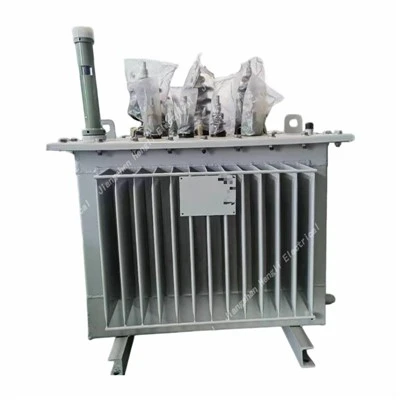
First, let’s start with the big one that trips people up all the time: oil quality. Yeah, I know, it sounds basic, but way too many teams just top off oil when the level’s low and call it a day. That’s a recipe for disaster. Three phase oil immersed transformers use mineral oil (or occasionally synthetic ester oil, but that’s a smaller subset) as more than just a coolant—it’s insulation, arc-quencher, and a carrier for chemical byproducts from normal operation. Monitoring oil quality isn’t just checking the color (though dark, sludgy oil is a red flag); it’s four key sub-checks: dielectric strength, water content, acidity, and dissolved gases. Let’s break those down fast: Dielectric strength is basically how well the oil can resist an electrical breakdown. If that drops below 30 kV (for standard mineral oil), you’re asking for a fault inside the windings. Water content is a huge one—even 50 ppm of water might not sound like a lot, but it lowers the dielectric strength fast and accelerates rust on core components. Acidity is measured via total acid number (TAN); a TAN over 0.1 mg KOH/g means the oil’s breaking down, leading to sludge that clogs cooling passages and insulates windings poorly. And dissolved gases—this is where we catch internal faults before they blow. Normal operation only has tiny amounts of hydrogen, methane, ethane, and ethylene. If you spike acetylene? That’s an arc, like a winding shorting. Ethane or propane spiking means overheating, maybe a loose connection. We tell our clients to test dissolved gas analysis (DGA) annually for transformers under load, and bi-annually for ones running 24/7 in high-demand sites—no exceptions.
Next up, temperature monitoring. Transformer heat is the #1 killer of insulation life, full stop. For every 10°C your transformer runs above its rated hot-spot temperature, insulation life cuts in half. That’s not a guess, that’s a well-documented fact we reference all the time. So what do you actually monitor here? Not just the surface temperature of the tank—we’ve seen teams slap a cheap thermocouple on the side of the tank and call it a day, but that’s the coolest spot. You need three key temp points: ambient temperature, oil top-temperature, and winding hot-spot temperature. Ambient is straightforward, just to know how much the environment is impacting load. Oil top temp is the one that’s easy to measure with a thermometer on the conservator tank—rule of thumb: keep it under 80°C for continuous operation, and don’t let it hit 100°C for more than a few hours. Hot-spot temp is the tricky one; it’s the hottest part of the winding, usually 10-15°C higher than the oil top temp. We recommend using either a built-in RTD (resistance temperature detector) installed during manufacturing or a calibrated thermal imager for quarterly checks—don’t skip that, because a 5°C overrun in hot-spot temp will double insulation life loss over 5 years. Also, don’t forget cooling fans or pumps if your transformer has them; a failed fan can push top temp 20°C in an hour, which is a quick ticket to insulation degradation.
Then there’s load current and voltage balance for the three phases. Three phase transformers are built to handle balanced loads, right? But in the real world, you never get perfect balance—one phase might be powering a heavy motor, another a smaller load, and the third just lighting. Unbalanced load is a silent killer because it creates negative sequence current, which heats up the windings unevenly. For example, if one phase is carrying 20% more current than the other two, that extra current has nowhere to go and burns through insulation on that phase’s winding 3x faster. So what do you monitor here? Three-phase current (RMS, not peak, because peaks are just transient spikes) and line voltage. We tell clients to keep phase current imbalance under 5% for distribution transformers and under 2% for power transformers. Voltage imbalance should be under 2% too—if you see a voltage spike or drop on one phase, check for bad connections on breakers or busbars before it messes up the transformer. Also, keep an eye on the load tap changer (LTC) if your transformer has one. The LTC adjusts voltage by switching taps on the winding, and if it’s not lubricated properly or has worn contacts, it can create arcing that adds contaminants to the oil. We recommend doing a quick LTC resistance test every year to make sure contact pressure is good—bad LTC contacts are one of the top causes of unexpected transformer failures we see in the field.
Oil level and condition of cooling components are next on the list. Wait, I lumped these together because they’re linked. The conservator tank (the big vented or sealed tank above the main transformer tank) holds the extra oil that expands and contracts as the transformer heats up and cools down. If the oil level is too low, air gets into the main tank, which introduces moisture and oxygen—both bad for oil and insulation. Sealed conservators (which we build into most modern units now) have a nitrogen blanket, so you don’t have to top off oil as often, but you still need to monitor the level gauge regularly. For vented conservators, check the level monthly, especially in extreme hot or cold weather—oil expands in summer, shrinks in winter, and if it’s too low in winter, you risk exposing the windings. Also, don’t forget the cooling radiators, fans, or heat exchangers. If a radiator is clogged with dust or bird nests, it can’t cool the oil, pushing temps up. We had a client last year with a 1 MVA transformer that failed because a radiator was half-blocked with construction debris—they thought the transformer was fine because the top temp was 78°C, but the hot spot was over 110°C, which cooked the insulation in 6 months. Do a visual check of cooling components every quarter, and clean them annually if you’re in a dusty or industrial area.
Last but definitely not least, partial discharge (PD) monitoring. This is the one that’s often skipped until it’s too late. Partial discharge is tiny electrical sparks inside the insulation, usually from tiny defects in the winding insulation or gaps in the oil. These sparks build up over time, eating away at insulation until a full arc happens. PD monitoring is especially important for transformers operating at 35 kV or higher, but even distribution transformers can have issues if they’re old. There are a few ways to check PD: periodic off-line tests (where you disconnect the transformer and apply a test voltage) or on-line monitoring that runs while the transformer’s in service. We recommend on-line monitoring for transformers in critical applications—like hospitals, data centers, or manufacturing lines where downtime is a nightmare. If you see PD levels over 500 pC (picocoulombs), that’s a red flag to investigate, because even small PD will eventually turn into a full failure.
Now, let’s talk about how to actually implement this, because I know a lot of clients read this and think “that’s a lot of work.” The good news is, you don’t have to do all these checks manually. Modern three phase oil immersed transformers from reputable suppliers (shoutout to the units we build) come with built-in sensors that feed data to a monitoring dashboard, so you get alerts when oil temp, load, or gas levels are off. For smaller transformers, you can do monthly visual checks plus annual oil and DGA tests, which is manageable. The key is to be consistent—we have clients that check their transformers every quarter and go 15 years without a major failure, and others that skip checks and replace a transformer every 5 years. It’s a no-brainer.
Wait, let’s address a common myth I hear all the time: “Oil-immersed transformers are low-maintenance, so I don’t need to monitor them.” That’s only true if you buy a cheap, low-quality unit. A well-built three phase oil immersed transformer is more reliable than dry-type, but it still needs monitoring. We’ve seen cheap transformers from unknown suppliers that have factory defects in the windings, and you catch that early with DGA or PD monitoring. Don’t cut corners on maintenance or monitoring—That’s the number one mistake we see new clients make.
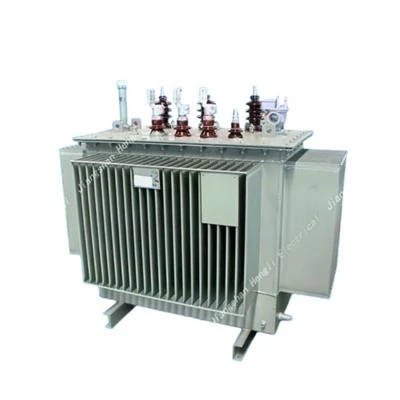
If you’re in the market for a new three phase oil immersed transformer, or you’re looking to upgrade your monitoring setup for your existing units, don’t hesitate to reach out. We’ve helped hundreds of clients from factories to substations build custom monitoring plans that fit their budget and needs, so you don’t have to stress about missing a critical parameter. Whether you need a small 50 kVA unit for a workshop or a 10 MVA unit for a large industrial site, we’ve got you covered, and our team can walk you through exactly what monitoring parameters you need for your specific application.
Dry Type Transformer References
- IEEE Std C57.104-2019, Guide for the Interpretation of Gases Generated in Oil-Immersed Transformers
- ANSI/IEEE Std C57.12.90-2017, Standard Test Code for Liquid-Immersed Distribution, Power, and Regulating Transformers
- NEMA Standard TP 1-2017, Loading Guide for Oil-Immersed Power Transformers
Zhejiang Jiangshan Hengli Electrical Co., Ltd.
Zhejiang Jiangshan Hengli Electrical Co., Ltd. is one of the most professional three phase oil immersed transformer manufacturers and suppliers in China, featured by quality products and low price. Please rest assured to wholesale cheap three phase oil immersed transformer in stock here and get pricelist from our factory. Customized orders are welcome.
Address: 212 Fuzhu Street Sidu Town, Jiangshan, Zhejiang, China
E-mail: henglijs@foxmail.com
WebSite: https://www.henlypower.com/
