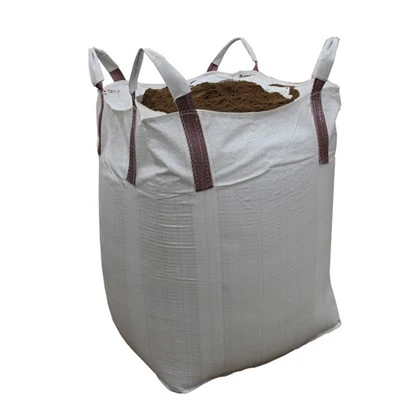
If you’ve ever visited a construction site, a farm supply store, or a bulk material warehouse, chances are you’ve crossed paths with a big bag—sometimes called a FIBC (Flexible Intermediate Bulk Container), ton bag, or bulk bag. For as common as they are, though, one question still pops up constantly from first-time buyers, small businesses, and even long-time material handlers: what’s the maximum weight a big bag can actually hold? As a big bags supplier that’s worked with thousands of customers across industries, I’m here to break this down not with generic rules, but with the practical, science-backed details that matter most when you’re designing your next bulk storage or shipping project. Big Bags

First, let’s get one key misconception out of the way: there’s no one-size-fits-all maximum weight for every big bag. That’s not a cop-out—it’s a reflection of how these bags are engineered. A big bag isn’t just a heavy-duty sack; it’s a specialized container designed with specific features to lift, store, and move bulk materials, and its maximum weight is directly tied to three core factors: its construction, the type of lifting equipment you use, and the material you’re holding.
Let’s start with construction, because that’s where the load limit begins. Most standard big bags are made from woven polypropylene, a material chosen for its tensile strength, resistance to UV light (for outdoor storage), and affordability. The way that polypropylene is woven, combined with the strength of its seams and lifting loops, dictates how much weight it can safely carry. Basic “one-trip” big bags, made for single-use shipping and not designed to be reused, usually have a maximum working load limit (WLL) of around 500 kg (1,100 lbs) to 1,000 kg (2,200 lbs). These are the workhorses for industries like agriculture, where you might pack grains or animal feed once and not need to return the bag.
But for customers needing durability, we offer multi-trip big bags, engineered to be used multiple times (sometimes 10 or more trips) and carry heavier loads. These have thicker, denser polypropylene fabric, reinforced double-stitched seams (often with a secondary layer of polypropylene webbing inside to prevent tearing), and lifting loops that are sewn directly into the bag’s top corners instead of being attached as afterthoughts. Multi-trip bags typically have a maximum WLL of 1,500 kg (3,300 lbs) to 2,000 kg (4,400 lbs). For even heavier applications—like mining aggregates, large-scale construction materials, or industrial waste—we supply heavy-duty big bags that can reach 3,000 kg (6,600 lbs) or more, often made with rip-stop polypropylene to distribute stress evenly across the bag.
Wait, but why can’t a bag just be built thicker and hold more? Because even the strongest material has a limit, and exceeding that leads to failure. I once worked with a small construction company that tried to use a standard 1,000 kg WLL bag for river rock that weighed 1,200 kg. The bag lifted fine from the forklift, but halfway to the jobsite, the bottom seam ripped open, spilling hundreds of pounds of rock onto a public sidewalk. That’s not just a mess—it’s a safety hazard, which is why WLL is a non-negotiable specification, not a suggestion.
The second critical factor is your lifting equipment. A big bag is only as strong as the weakest link in its handling chain. Even if a bag is rated for 2,000 kg, if your forklift forks are only 1.5 meters long (and the bag is 1.8 meters wide), you’ll risk tipping the forklift, or worse, the bag shifting off the forks during lifting. Or if you’re using a crane to lift bags (common for high-rise construction or warehouse stacking), the crane’s rated capacity has to be matched to the bag’s weight. I’ve seen a customer try to lift a 2,500 kg heavy-duty bag with a crane rated for only 2,000 kg—they got the bag off the ground, but the crane’s safety alarm went off mid-lift, forcing them to lower it slowly, wasting time and risking damage to both the equipment and the bag. That’s why we always ask customers about their lifting setup early on; if they don’t have the right forks, crane, or hoist, even a “heavy-duty” bag might not work for their needs.
Third, and often overlooked, is the material you’re storing. A bag rated for 2,000 kg of dry sand might not be safe for 2,000 kg of wet concrete, or 2,000 kg of fine dust. Why? Because of bulk density and flow. Fine, lightweight materials like fly ash or powdered sugar have a low bulk density, meaning they take up more space for the same weight. A 2,000 kg bag of fly ash would be almost full when lifted, putting stress on the top seams and lifting loops. Dense materials like iron ore or gravel, on the other hand, pack tightly, so a 2,000 kg bag of gravel will be relatively compact, distributing weight evenly across the bag’s base. That’s why we sometimes recommend a slightly smaller WLL for materials that are dense or have sharp edges—sharp aggregate, for example, can rub against the inside of the bag and wear through the fabric over time, so even if the bag is rated for 2,000 kg, we might suggest using it at 1,800 kg to extend its lifespan and reduce tear risk.
Now, let’s clear up a common point of confusion: working load limit vs. breaking strength. Manufacturers test big bags to find the breaking strength—the weight at which the bag will tear completely. That’s always higher than the WLL, which is the maximum weight you should lift the bag with for regular use. For example, a 1,000 kg WLL bag might have a breaking strength of 3,000 kg, but you should never get close to that. Breaking strength is a safety margin, not a target. We explain this to every new customer: if you’re at all unsure, it’s always better to go with a bag rated higher than you think you need, rather than risking a rupture.
We also offer specialized big bags for extreme use cases. For customers storing hazardous materials (like chemical powders or hazardous waste), we have UN-certified big bags, which undergo rigorous testing to ensure they can hold up to chemical exposure and heavy lifting. These are often rated for up to 1,500 kg, with additional liners to contain liquids or fine particulates. For food-grade materials—grain, flour, animal feed—we supply FDA-approved big bags, lined with food-safe polypropylene that can hold up to 2,000 kg, with no risk of contamination.
Over the years, I’ve had customers come to me after trying to cut costs by using a cheaper, unrated big bag from a random supplier. One small farm tried to use a generic big bag for corn, only to have the bag split when they lifted 1,200 kg, spilling corn all over their storage barn. The cost of the bag was $15, but the lost corn and cleanup cost them hundreds of dollars, not to mention the time they wasted. That’s why we emphasize that WLL isn’t just a number on a label—it’s a guarantee of safety and reliability.
So, putting this all together, what’s the answer to “what’s the maximum weight for a big bag”? For standard one-trip big bags, it’s 500 to 1,000 kg (1,100 to 2,200 lbs) for most applications. For multi-trip industrial bags, it’s 1,500 to 2,000 kg (3,300 to 4,400 lbs). For heavy-duty or specialized bags, it can go up to 3,000 kg (6,600 lbs) or more, depending on construction and use case. The key is to match the bag’s rating to your material, lifting equipment, and how many times you plan to reuse the bag.
If you’re still unsure about what big bag is right for your project, we’re here to help. Whether you’re a small business looking to ship a few hundred kg of grain, a construction company moving aggregate, or a factory handling industrial materials, we can walk you through the specs, test samples, and make sure you get a bag that’s safe, cost-effective, and suited to your needs. Don’t risk damage, safety hazards, or lost materials—reach out to us to discuss your requirements, and we’ll help you find the perfect big bag solution for your operation.
Standard Bags References
- Flexible Intermediate Bulk Containers (FIBC): Safety Guidelines and Design Specifications. Occupational Safety and Health Administration (OSHA), 2021.
- Woven Polypropylene Bag Tensile Strength and Load Capacity Testing. American Society for Testing and Materials (ASTM) Standard D5035-19, 2019.
- Bulk Material Handling: FIBC Selection for Agricultural and Industrial Applications. National Agricultural Storage and Handling Association (NASHA), 2022.
- UN Certification Requirements for FIBC Used in Hazardous Material Storage and Transport. United Nations Recommendations on the Transport of Dangerous Goods, 2020.
Hebei Hesheng Plastic Products Co., Ltd.
Hebei Hesheng Plastic Products Co., Ltd. is one of the most professional big bags manufacturers and suppliers in China for over 30 years, specialized in providing the best customized service. We warmly welcome you to wholesale high quality big bags for sale here from our factory. For price consultation, contact us.
Address: Tasizhuang Industral Zone, Qing County, Cangzhou City, Hebei, China.
E-mail: office@heshengbulkbag.com
WebSite: https://www.hs-bulkbags.com/
