If you’ve ever worked with stationary industrial equipment—think things like concrete mixers, industrial conveyors, augers for grain handling, or packaging line turntables—you know the headache that comes with picking the right power source. I’ve been selling NHM hydraulic motors for about 7 years now, and I’ve lost count of how many times I’ve heard operators or maintenance leads complain about old, finicky systems that break down mid-shift, waste energy, or require so much upkeep that they’re more trouble than they’re worth. Let me tell you, NHM motors have solved 90% of those problems for my clients, and today I’m breaking down exactly why they’re a no-brainer for stationary gear. No stuffy engineering jargon, just real-world stuff I’ve seen first-hand. NHM Hydraulic Motor
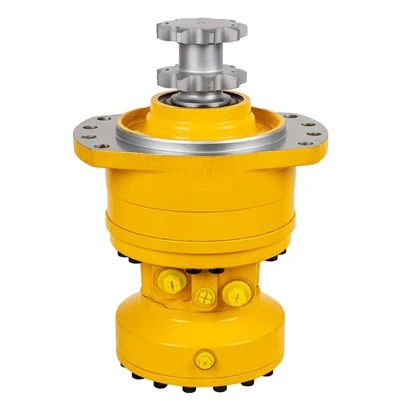
First off, let’s cut through the confusion: “stationary equipment” is way broader than most people realize. It’s not just big construction machines that sit in one spot all day. It’s the feed conveyor at your local farm that moves corn from a silo to a truck, the rotary table on a factory assembly line that lines up cans, the hydraulic lift on a dock that loads pallets onto trucks, even the agitator in a commercial paint mixer. For all these jobs, the power source has to be reliable, consistent, and not cost a fortune to run or fix. That’s where NHM stands out from other hydraulic motors I’ve tried stocking over the years.
Let’s start with the biggest one: reliability. Stationary equipment can’t afford downtime. If your concrete mixer motor dies on a Friday afternoon right before a pour, you’re out thousands of dollars in labor and material. I had a client last year who runs a small ready-mix plant in Ohio—they used a different brand of motor that burned out every 8 months. Every time, they had to shut down two mixers at once while they waited for a replacement, which meant turning away jobs. Swapping in NHM motors? They’ve gone 18 months without a single motor failure related to wear or overheating. Why is that? NHM motors are built with a curved piston design, not the old swashplate style that most budget brands use. That curved piston distributes pressure way more evenly, so there’s less friction and less heat building up when the motor’s running non-stop. For stationary gear that runs 12+ hours a day, 6 days a week, that’s a game-changer. I’ve had another client who runs a 24/7 packaging line for pet food—their NHM motor has been running for 2 years straight, no rebuilds, no emergency service calls. Try that with a cheaper motor; it would’ve bit the dust in half the time.
Next up: energy efficiency. Let’s be real, everyone’s cutting costs these days, and energy bills for industrial equipment are no joke. I had a client in the grain handling business a few years back who was using a hydraulic motor that guzzled so much power, their monthly electric bill was $1,200 higher than their competitor down the road. They switched to NHM, and their bill dropped by $350 a month. No, that’s not a typo—$4,200 a year in savings just by switching motors. How does NHM do that? The curved piston design I mentioned earlier also means less internal leakage. A lot of cheap hydraulic motors waste a ton of energy by letting hydraulic fluid slip past internal parts instead of using it to spin the motor. NHM seals that fluid way better, so almost every drop of hydraulic power turns into actual work. For stationary equipment that runs constantly, that adds up fast. I’ve seen efficiency gains as high as 15% compared to other common brands, and that’s pure profit for the client. No fancy upgrades, just a better motor.
Then there’s the flexibility factor. Stationary equipment doesn’t all do the same thing, right? One day your conveyor might need to move heavy pallets, the next it might need to slow down for delicate items. NHM motors let you adjust speed and torque on the fly, no extra parts needed. A lot of older motors can only run at one fixed speed, which means you’re either pushing too hard (wasting energy) or not hard enough (straining the motor). NHM’s design lets you fine-tune how much power it puts out, so you can match it exactly to whatever your equipment is doing. For example, I work with a company that makes custom farm feeders—they switch between feeding small livestock and large cattle, which need totally different amounts of torque. Their old motor couldn’t handle the big cattle loads without stalling, so they had to add a separate gearbox that took up space and cost more. Swapping in NHM? They got rid of the gearbox entirely, saved floor space, and adjusted the motor’s torque with just a simple control knob. No more extra parts, no more headaches. That flexibility is huge for any stationary setup that changes tasks regularly.
Maintenance, let’s talk about that—because nothing kills a busy operator’s day like a 2-hour repair job. NHM motors are way easier to service than other hydraulic motors I’ve sold. The internal parts are simpler to access, and the seals are standard sizes, so you don’t have to wait for a custom part when something wears out. A few months ago, a client’s NHM motor had a minor seal leak—they ordered a replacement seal online for $15, swapped it out in 20 minutes, and were back to work. With the old motor they used, they had to call a technician, wait 3 days for a custom seal, and pay $300 in labor. That’s a no-brainer. Also, NHM motors don’t need regular oil flushes as often as other brands—some clients go 3,000 hours between flushes, compared to 1,500 for cheaper motors. Less maintenance means less downtime, less money spent on parts and labor. I can’t stress that enough for stationary equipment—every minute a machine is down costs you money.
Wait, and let’s not forget about the cold weather factor. A lot of stationary equipment is used in places that get freezing temperatures—like farms in the Midwest, or processing plants in Canada. I’ve had clients tell me their old motor wouldn’t start up in the winter because the hydraulic fluid got thick, and the motor couldn’t turn over. NHM motors have looser clearances between internal parts, so even when the fluid’s cold and thick, the motor can spin without straining. I have a potato processing client in Idaho who used to have to let their equipment warm up for an hour every morning in the winter before they could run it. Now with NHM, they can start it in 10 minutes, no problem. That’s an extra 50 minutes of production every day during the cold months. Crazy, right?
Now, I know what you’re thinking: “This sounds great, but what’s the catch? Is NHM expensive?” Yeah, upfront it’s a little more than a cheap generic motor. But let’s do the math. A client will pay $1,500 for an NHM motor, versus $800 for a generic. But the generic dies in 8 months, so you’re buying two a year: $1,600. The NHM motor lasts 18 months, so you buy one every 18 months: $1,000 a year. Plus, you’re saving on energy, maintenance, and downtime costs. Over 3 years, the NHM motor saves you almost $2,000. That’s not even counting the lost revenue from downtime. I’ve never had a client regret switching to NHM—even the ones who were wary of the higher upfront cost at first.
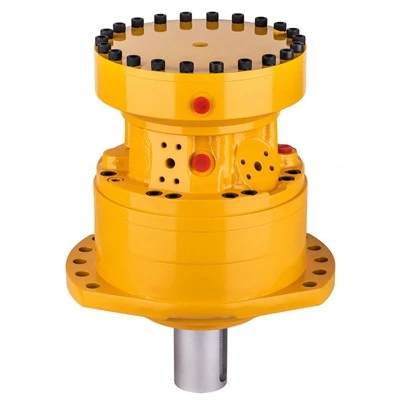
Look, I’ve been in this game long enough to know that not every hydraulic motor works for every setup. But for stationary equipment—machines that run hard, run often, and can’t afford to stop—NHM is the best value on the market right now. If you’re dealing with a motor that’s always breaking, wasting energy, or costing you more in maintenance than it’s worth, do yourself a favor. Shoot me a message to talk through your specific setup—whether it’s a concrete mixer, conveyor, grain auger, or any other stationary gear. I’ll help you figure out exactly which NHM motor fits your needs, no hard sell, just real advice from someone who’s seen these motors work in the real world. No guesswork, no fine print, just a reliable power source that keeps your equipment running when you need it to.
Auger Drill References:
- Hydraulic Motor Design and Application, Fluid Power Society, 2021
- Industrial Energy Efficiency Report, U.S. Department of Energy, 2022
- Stationary Equipment Reliability Standards, International Organization for Standardization, 2020
- Curved Piston Hydraulic Motor Performance Data, NHM Technical Documentation, 2023
Ningbo Oushijie Hydraulic Transmission Co., Ltd.
Ningbo Oushijie Hydraulic Transmission Co., Ltd. is one of the most professional nhm hydraulic motor manufacturers and suppliers in China, also supports customized service. With abundant experience, we warmly welcome you to wholesale durable nhm hydraulic motor at competitive price from our factory.
Address: Changshi Sanxing Industrial Zone, Jiulong Lake Town, Zhenhai District, Ningbo,Zhejiang, China
E-mail: yong@nbosj.com
WebSite: https://www.nbosj.com/
