If you’ve ever walked past a textile factory at dawn, you might have seen it: a faint, murky plume curling from an exhaust stack, or a stream of frothy, rainbow-hued water draining into a nearby ditch. For decades, the textile industry has carried a notorious reputation for its heavy water use and wastewater pollution—all while grappling with skyrocketing demand for more sustainable manufacturing. As a supplier of nanofiltration (NF) systems, I hear from textile plant managers every week who are stuck between a rock and a hard place: cut corners on wastewater treatment and face fines and public backlash, or sink too much capital into outdated systems that don’t deliver the results they need. The short answer to the question “Can nanofiltration (NF) systems be used in the textile industry?” is a resounding yes—but to get there, we need to talk about why this technology is a game-changer, how it works specifically for textile waste, and the real-world wins I’ve seen for clients who made the switch. Nanofiltration (NF) Systems

First, let’s break down the unique mess textile factories create, because not all wastewater is the same, and that’s where NF shines. Textile manufacturing relies on hundreds of chemicals to turn raw cotton, polyester, or blends into dyed, finished fabric. There are reactive dyes that bond to fibers, acidic and alkaline chemicals to adjust pH levels, heavy metals like chromium from pigment fixatives, and sizing agents (starch or polyvinyl alcohol, PVA) that keep fabric from tearing during weaving. A single 100,000-yard textile run can use up to 200,000 liters of water, and roughly 15-20% of the dyes used never even stick to the fabric—they go straight into the wastewater stream. Older treatment methods, like sedimentation, reverse osmosis (RO), or even basic activated carbon filtration, all have major flaws here. Sedimentation only removes the largest, heaviest particles, leaving dyes and chemicals dissolved. RO, while good for desalination, is overkill for many textile contaminants, wasting energy and pushing all dissolved solids out—including the ones that could be reused. Activated carbon works for some organic dyes but gets clogged quickly with heavy metals, and it can’t filter out small, charged molecules like reactive dye ions. That’s where NF steps in.
Nanofiltration is a pressure-driven membrane separation technology that sits exactly between ultrafiltration (which filters out larger particles) and reverse osmosis (which filters almost all dissolved solids) on the molecular size and charge spectrum. The membranes I supply are engineered with tiny pores (usually 1-10 nanometers, hence the name) and a surface that’s tuned to repel charged molecules while letting smaller, neutral ones pass through. For textiles, that means it does three non-negotiable things: it removes 90-98% of reactive dyes, acidic/alkaline chemicals, and heavy metals; it retains valuable sizing agents and process chemicals that would otherwise be thrown away; and it produces clean permeate water that’s safe to reuse in production. Let me be clear: this isn’t theoretical lab tech. Last year, I worked with a mid-sized denim manufacturer in the Carolinas that was spending $1.2 million a year on freshwater and $450,000 a year on wastewater disposal. They were using a combination of clarifiers and activated carbon that only removed 60% of their dye waste, so they were still hitting regulatory limits and paying $200,000 a year in fines. After we installed a modular NF system tailored to their dye and sizing waste, they cut their freshwater use by 62%—that’s over 100,000 liters a day saved. They also recovered 85% of their unused reactive dyes and 90% of their PVA sizing agents, cutting their raw chemical purchases by $320,000 a year. The payback period? Just 18 months. That’s not a sales pitch—it’s real numbers from a real factory that was in the exact same spot many of my clients are in right now.
Wait, you might be thinking—what about the practical headaches? Textile wastewater isn’t uniform. One factory might process natural cotton with soft, water-based dyes, another might work with synthetic polyester that uses oil-based pigments, and a third might mix both. The NF membranes I supply aren’t one-size-fits-all. We work with each client to run a small sample of their actual wastewater through a test unit first, adjusting membrane charge, pore size, and operating pressure to match their specific contaminants. For example, clients working with acid-based metal complex dyes (common for sportswear and performance fabrics) need membranes that are optimized to repel negatively charged dye ions, so we spec our high-charge NF membranes instead of the standard neutral ones. For factories using a lot of alkaline desizing chemicals, we add a pre-treatment step—usually a small pH adjustment tank—to prevent membrane scaling, which is when mineral deposits build up and reduce performance. I’ve had clients tell me they were scared NF would be too complicated to operate, but modern systems are automated: they run on a simple touchscreen, alert operators when membranes need cleaning, and can be monitored remotely by our team if there’s a minor issue. The denim plant I mentioned earlier has two part-time operators running three production lines, and the NF system only takes 15 minutes a day of their time—no advanced engineering degree required.
Another big win for textile facilities is how NF aligns with circular economy goals, which aren’t just “green buzzwords” anymore. Consumers are increasingly demanding brands that are transparent about their environmental impact, and regulatory bodies around the world are tightening wastewater rules fast. The EPA in the U.S. updated its industrial wastewater standards for textile facilities in 2022, lowering limits for chromium and dye waste by 40% over the next five years. The EU’s Circular Economy Action Plan requires textile manufacturers to cut freshwater use by 30% by 2030 for all brands selling in Europe. For small to mid-sized textile factories, these rules aren’t optional—they’re make-or-break. A NF system doesn’t just help you comply with current rules; it future-proofs your operations for upcoming regulations. The denim plant I worked with used to discharge water with a pH level of 11.2 (above the regulatory limit of 10.5) and trace amounts of chromium. Now their NF system produces permeate water with a pH of 7.1 and no detectable chromium, so they’ve had zero regulatory fines in 18 months. They also now sell the concentrated dye and chemical waste that NF rejects to a third-party recycler, earning an extra $120,000 a year in revenue from a byproduct they used to pay to get rid of. That’s the circular economy working for the bottom line, not just the planet.
Of course, no technology is perfect, and I’d be doing a disservice if I didn’t address the common drawbacks of NF systems for textile use. First, membrane fouling—this is the biggest pain point I hear about, and it’s not unique to NF; it’s a fact of membrane technology. Textile wastewater has high levels of organic matter and suspended solids that can stick to membrane surfaces over time, slowing flow and reducing contaminant removal rates. But modern NF systems (like the ones I supply) have anti-fouling membrane coatings, and we recommend a regular maintenance schedule: daily flushing, weekly cleaning with mild citric acid, and membrane replacement every 3-5 years. Compare that to activated carbon, which needs to be replaced every 6-12 months at a far higher cost per year, and NF becomes much more cost-effective. Another drawback is upfront capital cost, which is why I always recommend modular systems for small to mid-sized factories. You don’t have to install a full 10-line system all at once; we can start with a 2-line system that handles 50% of your wastewater, then expand as you see the cost savings, spreading out the expense and cutting payback periods even more. For example, a 10-line system for a small knitwear factory costs around $450,000, but a 2-line modular system is just $120,000, with a payback period of 12 months if your wastewater disposal and chemical costs are high enough.
Let me also talk about a common misconception I encounter: that NF only works for dye removal. No—its applications in the textile industry go far beyond that. I’ve supplied systems that help factories recover and reuse softeners, lubricants, and even textile auxiliaries that are added mid-production. For factories that use membrane bioreactors (MBRs) for secondary wastewater treatment, NF acts as a final polishing step to remove any remaining trace contaminants, bringing permeate water up to the standard for reuse in boiler feed water or even process water for high-end technical textiles. We’ve also worked with clients that manufacture non-woven fabrics for medical use, which require ultra-pure water to avoid contaminating sterile products—NF is the first step in their water treatment train, removing all micro-particles that could compromise product quality. One medical non-woven client in Germany told me that switching to NF not only cut their water costs by 70% but also eliminated 90% of the batch rejections they were getting due to water impurities, boosting their production output by 12%.
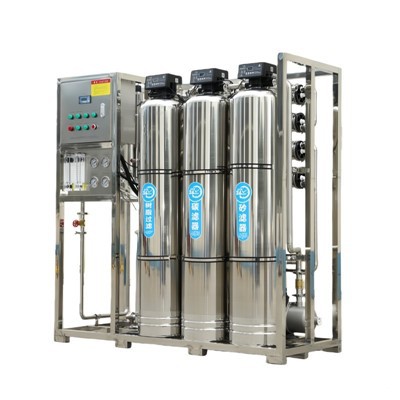
At the end of the day, textile manufacturers are being pulled in two directions: pressure to meet consumer demand for affordable, high-quality clothing, and pressure to reduce their environmental footprint. NF systems aren’t a silver bullet, but they’re one of the most reliable, cost-effective, and scalable solutions on the market right now. I’ve seen factories that were on the brink of closing due to pollution fines turn profitable by switching to NF. I’ve seen small family-owned textile operations compete with large corporate brands by reducing their waste and lowering their operating costs. What I’ve also learned is that every factory’s needs are different—there’s no one perfect NF system, which is why I take the time to test samples, customize setups, and train operators properly. If you’re a textile plant manager who’s tired of overpaying for water and wastewater disposal, or worried about upcoming regulatory fines, or just want to make your operations more sustainable, the first step is to reach out. I don’t push one-size-fits-all solutions, and I don’t make promises I can’t keep. I just provide systems that work, based on real numbers and real client results. The textile industry doesn’t have to be a pollution culprit—it can be a leader in circular manufacturing, and nanofiltration is the technology that makes that possible.
Sewage Treatment Plant References
- Van der Bruggen, B., & Vandecasteele, C. (2003). Removal of pollutants from industrial wastewater using nanofiltration. Journal of Membrane Science, 216(1-2), 259-271.
- United States Environmental Protection Agency (EPA). (2022). Effluent Guidelines: Textile Manufacturing Point Source Category. EPA 821-R-22-001.
- Li, X., Wang, Z., & Zhang, H. (2020). Nanofiltration for textile wastewater treatment and reuse: A review. Separation and Purification Technology, 238, 116478.
- European Commission. (2020). Circular Economy Action Plan: New Circular Economy Action Plan for a Cleaner and More Competitive Europe. COM(2020) 98 final.
Shandong Lingke Environmental Technology Co., Ltd.
Address: 100 Meters South of the Intersection of County Road 042 and National Highway 309, Changle County, Weifang City, Shandong Province
E-mail: aileenlin@sdlingkegroup.com
WebSite: https://www.lkecotech.com/
