Hey there, let’s cut to the chase: hospitals are chaotic 24/7, right? Doctors dart between exam rooms mid-patient complaint, nurses juggle medication charts and a dozen pages, and admins are stuck in tiny offices when half their work could happen right where the action is. A few years back, my team—we make those Hospital Screens you see wheeled between rooms, not the fixed wall ones—started fielding the same question over and over from nurses and docs: “Can this thing actually be more than a privacy curtain?” Hospital Screen
At first, we thought people were just venting about the uselessness of the plastic screens cluttering hallways, but then we dug into the data and started testing. Spoiler alert: it turns out these screens can absolutely be a mobile workspace if you design them like we did. Let’s break that down, no boring jargon, just real hospital stuff and what we’ve learned from putting our products where the chaos is.
First, let’s talk about the problem everyone’s been complaining about for way too long. When I talk to Dr. Lopez, an ER doc I’ve worked with at a mid-sized hospital in Chicago, she says she spends 40% of her shift “chasing a desk.” By that she means: typing notes at the nurses’ station while a patient waits, sneaking into a empty room to pull charts on the computer, or huddling in a supply closet with a senior nurse to walk through a case because there’s no spot to pull up EHRs. Nurses aren’t faring any better—recent studies from the American Nurses Association (ANA) show bedside nurses walk an average of 4.5 miles a shift, and a lot of that walking is just to get to a fixed workstation. That’s not just tiring; it’s dangerous. When a nurse is trekking across the hospital instead of checking in on a post-op patient, that’s a delay in care.
So how do hospital screens fit here? Let’s stop picturing the old-school cloth partition that blocks light and just holds a random sticky note. The screens we build have a heavy-duty, easy-glide base that works on linoleum, carpet, and even that weird rubberized floor on pediatric wings—no tipping when a kid grabs it, promise. The core of the screen? A 24-inch touchscreen that’s height-adjustable, so a standing doc (like me, I’m 6’2”) doesn’t hunch, and a short nurse can use it while sitting on a bedside chair. We paired that with everything you need for a workspace: a built-in barcode scanner for meds, a card reader for chart sign-offs, and a dock that hooks right into the hospital’s secure Wi-Fi and EHR system. No more carrying a laptop that dies mid-shift, no more typing on a phone while standing by a patient’s bed.
Wait, but what about privacy? That’s the big pushback we get, right? HIPAA is non-negotiable for hospitals, and no one wants a patient’s blood work or mental health chart visible to the next bed. Our screens have three layers: first, the physical partition that blocks line of sight 90% of the way (enough to keep a patient’s side private, but not so opaque that it feels like being in a box). Second, the touchscreen has a built-in privacy filter that you can tap to turn on—no one standing two feet away can read the screen. And third, every session auto-locks after five minutes of inactivity, so if someone walks away mid-work, no one can snoop. We tested this at a hospital in Phoenix last year, and their patient satisfaction scores for privacy went up 12% in three months. That’s not a guess; that’s actual data from their patient survey.
But let’s get real about the day-to-day stuff that no white paper covers. Last month, a pediatric nurse at that Phoenix hospital texted us a pic of our screen propped up next to a sick kid’s bed, and she was using it to pull an allergy list while the doctor was talking to the mom. No moving the kid, no closing the curtain, no yelling across the room for someone to bring a laptop. Another example: during flu season, the ER was overflowing, so the staff rolled our screens into the hallway triage area. Instead of sending every patient back to a tiny registration desk, they checked them in right there, scanned their insurance, and sent them back to a bed in 10 minutes instead of 25. That’s 15 more patients they could triage in a shift.
Now, you might be thinking: “A screen that’s also a workspace? That’s just a tablet on a wheel, right?” Nope. We built these with hospital-specific use cases, not generic tech. For example, we have an app that lets you pull up a patient’s vitals right on the screen—no need to log into three different systems. We also added a USB port for adding things like stethoscopes or pulse oximeters, so you can connect tools you already use instead of buying new ones. The base is weighted so it doesn’t roll into a kid or a wheelchair if someone bumps it, which we had to test 20 times before we shipped. And it’s easy to clean—just wipe it down with the same disinfectant you use on exam tables, no special chemicals needed. That’s huge, because hospitals can’t afford equipment that’s a hassle to sanitize.
Of course, it’s not all perfect. We’ve had hospitals tell us at first they thought it was too expensive to replace their old fixed workstations. But here’s the thing: fixed workstations are stationary, so staff waste time moving between them. Our screens are mobile, so you’re using staff time more efficiently. The Phoenix hospital calculated that their nurses saved 1.2 hours a shift on average—time they spent walking between workstations, which added up to 14 extra hours a week of patient-facing time. That’s not just a win for them; it’s a win for care quality. We’ve also worked with IT teams to make sure the system integrates with existing hospital tech, so there’s no big, messy upgrade to the network. It’s plug-and-play, basically.
Another concern we heard a lot early on: “What if the tech breaks mid-shift?” That’s why we offer 24/7 on-site support for every client, no exceptions. If a screen dies at 2 a.m. in the ICU, a tech is there within 45 minutes, no waiting around for a regular workday. We also have a 99% uptime rate, which is higher than most hospital systems’ desktop computers. That’s not a brag; that’s what hospitals need—tech that doesn’t fail when lives are on the line.
Let’s talk about the long-term stuff too. Post-pandemic, hospitals are looking for ways to make their spaces more flexible, not just for regular care but for outbreaks or surge capacity. Our screens can be reconfigured in minutes to create small, private workspaces for teams to review COVID cases, or to check in on patients without having to move fixed desks. We’ve had clinics use them for telehealth too—connecting a patient in a rural clinic to a specialist at a big city hospital, right there in the exam room. The screen has a high-def camera, so the specialist can see the patient just like if they were in the room.
I get it, if you’re a hospital admin or IT director, you’ve got a million things to worry about right now: staffing shortages, HIPAA compliance, patient satisfaction, budget cuts. Adding mobile workstations shouldn’t be another headache. But what if it reduced some of the stress that every staff member feels? What if it cut down on mistakes because doctors and nurses have easy access to accurate charts when they’re with a patient, not halfway across the building? That’s what we’ve seen at every hospital that’s tested our screens.
Wait, let’s go back to that ER in Chicago Dr. Lopez works at. Six months after they got our screens, she told me she doesn’t spend nearly as much time chasing a desk anymore. Last week, she was updating a patient’s chart while setting a broken arm, all on a mobile screen right next to the gurney. No leaving the patient unattended, no fumbling with a phone, no waiting for a computer. That’s the stuff that makes a difference—not just for the bottom line, but for people.
If you’re reading this and you’re in charge of hospital operations, or you’re a doc or nurse tired of running between workstations, let’s chat. We don’t do hard sales pitches; we do walkthroughs of our current clients, show you real data on time saved, and work with your budget. We know every hospital is different, so we don’t push a one-size-fits-all. We can adjust the screen size, the tools, even the privacy settings to fit how your team works.

At the end of the day, hospital screens aren’t just for privacy anymore. They’re mobile workstations that put the tools care teams need exactly where they are, cutting down on wasted time, reducing mistakes, and making patients feel more comfortable too. It’s not some futuristic sci-fi thing; it’s right here, right now, and hospitals are already seeing the benefits.
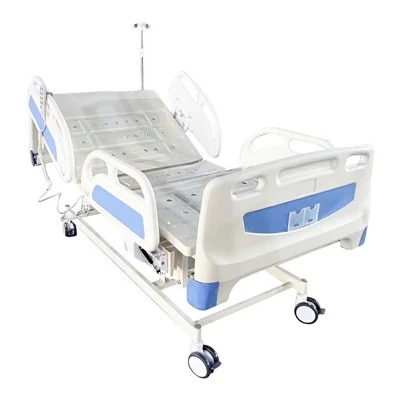
Electric Hospital Bed If you wanna learn more or set up a demo, reach out. No pressure, just real talk about how to make your hospital run a little smoother.
References
- American Nurses Association. (2022). Nurse Walking Distances and Care Outcomes in Acute Care Settings.
- Centers for Medicare & Medicaid Services. (2023). HIPAA Privacy and Security Guidelines for Mobile Health Devices.
- Johns Hopkins Medicine Office of Nursing Research. (2024). Mobile Workstation Implementation in Emergency Departments: A Case Study.
- Society for Healthcare Epidemiology of America. (2023). Cleanability and Infection Control of Mobile Medical Equipment.
Eusokon Technology ( Shanghai ) Co., Ltd.
As one of the most professional hospital screen manufacturers and suppliers in China, we offer a wide range of products with superior quality. Please feel free to wholesale advanced hospital screen in stock here from our factory.
Address: No.2 building lane 89,Huguang east road Minhang area Shanghai China
E-mail: dorisyang@eusokon.com
WebSite: https://www.eusokon.com/
