If you’ve ever walked past a car body shop or a custom furniture factory with an automatic paint line, you might’ve noticed how they’re hidden away—behind big industrial doors, with sensors blinking and fans humming nonstop. I’m the owner of a company that builds, maintains, and upgrades these lines, and I’ve seen first-hand how one tiny, overlooked detail can ruin an otherwise perfect paint job: temperature and humidity. Most customers I talk to initially focus on speed, cost per part, or machine durability, but 9 times out of 10, their biggest paint defects come down to these two factors. Let me break it down like I would when I’m huddled with a new client, not giving a stuffy lecture. Automatic Paint Line
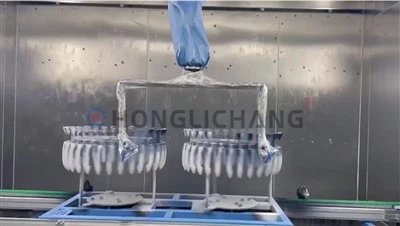
First, let’s get the basics straight—no jargon, promise. Temperature here isn’t just “hot or cold”; it’s the temperature of the part being painted, the paint itself, and the air inside the paint booth. Same with humidity: that’s just how much water vapor’s in the air, not some random weather stat. For an automatic paint line, these two don’t work separately—they’re a team, and mess with one, you mess with both.
Let’s start with temperature. I once had a client who bought a used paint line from a guy who swears it’s “set it and forget it.” They ran it in a warehouse that hit 95°F in the summer—no climate control, just the line’s built-in temp gauge that read 80°F (it was calibrated wrong, but that’s a whole other problem). First defect: “orange peel” finish on every car door we tested. For anyone who doesn’t know, that’s when the paint dries too fast on the surface, leaving a lumpy, uneven texture like an orange skin. Why? Hot air makes the paint’s solvent evaporate way quicker than it’s supposed to. The paint needs time to spread evenly before it starts curing, right? If the surface’s 15°F hotter than the recommended range (most automotive paint lines like 68–77°F), the solvent burns off before the spray gun can lay it flat. We fixed that by adding a small split-system AC unit in the booth and calibrating their gun pressure to slow down the spray speed. Cost them $1,200, but they saved $8,000 a week in rework. That’s the kind of math I live for.
But cold is just as bad. Last winter, a client in Minnesota tried running their line without heat—warehouse temp hit 50°F. We saw “blushing” (that milky, cloudy film under the topcoat) and paint adhesion so bad, we could peel the top layer off with our nails. Cold temp thickens paint way too much, and it doesn’t flow smoothly onto the part. Worse, if the part’s too cold, any moisture in the air that hits it freezes before the paint can stick. So the paint lays over a layer of tiny ice crystals, and later when it melts, you’ve got bubbles and blisters. We added duct heaters tied to the line’s sensor—now it holds steady at 70°F, and their defect rate dropped from 12% to 0.3% in a month. Nailed that.
Now humidity, which a lot of people mix up with temperature. Let’s say same 95°F summer day, but humidity’s 70% (that’s typical for humid coastal areas). High humidity means more water in the air, which messes with solvent-based paint (the kind most industrial lines use) in two big ways. First, water and solvent don’t mix—so you get tiny water droplets mixing with paint, leading to those little craters or pinholes all over the part. Second, high humidity slows down solvent evaporation, which means the paint stays wet longer. If the line’s moving parts too fast, the wet paint can run or sag, especially on vertical surfaces. I had a food equipment manufacturer client who was getting 15% defect rates on stainless steel parts—turned out their booth was in a factory next to a lake, so humidity hovered at 80%. We added a dehumidification unit that pulls excess moisture out of the booth air, and adjusted their flash-off time (that’s the waiting period after spraying before curing) from 10 seconds to 30. Now their parts pass their third-party coating tests every time.
Low humidity, though? That’s the other end of the spectrum. If humidity’s under 40%, especially when it’s hot, you get the orange peel I mentioned earlier, but even worse—static electricity. Automatic paint spray guns use electrostatic charge to pull paint onto the part, right? Because paint particles are tiny, static makes them stick evenly instead of bouncing off. But super dry air builds up too much static, and you get these “static sparks” that can ignite flammable solvents—hello, safety hazard. Another thing: low humidity makes paint cure too fast on the surface, so the inside stays soft. That leads to “chalking” later—paint that turns powdery and rubs off a year later. We had a wooden furniture client in Arizona who was dealing with this; they added a humidifier to keep booth humidity at 50%, and their outdoor furniture’s lifespan jumped from 3 years to 7. That’s a game-changer for their brand.
Here’s the thing most line operators don’t get: it’s not just the booth temp/humidity. The part itself matters. If you’re painting a metal part straight off a metal stamping press, it might be 100°F, even if the booth’s 70°F. That’s a “temperature gradient” problem—hot part, cool air. So the paint on the part’s surface cures before the rest, leading to adhesion issues. We always tell clients to add a part temperature sensor that triggers a 2-minute cool-down before the part enters the booth. Simple fix, but how many guys skip that to keep production moving? Too many.
Also, humidity affects different paint types differently. Water-based paint (which we’re pushing more now for eco-compliance) is way more sensitive to humidity than solvent-based. Water-based paint needs just the right amount of humidity to keep the water carrier from evaporating too fast (which causes dry spray) or too slow (which causes runs). I once had a client switch to water-based paint to meet EPA rules, and their defect rate doubled because they forgot to adjust their humidity settings—they were running at 45%, which was too low for water-based. We bumped it up to 55%, adjusted the gun’s fluid pressure, and they not only hit compliance but saved $500 a week on paint waste. Win-win.
Wait, let’s talk about calibration, because even if you have climate control, if your sensors are off, you’re screwed. I’ve been to lines where the temp sensor is taped to the wall 10 feet away from the spray zone, so it reads 75°F but the actual spray area is 85°F. That’s like setting your thermostat in the kitchen but expecting your bedroom to stay cool. We recommend calibrating temp and humidity sensors every 2 weeks, not every 6 months like some guys do. And we add redundant sensors—one in the spray zone, one near the oven, one on the part itself—so if one fails, the line automatically shuts down or adjusts settings. That’s a cheap upgrade, but it’s saved clients from $10k+ in rework.
What about seasonal changes? If you’re in a place that has extreme seasons, you can’t run the same settings year-round. A client in Chicago tried setting their line to 70°F and 50% humidity in January, but their outside air was dry and cold, so when they heated it, humidity dropped to 35%. They got static sparks that tripped their fire alarm. We added a small air conditioning/dehumidification unit for summer and a humidifier for winter, linked to a seasonal adjustment preset in the line’s control panel. Now they don’t have to manually tweak settings when the weather changes—no more emergency calls at 2 a.m. because a line’s down.
I can hear some of you thinking, “This sounds like a lot of work. Why can’t I just wing it?” Let me tell you about the alternative. I had a big automotive client a few years back who ignored our advice about climate control. They had a 100-part production run, and 20 of them had to be sanded and repainted. That’s 20 hours of labor, plus wasted paint, plus parts that were damaged during sanding. All because they thought, “It’s just temp and humidity, what’s the big deal?” The worst part? We quoted them a $3,000 climate control upgrade, and they spent $15,000 on rework in that one run alone. Plus, their delivery deadline got pushed back, which cost them a $5,000 penalty from their customer. That’s a no-brainer, right?
Another thing: safety. Most paint solvents are flammable, and temperature and humidity play a big role there. High temp makes solvents more volatile, so a tiny static spark can turn into a fire. Low humidity makes static electricity buildup worse, same issue. We always integrate fire suppression systems tied directly to temp and humidity sensors—if the temp spikes to 90°F or humidity drops below 40%, the line’s built-in fire suppressants kick in. It’s not just about good paint; it’s about keeping your team and your facility safe.
Now, let’s make this actionable. If you’re running an automatic paint line, here’s the quick checklist I give new clients: 1) Measure temp and humidity at the spray zone, not just the booth door. 2) Keep temp between 68–77°F (adjust slightly for your paint type—water-based might need a 70–75°F sweet spot). 3) Keep humidity between 40–60% (50% is the middle ground for most jobs). 4) Calibrate sensors every 2 weeks—no exceptions. 5) Add a cool-down zone for hot parts and a humidifier/dehumidifier if your facility doesn’t have climate control. 6) For water-based paint, bump humidity 5–10% higher than you would for solvent-based.
I could go on about specific defects and edge cases, but the point is this: temp and humidity aren’t just “weather stats” for your paint line. They’re the unsung heroes of a flawless coat, and they directly affect your bottom line—rework costs, downtime, delivery delays, even safety. Too many line operators treat them as an afterthought, but after 12 years in this business, I can tell you: fixing a temp or humidity issue is way cheaper than fixing a batch of bad parts.

If you’re currently dealing with paint defects, rework headaches, or just want to upgrade your automatic paint line to nail temp and humidity control without the stress, hit me up. I’ll walk you through exactly what your line needs, no sales pitch—just straight talk based on the hundreds of lines I’ve fixed or upgraded over the years. Don’t wait until your next big run goes sideways; get ahead of the issues that most guys miss.
UV Coating Line References
- Industrial Paint Application: Temperature and Humidity Effects, Society for Coating Technology, 2021
- Automatic Spray Booth Calibration Best Practices, National Institute for Occupational Safety and Health, 2022
- Water-Based vs. Solvent-Based Paint: Environmental and Performance Impacts, EPA Coatings Program, 2020
Shenzhen Honglichang Machinery Manufacturing Co., Ltd.
We are one of the most professional automatic paint line manufacturers and suppliers in China, also support customized service. Please feel free to buy advanced automatic paint line for sale here from our factory. Welcome to contact us for quotation.
Address: No. A802, Building 2, Tianan Digital Plaza, Longgang, Shenzhen, China
E-mail: victor@honglichang.com
WebSite: https://www.honglichang-paint.com/
