If you’ve ever walked through a chemical lab, pharmaceutical R&D space, or a college research facility, you’ve probably seen both fume hoods and glove boxes, often mistaken for each other or used interchangeably. As a supplier of fume hoods for over a decade, I’ve heard this confusion more times than I can count: new lab managers asking which one they need for organic synthesis, researchers unsure if their radioactive samples fit inside a standard fume hood, and even experienced technicians mixing up their maintenance routines. The truth is, these two pieces of equipment serve entirely different purposes, work on different principles, and have very distinct use cases—and picking the wrong one can lead to safety risks, compromised experiments, or wasted investment. Fume Hoods
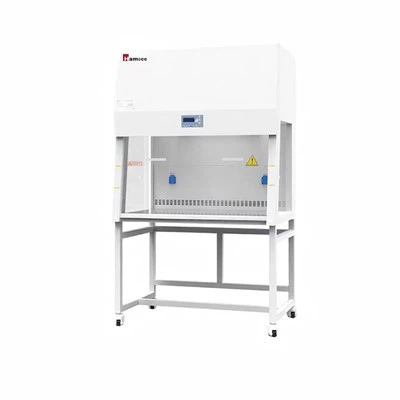
Let’s start with the basics of what each does, because at their core, both are designed to protect people from hazardous materials, but that’s where the similarities end. A fume hood (sometimes called a lab hood or chemical hood) is, in simple terms, a ventilated enclosure that pulls air, vapors, or particulates away from the user and expels them safely outside the building. It’s the most common workhorse of general lab spaces, designed for open, hands-on work with non-toxic, volatile, or moderately hazardous materials. You might reach for a fume hood when you’re mixing solutions, pouring corrosive liquids, or doing routine chemical reactions that release fumes.
A glove box, on the other hand, is a sealed, air-tight chamber that’s completely isolated from the surrounding lab environment. It’s designed for work that can’t be exposed to the outside air or where the materials inside are extremely dangerous—think radioactive samples, pyrophoric chemicals that ignite on contact with oxygen, or biological agents that pose a high infection risk. Instead of ventilating away the contents, a glove box maintains a controlled atmosphere inside, usually filled with inert gas like argon or nitrogen, or a negative pressure that prevents any leaks to the outside. You interact with the materials through heavy, rubber gloves attached to the walls of the box, so there’s no direct exposure to the contents at all.
To break down the key differences that matter most for lab operations, let’s dive into four critical areas: air flow and containment, user interaction, use cases, and maintenance. These are the factors that will determine which piece of equipment is right for your space, and where as a fume hood supplier, we’ve seen labs go wrong by choosing one over the other without considering their needs.
First, air flow and containment. This is the biggest line between the two. A standard fume hood relies on constant, directional air flow: it pulls air in from the front opening, through the work area, and out through a dedicated exhaust system connected to the building’s HVAC. The key here is that the hood’s face velocity—the speed of air at the front opening—needs to be consistent, usually between 80 and 120 feet per minute, to ensure no hazardous fumes escape back into the lab. If the face velocity is too low, fumes can drift out; if it’s too high, it can blow light equipment off the work surface or make the hood uncomfortable to work in. Modern fume hoods have variable air volume (VAV) controls that adjust the flow based on how far the sash (the movable front panel) is open, saving energy while maintaining safe air speed.
Glove boxes, by contrast, don’t rely on exhausting air to contain materials. They are a closed system. Most operate at negative pressure, meaning the inside is at a slightly lower pressure than the lab, so any small leaks will pull air into the box rather than letting hazardous material escape out. The internal atmosphere is tightly controlled: for work with pyrophoric chemicals, you’ll flush the box with inert gas to get oxygen levels down to less than 1 part per million; for biological work, you might hold positive pressure inside to keep pathogens from leaking out. Unlike fume hoods, which are connected to the building’s exhaust, glove boxes often recycle their internal air through filters—HEPA for particulates, or specialized filters for organic vapors—meaning they don’t pull in outside air or expel large volumes to the environment. That’s why they’re essential for materials that can’t risk exposure to outside air, or materials so dangerous that even a tiny leak is a major hazard.
Next, how you interact with the equipment. Fume hoods are designed for open, manual work. The sash slides up, and you reach in with your hands, often with lab coats, gloves, and safety glasses, to manipulate equipment on the work surface. You can move around items inside, pour liquids, adjust burners, or use tools like pipettes or beakers without any barriers between you and the work. That flexibility is why fume hoods are ideal for routine lab tasks: you don’t need specialized equipment to work inside, and you can adapt to almost any procedure that fits within the hood’s footprint. The only physical barrier is the sash, which you keep as low as possible to maintain proper air flow, usually no more than 18 inches high when working.
Glove boxes, as the name suggests, use built-in gloves to create a barrier between the user and the contents. The gloves are thick, chemical-resistant rubber, attached to ports on the box walls, so you can’t reach inside directly. Most glove boxes have an airlock or entry chamber that lets you pass items in and out without breaking the internal atmosphere—you put items into the airlock, close the inner door, purge the airlock with the same inert gas as the main box, then open the outer door to retrieve them. That setup means any work inside the glove box is more limited than in a fume hood: you can’t easily move large pieces of equipment, and you’re constrained by the size of the box and the length of the gloves. For tasks that require fine motor skills, like handling small samples, it works well, but for routine work like mixing 10-liter batches of solution, a fume hood is far more practical.
Now, the use cases that make each equipment indispensable. Let’s be clear: there’s no “better” choice here, just the right choice for your work. Fume hoods are the go-to for most general lab work. If you’re a pharmaceutical scientist formulating a new drug compound that reacts with water, or a high school chemistry teacher preparing acid-base demonstrations, a fume hood is perfect. They’re also more versatile for large-scale work: many labs use walk-in fume hoods, which are big enough to fit multiple people or large equipment like distillation setups. They’re also typically more cost-effective upfront, and easier to install because they just need a connection to the building’s exhaust system. That’s why as a fume hood supplier, we work with labs across every industry, from K-12 schools to Fortune 500 chemical companies, because their needs often center on safe, open work with moderately hazardous materials.
Glove boxes, meanwhile, are for the specialized, high-risk tasks that fume hoods can’t handle. If you’re working with lithium metal for battery research, which ignites instantly in air, a fume hood won’t cut it—even low levels of oxygen in the hood’s air would cause a reaction. If you’re handling radioactive isotopes that could contaminate the lab if they escape, or infectious agents that require absolute containment, a glove box is non-negotiable. They also let you work with materials that need a dry environment: for example, organic synthesis that requires strictly anhydrous conditions, where even a tiny amount of water vapor in the air would ruin the reaction. The downside? Glove boxes are much more expensive than standard fume hoods, require regular maintenance to check for leaks, and are limited to smaller, specific tasks. They’re not designed for everyday lab work, and you’d never use one to pour a liter of hydrochloric acid—you’d risk damaging the gloves and breaking the internal atmosphere.
Maintenance and compliance are another area where the two differ dramatically. Fume hoods require regular testing to ensure they’re working safely. OSHA (Occupational Safety and Health Administration) and other global safety standards require that fume hoods have their face velocity checked at least annually, and that the ductwork is inspected to make sure there are no leaks or blockages that would reduce air flow. If you’re using a hood for a new type of chemical, you might also need to adjust the exhaust system to handle more volatile fumes. For labs, that means scheduling routine hood audits, replacing worn sash seals, and cleaning filters on a regular basis. As a fume hood supplier, we also offer retrofits to upgrade older hoods with VAV controls or updated seals to meet current safety standards, which is a common need as labs change their procedures.
Glove box maintenance is a whole different beast. You have to regularly test for leaks using specialized equipment like a helium detector, because even a tiny hole in a glove or a seal can compromise the internal atmosphere. The gloves themselves wear out over time from repeated use with harsh chemicals, so they need to be replaced every six months to a year, depending on use. For inert gas glove boxes, you also have to monitor oxygen and moisture levels constantly, and refill or recycle the inert gas as needed. The airlock system needs regular cleaning to prevent cross-contamination between items you bring in and the main box. For labs that work with radioactive materials or biohazards, glove box maintenance also involves decontamination procedures that are far more rigorous than what’s required for fume hoods.
I’ve seen labs make the wrong call here more than once. A few years back, a small biotech startup came to us confused because they’d bought a cheap glove box to handle their new cell culture work, only to find that the sealed box made it impossible to safely transfer growth media without risking contamination. They didn’t need a fully isolated glove box—they just needed a fume hood with HEPA filtration to keep their samples and the lab environment safe. Another example: a high school chemistry lab tried to use a fume hood for sodium azide experiments, which release highly toxic, explosive fumes that can build up in the hood’s ductwork. A fume hood would vent the fumes outside, but sodium azide is so dangerous that a glove box with proper negative pressure and continuous monitoring was the only safe choice. That’s why taking stock of your specific materials, tasks, and safety requirements is so critical.
At the end of the day, both fume hoods and glove boxes are essential tools for lab safety, but they’re built for different jobs. Fume hoods are the flexible, workhorse solution for general open-air work with moderately hazardous materials, designed to keep the air in the lab safe by pulling contaminants away from you. Glove boxes are the specialized, isolated solution for high-risk materials that can’t be exposed to air, designed to keep both the user and the surrounding environment completely separate from the contents inside.
If you’re outfitting a new lab, upgrading your current equipment, or not sure which piece is right for your work, don’t guess. Reach out to discuss your specific needs, whether you’re looking for a standard fume hood, a walk-in model, or guidance on which equipment will keep your team safe and your experiments on track.
Ducted Fume Hoods References
OSHA. (2019). Laboratory Safety Guidance for Hazardous Chemicals. Occupational Safety and Health Administration.
American National Standards Institute. (2020). ANSI Z9.5: Ventilation for Laboratory Environments. American National Standards Institute.
World Health Organization. (2021). Laboratory Biosafety Manual (4th ed.). World Health Organization.
HAMECC(Shanghai) Lab Solutions Co., Ltd.
We’re well-known as one of the leading fume hoods manufacturers and suppliers in China, featured by quality products and good price. Please rest assured to buy customized fume hoods made in China here from our factory.
Address: Building 1, No. 2222, Huancheng Road, Jiading District, Shanghai
E-mail: info@hamecc.com
WebSite: https://www.hamecc.com/
