If you’re a packaging professional, you’ve likely encountered vacuum-metalized CPP film at some point—its shiny, barrier-rich surface makes it a go-to for everything from snack bags to cosmetic pouches. But as a supplier of this material, I get dozens of questions a month that boil down to one: “How long can I actually keep this film before it stops working?” It’s not a trivial question. Package integrity drives shelf life for the products inside, and no one wants to toss a pallet of unused film because it degraded too fast. After 12 years working with this material, I’ve seen far too many projects derailed by mismatched expectations, so let’s break down the science behind its shelf life, what you can do to extend it, and why it’s not a one-size-fits-all number. Vacuum-Metalized CPP Film
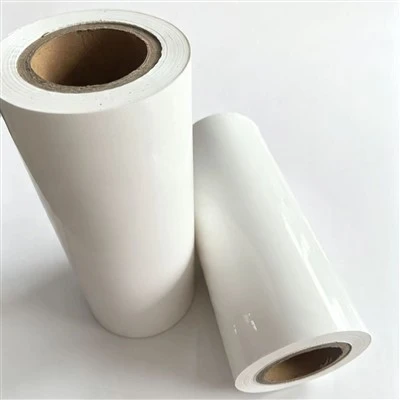
First, let’s set a baseline: what even is vacuum-metalized CPP film, anyway? CPP stands for cast polypropylene, a rigid, heat-sealable base film. Vacuum-metalization adds a thin layer of aluminum (usually 10 to 50 nanometers thick, thinner than a strand of human hair) to one side of the film in a vacuum chamber. That aluminum is the star here: it blocks oxygen, moisture, light, and even odors, which is why it’s such a workhorse for barrier packaging. But aluminum is just a layer—its performance depends entirely on how well it sticks to the CPP base, and how little it degrades over time. That’s where shelf life comes in.
The short answer we give customers most days is this: under ideal storage conditions, our vacuum-metalized CPP film has a usable shelf life of 12 to 18 months from the date of manufacture. But that’s just the start. Let’s dig into why that range exists, and what factors can push that number way up—or slash it in half.
Let’s start with the science of degradation. The aluminum layer isn’t invincible. Two main processes eat away at its performance: oxidation and mechanical stress. Oxidation is the big one. Aluminum reacts with oxygen and moisture to form aluminum oxide, a dull, porous layer that doesn’t block gases like the shiny, metallic aluminum does. The thinner the aluminum layer, the faster this happens. A 10-nanometer coating might lose 10% of its barrier performance in 18 months under ideal conditions, but a 50-nanometer coating could take twice as long to show the same shift. That’s why when we quote a film for a coffee pouch (which needs near-total oxygen block to keep beans fresh), we spec a thicker aluminum layer—it’s not just for looks, it’s for long-term durability.
Mechanical stress is the other culprit. Vacuum-metalized film is a flexible material, so bending, stretching, or even rough handling during storage can crack the aluminum layer. Those micro-cracks act like little holes for oxygen and moisture to seep through, ruining the barrier. I’ve seen customers store pallets of film on a concrete warehouse floor, stacked 10 high, with no protective wrapping—by the time they went to use it, the bottom layers had tiny cracks from being crushed, and their product failed barrier tests. That’s avoidable, but it’s a common mistake.
Now, let’s get back to that baseline of 12 to 18 months. That number comes from our own lab testing and industry standards set by organizations like the Flexible Packaging Association (FPA). We test every batch of film for oxygen transmission rate (OTR) and water vapor transmission rate (WVTR) at 3-month intervals from manufacture, and what we’ve found lines up with the FPA’s data: when stored correctly, OTR (a key metric for oxygen barrier) increases by less than 15% after 12 months, and less than 25% after 18 months. Most packaging applications can tolerate that shift—snack foods, for example, usually only need OTR below 5 cm³/m²/day, so a 15% increase is negligible. But if you’re packaging sensitive products like pharmaceuticals or fresh pet food, you might want to aim to use the film within 12 months to avoid any risk of barrier loss.
But wait—storage conditions make all the difference. Let’s break down what “ideal” storage actually means. First, temperature: keep it between 15°C and 25°C (59°F and 77°F). Anything above 30°C (86°F) speeds up chemical reactions, so a film stored in a hot warehouse in Arizona will degrade twice as fast as one in a climate-controlled facility. Humidity is even more critical: aim for 40% to 50% relative humidity. Excess moisture in the air accelerates oxidation of the aluminum layer, so a film stored in a damp basement might go from peak performance to unusable in 9 months, not 18.
Then there’s light. UV light is a big enemy of aluminum, too. Even indirect sunlight or harsh fluorescent lighting can break down the metal layer over time. That’s why we always recommend storing vacuum-metalized film in opaque, dark packaging, not on open shelves by a window. We’ve had customers who kept rolls in their production area, exposed to constant overhead lights, and found their film’s barrier dropped 30% in just 10 months. A little darkness goes a long way.
Even how the film is stored matters. We always recommend keeping rolls upright, not laying them flat. Laying heavy rolls flat can cause creases at the edges of the roll, and repeated stress on the same area weakens the aluminum layer over time. We also advise keeping rolls off the floor, on wooden pallets not concrete, to avoid moisture wicking up from the ground. For long-term storage (more than 6 months), we recommend double-wrapping the rolls in plastic film to seal out moisture and light, and adding desiccant packets to the packaging to absorb any excess humidity.
Now, what if you have film that’s past the 18-month mark? It’s not automatically trash. We often test old batches for our customers, and we’ve seen films that were 2 years old still pass OTR and WVTR tests—sometimes even 3 years old, if stored perfectly. The key is to test, not guess. We offer free sample testing for customers who have leftover film, so you don’t have to risk packaging a bad batch. Just send a small sample, and we’ll run the barrier tests to confirm it’s still fit for purpose. That’s a service we’re proud to offer, because we know no two storage environments are the same.
Another thing that affects shelf life: the type of CPP base film we use. Not all CPP is created equal. We use a biaxially-oriented CPP (BOPP-adjacent, but specifically CPP) base that’s treated for better adhesion with the aluminum layer. Cheaper, low-grade CPP has a smooth surface that the aluminum doesn’t stick to as well, so the metal layer delaminates faster, leading to worse barrier performance and a shorter shelf life. That’s why some suppliers might advertise a shorter shelf life—they’re using inferior base materials. We invest in high-quality base films and our own vacuum-metalization process to ensure the aluminum bonds tightly, which extends the usable life of the film.
Let’s also talk about common misconceptions. A lot of packaging teams think that because the film looks shiny, it’s still good. That’s not true. The aluminum layer can start to degrade before it loses its shine—we’ve seen films that looked perfectly metallic but had an OTR 40% higher than the original, which would ruin a product’s shelf life. On the flip side, a film that’s dull might still have enough barrier for non-sensitive applications. We had a customer packaging dry pasta, which doesn’t need high barrier, use a 2-year-old film that looked a bit dull, and it worked perfectly. The only way to know is to test.
Now, how can you extend the shelf life of your vacuum-metalized CPP film? We’ve put together a few actionable tips based on years of working with packaging teams:
- Store film in a climate-controlled space, between 15°C and 25°C, with 40-50% humidity. Avoid attics, basements, or warehouses with inconsistent temperatures.
- Keep rolls upright on wooden pallets, off the floor, to avoid moisture and physical stress.
- Wrap unused rolls in opaque, airtight plastic and add desiccant packets for long-term storage (over 6 months).
- Avoid exposing film to direct sunlight or harsh fluorescent lights. Store in dark, closed areas.
- Track the manufacture date of every roll, and use a first-in, first-out (FIFO) inventory system. Don’t let older rolls sit on the shelf while newer ones are opened.
- If you have leftover film, test it before using it—we’re happy to run OTR and WVTR tests for you to confirm it’s still functional.
As a supplier, our goal isn’t just to sell you film—it’s to make sure that film works for you, for as long as you need it. That’s why we publish detailed manufacture dates, batch codes, and storage instructions with every order, and why we offer that free testing service. We’ve had customers who switched to our film and extended their usable shelf life of the material from 10 months to 18 months just by following our storage tips, which saved them thousands in waste.
If you’re not sure how to store your current film, or you have questions about what type of vacuum-metalized CPP film is right for your product’s shelf life needs, don’t hesitate to reach out. We can walk you through our test data, share our storage best practices, and even recommend a film grade that’s tailored to how long you need your packaging to last.
Standard Polyethylene Film References:
Flexible Packaging Association. (2022). “Shelf Life Guidelines for Flexible Barrier Films.” FPA Technical Bulletin.
ASTM International. (2021). “Standard Test Methods for Oxygen Transmission Rate of Flexible Barrier Materials.” ASTM D3985-21.
The Aluminum Association. (2020). “Vacuum-Metalized Aluminum for Packaging Applications.” Technical Report 20-03.
Qingzhou Huiyuan Packaging Materials Co., Ltd.
As one of the most professional vacuum-metalized cpp film suppliers in China since 1997, we’re featured by quality products and good service. Please feel free to buy cheap vacuum-metalized cpp film made in China here from our factory. For price consultation, contact us.
Address: Naoshan Industrial Park, Shaozhuang Town, Qingzhou City, Weifang, Shandong Province, China.
E-mail: 15864598133@163.com
WebSite: https://www.huiyuanfilms.com/
