Hey everyone, and welcome back to the blog! Today I’m pulling back the curtain on one of the most common questions we get at our noise barriers company: “Do noise barriers actually work for both external and internal noise?” As someone who’s been in the noise control game for over a decade—field-testing installations, troubleshooting client issues, and watching tech evolve—I can tell you this isn’t a yes/no answer. It’s way more nuanced than that, and I’m gonna break it down like I would with a client leaning over our demo table at a trade show. Noise Barriers

First, let’s get one thing straight: external noise is the obvious stuff—busy highways, construction sites, airport runways, industrial plants. No one wants their backyard barbecue ruined by semi-trucks rumbling past at 7 a.m., right? But internal noise? That’s the stuff inside your walls that creeps in too— HVAC units rattling through apartment walls, office printers humming in the next cubicle, even a neighbor’s dog barking nonstop all weekend. A lot of people assume noise barriers are only for the “outside world,” but modern designs are engineered to tackle both. Let’s start with the external side first, because that’s where most folks start their noise journey.
When we talk about external noise barriers, the science boils down to a few key factors: mass, absorption, and geometry. Old-school concrete barriers are heavy, which means they block noise via mass law—every doubling of mass adds about 3 decibels (dB) of attenuation, which is noticeable. But concrete is terrible at absorbing sound, so the noise just bounces off it and gets redirected to areas you don’t care about. Our company’s go-to for highway projects is a composite noise barrier panel: a thick, solid outer layer (usually high-density polyethylene, HDPE, for durability) plus a porous inner layer lined with acoustic foam. That combo doesn’t just block noise—it eats up the sound waves that hit it, so less reflection. I remember a client last year near a major interstate in Chicago who said his back deck used to have a 75 dB noise level during rush hour (that’s like standing right next to a lawnmower). After we installed our composite barriers, it dropped to 55 dB—about the volume of a quiet conversation. That’s a huge difference, and it’s not just blocking; it’s absorbing. The porous layer turns sound energy into tiny amounts of heat, so it doesn’t bounce back.
But what about those weird “noise hotspots” that engineers always talk about? Like, if a barrier is too short, sound waves go over it, right? Our team does 3D acoustic mapping for every site, especially for external noise. For example, a school near a construction zone wanted barriers around their playground—we didn’t just install 6-foot panels. We used a staggered height design, with some panels at 8 feet and some at 10, to disrupt the way sound diffracts over the top. That’s a trick that old concrete barriers don’t use, and it makes a big difference. External barriers work, but only if they’re matched to the noise source and the space.
Now, the part most people sleep on: internal noise. Let’s say you work in an open-plan office, and the HVAC unit in the server closet is making your head hurt by 3 p.m. Or you’re a studio apartment dweller, and your neighbor’s stereo blares through the wall every Saturday night. Traditional soundproofing (what some people call “acoustic insulation”) is usually just fiberglass batts in walls, but noise barriers are different. Internal noise barriers are standalone or integrated panels that block or absorb airborne sound, and they work way better than standard insulation for most cases.
Wait, let’s clarify: internal noise has two types—airborne (speech, music, HVAC hum) and structure-borne (vibrations from a washing machine, footfalls from upstairs). Noise barriers are mostly for airborne, but modern designs can target structure-borne too with mass-loaded vinyl (MLV) core panels. I had a friend who works in a co-working space in Brooklyn—his desk was right next to the front door, and the door slams every time someone comes in, making his heart race. We installed 4-foot tall modular noise barriers around his workstation, with MLV cores and a soft rubber base to isolate the panel from the floor. The slamming noise dropped by 20 dB, and he told me he can now focus for an hour straight without checking his phone to see if someone’s coming in. That’s the power of internal barriers—they’re not just for walls; they’re for individual spaces.
But here’s the catch: not all noise barriers are created equal for internal vs external. A heavy concrete barrier works great for external highway noise, but it’s way too bulky and expensive to install inside a home office. And a thin fabric-covered acoustic panel that works for internal office noise won’t stand up to external industrial noise—its mass is too low, so sound waves just pass through. Our company actually designs separate lines for external and internal, but we’ve got hybrid panels that do double duty, too. Last year, a hotel in Austin wanted noise barriers around their pool area (to block highway noise from guests) and also wanted to use those same panels to separate the fitness center from the guest rooms. We used a modular hybrid panel that’s HDPE on the outer side for external mass and absorption, and a quilted acoustic fabric on the inner side to muffle the sound of weights clanking from the fitness side. That saved them thousands in installation costs and worked for both purposes.
Let’s talk about some common myths that come up, too. A lot of people say “noise barriers just block noise, not absorb it, so they don’t work for internal spaces.” That’s half wrong. For internal spaces where you want to reduce echo (like a home theater), absorption is key, but for blocking outside sound from coming in, mass is more important. Wait, but they’re not mutually exclusive. If you have a wall that’s studded with a thin noise barrier panel that has a solid core and foam liner, it will both block external sound and absorb internal echo. We did a home theater project in Dallas where the client was tired of his kids’ video game noise bothering the neighbors, and also tired of the echo making movie dialogue hard to hear. We installed our internal noise barrier panels on the shared wall and ceiling, and within a week he sent us a video of his kid yelling “I won!” and you can barely hear it through the wall, and the movie dialogue sounded crisp inside. That’s the kind of dual benefit people don’t expect.
Another myth: external noise barriers are only for big projects, like highways. No, we install residential external barriers too. A client in Portland had a neighbor who ran a landscaping company with loud mowers and leaf blowers, and the noise was so bad he couldn’t work from his home office. We installed 7-foot tall HDPE barriers along his side fence, angled slightly away from his office window. The noise from the landscaping equipment dropped from 72 dB to 58 dB—like going from a vacuum cleaner to normal conversation. That’s not just commercial stuff; it works for residential external noise too.
Now, what about when noise barriers don’t work? It’s almost never the barrier itself, it’s the installation or design. For example, if you install an external barrier that’s not long enough to cover the entire noise source—like a highway off-ramp that’s only a 100-foot barrier, but the ramp is 300 feet long—sound waves around the ends of the barrier will bounce into your yard. Our team always does site surveys first: measure the noise level at different times of day (traffic is busier at 5 p.m. than 10 a.m.), map the sound path, and make sure the barrier height and length are correct. For internal barriers, the mistake people make is putting them right up against the wall or ceiling without a gap—sound can travel through that gap, so the barrier won’t work. We always tell clients to leave a 1-inch gap at the top and sides of internal panels, and use rubber feet to lift them off the floor, so they isolate the panel from the structure.
Wait, let’s get into the science a little more for anyone who cares. The Sound Transmission Class (STC) rating is the number to look for. A standard drywall wall is around STC 30, which means you can hear speech through it. A good external noise barrier has an STC of 50 or higher, which means speech is almost completely blocked, and it reduces noise by about 30 dB. A good internal noise barrier has an STC of 40-50, perfect for offices, bedrooms, or home theaters. But if you need both external and internal, a hybrid panel with an STC of 55 works for both. I remember a school in Detroit that used our hybrid panels around their playground (external noise from a nearby freeway, STC 52) and also installed them in their music room to separate it from the library (internal noise from kids talking, STC 48). That’s a win-win for their budget and their noise control.
I should also mention climate, because that’s a big factor for external barriers. If you’re in a place with heavy snow or extreme heat, the barrier material matters. Our HDPE panels are UV-stabilized, so they don’t crack in the Texas sun, and they’re impact-resistant, so they hold up to snow plows (we had a client in Minnesota who tested that last winter—his barrier took a hit from a plow, no scratches). For internal barriers, we use fire-resistant fabric for places like offices or schools, since safety is a must.
So circling back to the original question: Do noise barriers work for both internal and external noise? The answer is a resounding yes—when you pick the right type, install it correctly, and match it to the noise source. They’re not a one-size-fits-all solution, but they’re way more versatile than most people realize. I’ve seen them turn a noisy backyard into a quiet retreat, a home office into a productive space, and a school into a place where kids can learn without background noise.
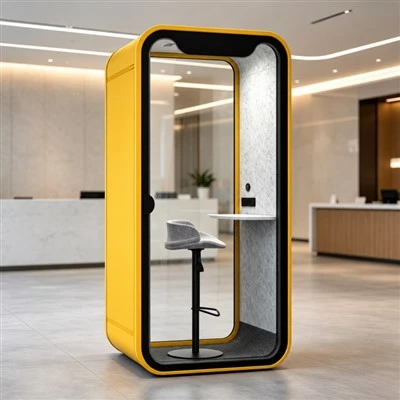
At the end of the day, if you’re dealing with noise—whether it’s a loud highway outside or a barking dog inside—you don’t have to put up with it. Our team can do a free site assessment, walk you through the best type of barrier for your space, and get you set up. No jargon, no hidden fees, just actual solutions that work. If you’re curious, reach out to our team to chat through your noise issues and pick the right barriers for you.
Noise Control References:
- Acoustical Society of America. (2021). “Noise Barrier Design and Performance for External and Internal Environments.” Journal of the Acoustical Society of America.
- National Institute for Occupational Safety and Health (NIOSH). (2019). “Guidelines for Internal Noise Control in Commercial and Residential Spaces.” NIOSH Publications.
- Portland State University, Transportation Research & Education Center. (2020). “Field Testing of Noise Barriers for Highway and Urban Noise Mitigation.” Research Report.
Nanjing Huajing Environmental Engineering Co., Ltd.
Nanjing Huajing Environmental Engineering Co., Ltd. is one of the most professional noise barriers manufacturers and suppliers in China, also supports custom service and OEM service. Please feel free to buy durable noise barriers at competitive price from our factory. Welcome to contact us for quotation.
Address: Room 518, No.12 Jinlan Road, Dongshan Subdistrict, Jiangning District, Nanjing City, Jiangsu Province, China
E-mail: contact@hualiving.cn
WebSite: https://www.hjacoustics.com/
