Hey there, let’s cut to the chase – if you’re deep in pharma manufacturing, you know that behind every pill, vaccine, or injectable dose is a whole lot more than just chemistry textbooks and lab flasks. When I started this industrial reactor supply gig 12 years ago, I thought these big metal tanks were just “scaled-up lab gear” – wow, was I wrong. Now I work with pharma teams every single day, and I can tell you: industrial reactors aren’t just boxes to mix stuff. They’re the make-or-break tool that turns a promising lab compound into something that actually gets to patients. Industrial Reactor

Let’s start with the basics, no jargon overload. First, what even are we talking about here? Industrial reactors for pharma are basically sealed, temperature-controlled, pressure-regulated tanks built to handle reactions that’d blow a small lab glassware to smithereens. They come in all shapes – glass-lined for sensitive compounds, stainless steel for tough processes, even jacketed ones that heat or cool exactly when you need it. But their superpower isn’t the build; it’s the precision. Pharma can’t mess around with off-spec batches, right? A 0.5°C swing or a little too much pressure can ruin a drug’s safety or efficacy – not to mention waste thousands of dollars and weeks of time.
Now, let’s walk through the key use cases that matter most to pharma folks. First up: API (Active Pharmaceutical Ingredient) synthesis. That’s the core of any drug, and it’s all reactor work. Take, say, a simple pain reliever – the lab makes a tiny batch, but to make enough for 100,000 patients, you need to scale that reaction without changing the chemistry. We’ve had clients come to us last year with a lab process that worked at 100mL, but when they scaled to 1000L, the reaction stopped forming the right compound. Why? No one accounted for heat buildup – lab flasks lose heat fast, but big reactors hold heat like a blanket. We retrofitted their reactor with a better cooling jacket, and they fixed the batch yield by 30%. That’s the real stuff – not just selling a tank, but solving their problem.
Next, fermentation for biologic drugs – think monoclonal antibodies, insulin, mRNA vaccines. These aren’t chemical reactions; they’re living cells (bacteria, yeast, even mammalian cells) doing their thing. Industrial reactors here are called “bioreactors” sometimes, but they’re still a type of industrial reactor. You can’t just mix these cells willy-nilly. They need constant oxygen flow, pH balanced to a tenth of a unit, and agitation slow enough not to tear the cells apart but fast enough to keep nutrients even. During the COVID surge, we had a team making mRNA vaccine components – their old reactor couldn’t handle the continuous oxygen bubbling needed, so we adjusted the spargers (those little bubble makers) and added real-time pH monitors. They went from making 5 batches a week to 18, and that meant more doses to people fast. That’s the reason I do this – not just sales, but keeping life-saving processes on track.
Then there’s purification and formulation, which people sometimes forget reactors do. It’s not just “make the stuff”; it’s turning that messy reaction soup into something you can put in a pill or injection. For example, crystallization – that’s when you turn the API into solid, pure crystals that are easy to filter. Industrial reactors control the cooling rate here, so crystals grow big enough to separate but not too big to break down later. One client made a cancer drug whose old crystallization step produced tiny crystals that stuck to filters, wasting 25% of their API. We switched them to a reactor with a controlled slow-cooling system, and the yield jump to 92%. That’s money they can put back into R&D for new drugs.
Wait, let’s talk about the non-negotiables pharma looks for, because that’s where we earn our keep. GMP compliance is huge – Good Manufacturing Practices, right? If your reactor doesn’t meet GMP, you can’t sell the drug. That means smooth surfaces so no bacteria can hide, easy access for cleaning, and documentation systems that track every little parameter. We don’t cut corners here – every reactor we supply comes with full validation paperwork, so their auditors can sign off without headaches. Also, batch consistency. Pharma can’t have one batch work and the next fail. Our reactors have programmable logic controllers (PLCs) that let you set exact temps, times, and pressures, so every batch is identical. No more guesswork – that’s what regulators like the FDA and EMA love.
Let me give you a quick real-world example that stuck with me. A few years back, a small biotech startup came to us with a prototype for a rare disease drug. They had a lab reaction that worked, but they couldn’t scale it because their old reactor leaked fumes, and the reaction needed strict inert gas (nitrogen) to prevent contamination. We built a custom 500L glass-lined reactor with a closed-loop gas system and a leak-testing panel. They scaled their batch, got FDA approval, and now that drug’s helping 10,000 people worldwide. That’s not just a sale – that’s part of something big.
Now, let’s clear up a couple myths I hear all the time. First: “Small lab reactors are fine for scaling.” Uh, no. When you go from 1L to 10,000L, surface area changes, heat transfer changes, mixing changes – it’s not just a “bigger version.” Industrial reactors are engineered specifically for that scale shift, which is why bad scaling causes 60% of pharma batch failures, per a 2022 industry report I read. Second: “All industrial reactors are the same.” Nope – a reactor for a chemo drug needs corrosion-resistant materials, one for a biologic needs gentle mixing, one for vaccine manufacturing needs sterile, single-use components. We don’t push a one-size-fits-all; we work with their process to build or tweak exactly what they need.
What’s next for pharma reactors, too? I’m deep in this, so I see the trends. Single-use reactors are blowing up – they’re pre-sterilized, so no cleaning between batches, which cuts turnaround time a ton. That’s perfect for startups that don’t want to invest in cleaning validation. Also, AI-integrated reactors – ones that learn from past batches and adjust parameters in real time. Last year, we helped a client test an AI reactor that caught a pH drift 10 minutes before it would’ve ruined the batch, saving $120k in materials. That’s the future, and we’re building reactors that can connect to their digital systems so it’s seamless.
Now, let’s get real with you. If you’re a pharma ops manager, a process engineer, or someone who’s tired of batch inconsistencies and compliance headaches, you don’t just need a reactor supplier – you need someone who gets your side of the table. We don’t sell parts; we solve problems. We’ve worked with big pharma and tiny biotechs, so we know the difference between needing a quick retrofit and building a full custom system. We help you with validation, with troubleshooting, with scaling without ruining your budget or your timeline.
Here’s the thing: industrial reactors are the backbone of pharma manufacturing, but most people outside the industry never see them. They’re the quiet tanks that turn chemistry into hope, that turn lab compounds into doses that heal. If you’re working on a drug, a vaccine, a biologic, or anything in between, don’t treat your reactor as an afterthought. It’s the tool that makes your process work.
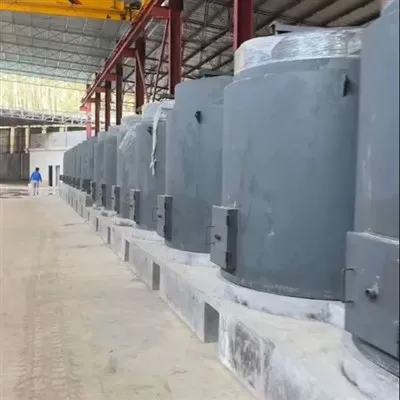
If you’re tired of dealing with reactors that can’t keep up with your GMP requirements, that cause batch failures, or that just don’t fit your scaling needs – let’s talk. We don’t do generic sales pitches, we dig into your process, figure out exactly what you need, and build or modify a reactor that works for you. No nonsense, no hidden fees, just a tool that helps you get life-saving products to patients faster.
PMMA Cracking Furnace References
- 2022 Pharma Manufacturing Scaling Challenges Report, International Society for Pharmaceutical Engineering (ISPE)
- GMP Guidelines for Industrial Reactor Validation, U.S. Food and Drug Administration (FDA), 2021
- Single-Use Bioreactor Market Trends, Pharmaceutical Technology Magazine, 2023
- Process Scale-Up Fundamentals for Industrial Reactors, John Wiley & Sons, 2020
Wuxi Quansheng Industrial Equipment Co., Ltd.
As one of the most professional industrial reactor manufacturers and suppliers in China, we have world-leading production equipment and strong manufacturing capabilities. Welcome to buy high quality industrial reactor for sale here from our factory. For price consultation, contact us.
Address: No.10, Fulaiqiao Road, Hudai Town, Binhu District, Wuxi City, Jiangsu Province, China
E-mail: 397293586@qq.com
WebSite: https://www.pmmatech.com/
