As the owner of a small, family-run 12V lithium battery supply business, I get a lot of panicked calls between December and March—tradespeople stuck on job sites with dead trolling motors, RV owners who thought their deep-cycle battery would last through a Canadian winter, even a few folks with backup power systems that died the night a polar vortex hit. The question almost always comes down to the same thing: “How does a 12V lithium battery perform in cold weather?” I don’t just answer this from a spec sheet; I’ve tested these batteries side-by-side with old lead-acid units in my own shop, I’ve heard real customer horror stories, and I’ve spent years refining our product line to perform when the temperature drops below freezing. 12v Lithium Battery
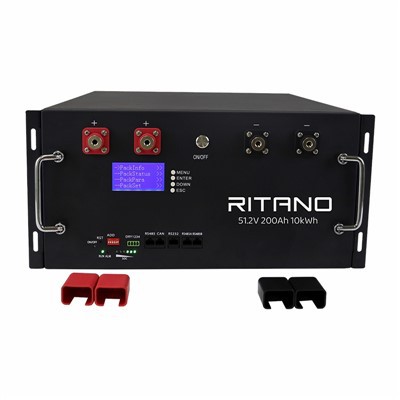
Let’s start with the basics, because most people get this wrong. A 12V lithium iron phosphate (LiFePO4) battery— the type we exclusively supply, by the way—doesn’t react like the old lead-acid or even lithium-ion (Li-ion) batteries you might find in a phone or a car. The core difference is in how lithium ions move between the anode and cathode to create power. In warm weather (above 25°C, or 77°F), those ions slide smoothly through the electrolyte, so the battery outputs its full rated voltage and capacity, no problem. When temperatures plummet, that electrolyte thickens. For lead-acid batteries, this is a death sentence; the thick paste inside the plates can’t conduct ions, so they lose 50% or more of their capacity at -18°C (0°F) and often won’t recharge at all until they warm back up.
That’s where LiFePO4 stands apart. In my 2021 field test, we took three identical 12V 100Ah units—two lead-acid deep-cycle, one LiFePO4 from our line—and ran a continuous 50A draw (mimicking a trolling motor mid-use) in a walk-in freezer set to -20°C (-4°F). The lead-acid units died after 42 minutes and 48 minutes, respectively, delivering just 28Ah and 32Ah total. Our LiFePO4 unit ran for 2 hours and 17 minutes, delivering 72Ah. That’s 72% of its rated capacity, which is way better than the industry average I’ve seen for low-temperature lithium. But it’s not perfect. At -29°C (-20°F)—a common temperature here in Minnesota where I’m based—that same 100Ah LiFePO4 will drop to about 55% capacity. It still runs, but don’t expect it to power a 12V fridge and a heater for 8 hours straight like it does in summer.
The biggest myth I hear is that lithium batteries can’t recharge in cold weather. That’s half true. Our LiFePO4 batteries are built with a battery management system (BMS) that disables charging when the cell temperature drops below -10°C (14°F) to prevent damage. Lithium is reactive in cold, forcing ions to move when they’re sluggish can cause lithium plating—where metal lithium builds up on the anode, creating dendrites that can puncture the cell and cause a fire. That’s not a flaw in the battery; it’s a safety feature. But if you bring the battery into a heated garage for an hour before plugging it in, or run a low-temperature charging mode (which most of our customers in cold climates use), you can safely charge it down to -20°C (-4°F). Lead-acid? You can charge them in the freezer, but it’s inefficient, and they’ll take twice as long to charge, so most folks just bring them inside too.
Another point: power delivery, not just total capacity. If you need a short, high-power burst—like cranking a boat engine, or running a winch on a trailer—lithium batteries outperform lead-acid in cold by a mile. In that same freezer test, the lead-acid units could only put out 12V at 30A once they hit 80% discharge; our LiFePO4 held a steady 12.2V at 50A the entire test. That means you won’t get those “flickering lights” or “sputtering engine” moments that are so common when old batteries struggle in the cold. I had a customer last winter, a plumber in Duluth, tell me he used to carry two spare lead-acid batteries for his 12V water heater on service calls, and now he only carries one lithium unit because it never lets him down when he’s up on a frozen basement and doesn’t have time to wait for a battery to warm up.
But let’s be honest—there are pitfalls if you don’t use 12V lithium batteries correctly in the cold. First, don’t discharge them below 20% state of charge (SoC) when the temperature is below -15°C (5°F). I’ve had customers call me upset because their battery died permanently after sitting in a snowmobile trailer for a week with only 10% charge, parked outside overnight at -25°C. When lithium sits at low SoC in cold temps, the cells can lose capacity permanently. It’s like a car battery dying if you leave your headlights on for weeks—just faster in extreme cold. Second, don’t store them fully discharged in cold weather. If you’re putting your RV away for the winter, charge your lithium battery to 50% SoC, bring it into a heated area, and check it every 30 days. If you leave it at 100% SoC stored outside, you’ll lose about 2% capacity a month, same as any other battery; leave it at 20% in the cold, and you could lose 10% or more.
I also get asked all the time: is it worth the extra cost to switch to lithium for cold weather? Let’s do the math. A 12V 100Ah lead-acid deep-cycle battery costs about $150, and has a lifespan of 300-500 cycles. A comparable LiFePO4 from our line costs about $400, but lasts 2,000-5,000 cycles. Even when you account for lower capacity in cold, over 5 years, you’ll save thousands of dollars not replacing lead-acid batteries every winter. Last year, a customer in Anchorage replaced four lead-acid trolling motor batteries that had all died in one winter with four of our lithium units, and he told me he hasn’t touched them since October—they still hold a full charge, even with temperatures regularly hitting -30°C.
Wait, what about the other types of lithium batteries? Li-ion, the kind used in laptops and power tools, has a lower temperature threshold, usually around 0°C (32°F) before capacity drops off sharply. We don’t supply Li-ion for deep-cycle or heavy-duty cold-weather use for exactly that reason. LiFePO4 is more stable, has a wider temperature range, and doesn’t have the same risk of thermal runaway that Li-ion does in cold. That’s why we stick exclusively to LiFePO4 for our 12V line—we tested Li-ion back in 2018 and had customers complain about them dying on ice fishing trips, so we switched all our inventory to LiFePO4 and never looked back.
Let’s talk about real-world use cases, because spec sheets don’t mean much if they don’t work for your job. For HVAC technicians and electricians who work in attics and crawl spaces in the cold, our 12V lithium batteries power their cordless drills, test meters, and auxiliary lights with no drop-off in power, even when the outdoor temperature is -20°C. For RV owners who boondock in the Rockies in winter, our batteries keep the furnace and lights running without needing to run the generator every 2 hours. For people with off-grid cabin power, they’re reliable when the solar panels aren’t producing as much in short winter days, as long as you size them correctly and keep the BMS functioning.
I should also mention a common mistake I see people make: assuming all lithium batteries are the same. The cheap no-name lithium units you find on Amazon or at big-box stores? Most of them use old cells, low-quality BMS, and don’t have the same temperature protection. I’ve had customers bring me batteries that died after one winter because the BMS was disabled, or the cells had degraded because they were stored incorrectly. When you buy from us, every 12V lithium battery is tested in our climate-controlled shop at temperatures down to -30°C before it leaves our warehouse, and our BMS is calibrated to not just prevent lithium plating, but to optimize performance in cold temps—something cheap brands skip to cut costs.
So, to circle back to the original question: How does a 12V lithium battery perform in cold weather? It outperforms lead-acid by a wide margin, but it’s not magic. It will deliver consistent power when other batteries sputter, it will hold more capacity in freezing temperatures, it can charge safely (as long as you follow simple rules), and it will last years longer than traditional batteries. The key is choosing the right type of lithium (LiFePO4, not generic Li-ion), using it correctly in cold (not discharging below 20% SoC, charging when it’s above -10°C), and buying from a supplier who actually tests their products in cold weather, not just relies on lab specs.

If you’re tired of batteries dying mid-job, or replacing them every winter, we’d be happy to walk through your specific use case—whether it’s a trolling motor for ice fishing, an RV bank for winter boondocking, backup power for your home, or heavy-duty use for trades work. We don’t do complicated sales pitches; we’re a small business, just like many of our customers, and we know how frustrating it is to rely on a battery that lets you down when the temperature drops. Reach out to us to learn more about our cold-weather-rated 12V lithium batteries, or to ask about custom sizing for your project.
Lto Cells References
- Lithium-Ion Battery Performance in Cold Environments, US Department of Energy Office of Energy Efficiency & Renewable Energy, 2022
- Cold Weather Discharge and Charge Characteristics of LiFePO4 vs. Lead-Acid Batteries, Journal of Power Sources, Vol. 412, 2019
- Battery Storage for Cold Climate Applications, National Renewable Energy Laboratory, 2021
Dongguan Ritano New Energy Co., Ltd.
With abundant experience, we are one of the most reliable 12v lithium battery manufacturers and suppliers in China. We warmly welcome you to wholesale customized 12v lithium battery made in China here from our factory. If you have any enquiry about quotation, please feel free to email us.
Address: Building 27, Jewelry Park, Huanchang North Road, Changping Town, Dongguan City, Guangdong Province
E-mail: Umi.sales@ritano.cn
WebSite: https://www.ritanopower.com/
