If you’ve ever walked past a refrigeration unit at a grocery store, a cold storage warehouse, or even a commercial HVAC system on a hot summer day, you’ve probably seen an air cooled evaporator at work. As someone who’s been supplying and refining these units for over a decade, I can tell you that most people only notice the fan blowing warm air out or the cold surface of the unit, but the real magic—and the biggest driver of how well that system works—happens inside the evaporator’s heat exchanger. Air Cooled Evaporators
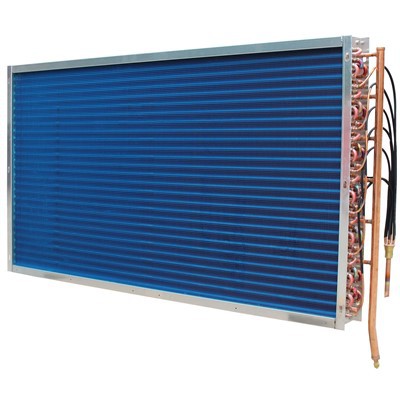
I get asked this question all the time by potential clients, and even some long-term partners: why does heat exchanger design matter so much for air cooled evaporators? The short answer is that the heat exchanger is the core component responsible for transferring heat from the air surrounding the evaporator to the refrigerant flowing through its tubes. But the details of how that exchanger is built—from tube diameter and fin spacing to material selection and flow path layout—don’t just tweak performance numbers; they determine everything from energy use and operating costs to how long the unit lasts and how well it handles seasonal or operational changes.
Let’s start with the basics. An air cooled evaporator’s job is simple, at least in theory: liquid refrigerant enters the unit at a low pressure, boils as it absorbs heat from the air blown over the heat exchanger tubes, and turns to vapor before returning to the compressor. The more efficiently that boiling and heat transfer happens, the less hard the compressor has to work. That efficiency hinges entirely on the heat exchanger’s design, and I’ve seen first-hand how a small adjustment in that design can change a client’s monthly utility bills by thousands of dollars.
Take tube diameter, for example. For years, many manufacturers used large-diameter copper tubes for their evaporator heat exchangers, arguing that they reduced pressure drop for the refrigerant. What they didn’t account for was the air side of the equation. Larger tubes create gaps between the tube and the air stream flowing past, which can lead to areas of stagnant air where heat transfer is almost zero. Smaller tubes, by contrast, bring the refrigerant closer to the air stream, creating more uniform heat transfer across the entire surface. A client of mine in the food processing industry switched from a standard large-tube evaporator to our smaller-diameter, high-density fin design two years ago. Their energy use for refrigeration dropped 18% in the first 12 months, and their evaporator defrost cycles—another big drain on efficiency—ran 20% less often. It sounds like a small change, but when you’re running a system 24/7, that adds up.
Fin spacing is another critical detail. Fins are the thin metal plates that wrap around the heat exchanger tubes, and they’re there for one main reason: to expand the surface area where heat transfer can happen. More surface area means more opportunities to pull heat from the air. But here’s the catch: too many fins, or fins that are spaced too closely together, and you get a problem we call fouling. Dust, lint, moisture, and even food residue can get trapped between tight fins, creating an insulating layer that blocks heat transfer. I had a client in a cold storage warehouse for produce reach out to me last year because their evaporator was running at half capacity, and they couldn’t figure out why. When we inspected it, we saw that the original manufacturer had installed fins spaced just 1.2 mm apart—ideal for dry, controlled environments, but terrible for a warehouse where fruit peel and dust circulate in the air. We redesigned the heat exchanger with 1.8 mm fin spacing, which was wide enough to let debris pass through during normal operation, while still retaining 90% of the surface area of the original tight-fin design. Their capacity bounced back immediately, and they’ve only had to do a deep clean once a quarter instead of twice a month. That’s the balance we strive for with every heat exchanger: maximize surface area without sacrificing airflow or resistance to fouling.
Material selection is also part of the heat exchanger design, and it’s often a trade-off between performance, cost, and durability. Copper has long been the go-to for refrigerant tubes because it has excellent thermal conductivity, which speeds up heat transfer. But for outdoor applications or environments with high humidity or corrosive air (like a coastal facility or a wastewater treatment plant), copper can corrode over time, leading to leaks and expensive repairs. That’s where we often turn to aluminum or microchannel heat exchangers, which are lighter and more corrosion-resistant, though their thermal conductivity is slightly lower. To compensate, we tweak the fin pattern and flow path to ensure that air moves evenly across the surface, making up for the small drop in material performance. I worked with a seafood distributor in Florida last year that had been using copper evaporators that would leak every 18 months due to salt air exposure. By switching them to our corrosion-resistant aluminum microchannel heat exchangers, their leak-related downtime dropped to zero, and their overall heat transfer efficiency stayed just as high as the original copper units. It’s not about choosing the “best” material—it’s about matching the heat exchanger design materials to the specific environment the evaporator will operate in.
Then there’s the flow path of the refrigerant through the heat exchanger. Most standard evaporators use a single-pass design, where refrigerant flows through all the tubes in one straight path. That’s easy to manufacture, but it means that refrigerant at the end of the path often leaves the heat exchanger still superheated, which is wasted heat that could have been captured. Multi-pass heat exchangers, by contrast, route refrigerant back and forth through the tubes, ensuring that almost all the liquid is boiled into vapor before it exits. This reduces the load on the compressor, which only needs to compress vapor, not a mix of liquid and vapor that wastes energy. A client in a grocery chain tested our multi-pass evaporators in one of their new stores last year, and found that their compressor run time was 12% lower than adjacent stores using single-pass units with the same cooling capacity. The upfront cost for a multi-pass design was a bit higher, but they recouped that in energy savings in less than 10 months.
But it’s not all about efficiency, either. Heat exchanger design also directly impacts the reliability and lifespan of air cooled evaporators, which is a huge concern for clients who can afford downtime. Defrost cycles, for example, are necessary for evaporators that cool air below freezing, because frost builds up on the heat exchanger surface and blocks airflow. The way heat is distributed across the heat exchanger determines how evenly frost forms. If part of the exchanger transfers heat well and another part is stagnant, frost will build unevenly, leading to longer defrost times and temperature spikes in the cold space. Our heat exchanger designs use uniform tube spacing and flow paths to ensure consistent temperature across the entire surface, which reduces frost formation and makes defrost cycles more efficient. I had a cold storage client that was losing $5,000 a day in spoiled product during defrost cycles because their old evaporator had uneven heat transfer. After switching to our redesigned heat exchanger, those temperature spikes dropped by 80%, and their product loss went down by 90%.
I also want to talk about something that’s become more important in recent years: compatibility with low-GWP refrigerants. As regulations around greenhouse gas emissions get stricter, more and more clients are switching to refrigerants with lower global warming potential, like R-32 or R-454B. These refrigerants operate at slightly higher pressures, and their heat transfer properties are a bit different than older refrigerants like R-22. That means the heat exchanger design can’t be a one-size-fits-all anymore. A heat exchanger that works well with R-22 might not efficiently transfer heat with R-454B if the tube size or flow path isn’t adjusted. We’ve invested a lot in testing our heat exchangers with these new refrigerants, running hundreds of simulations and real-world tests to make sure our evaporators deliver the same high efficiency and reliability no matter what refrigerant our clients use. A client in Europe told me last year that switching to our R-454B-compatible evaporators helped them avoid a $100,000 penalty for non-compliance with local emissions regulations, while also cutting their energy use by another 7%. That’s the kind of value that comes from designing heat exchangers with future needs in mind, not just current costs.
Of course, there are limits to what heat exchanger design can do. It’s not going to fix a poorly sized fan, or an improperly charged refrigerant system, or a unit installed in a space with no airflow. But when paired with good system design, a well-engineered heat exchanger turns a so-so evaporator into a high-performing, cost-efficient unit. I’ve seen clients cut their energy bills by 25%, reduce downtime by 40%, and extend the lifespan of their refrigeration systems by 5 years or more, all just by upgrading the heat exchanger in their existing air cooled evaporators.
What I’ve learned over the last 12 years in this business is that there’s no such thing as a “perfect” heat exchanger design. Every client has different needs: a grocery store needs a unit that handles frequent temperature swings from door openings, a cold storage warehouse needs durability against dust and debris, a coastal facility needs corrosion resistance. That’s why we work closely with each client to tailor the heat exchanger design to their specific application, not just sell them a standard off-the-shelf unit. We run performance simulations, talk through their operational challenges, and test the design in conditions as close to their real world as possible before we even build the unit.
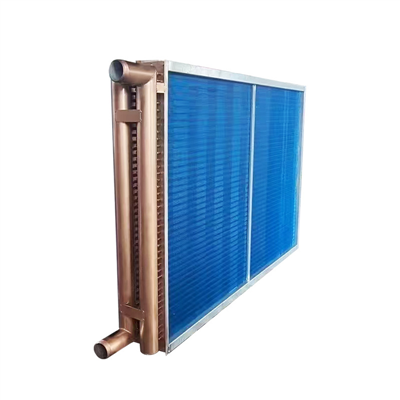
If you’re working with air cooled evaporators, whether you’re installing a new system or upgrading an old one, don’t overlook the heat exchanger. It’s the part that does the heavy lifting, and small design choices can make a huge difference in your operating costs and long-term reliability. If you’d like to discuss your specific application, we can work with you to design a heat exchanger that meets your needs, balances efficiency and durability, and helps you get the most out of your evaporator system. We’re here to help, and we look forward to hearing from you.
Finned Tube References
ASHRAE Handbook – HVAC Systems and Equipment. American Society of Heating, Refrigerating and Air-Conditioning Engineers, 2020.
Fundamentals of Heat Exchanger Design. Shah, Ramesh C., and Dusan P. Sekulic. John Wiley & Sons, 2003.
Refrigeration System Design and Optimization. Stoecker, Wilbert F. McGraw-Hill, 1998.
Xiangshui Derkang Refrigeration Equipment Co., Ltd.
Address: No. 2, Xiaojian Town Entrepreneurship Park, Xiangshui County
E-mail: 505745223@qq.com
WebSite: https://www.xsderk.com/
