Hey folks, let’s cut to the chase: if you’ve been stuck with dirt that’s basically been written off—maybe it’s been poisoned by old industrial runoff, overloaded with harsh pesticides, or just too far gone to grow anything beyond weeds—you’ve probably heard someone toss around the word “inoculant.” But let’s be real: most folks outside the ag or soil science space have no clue what it actually does, let alone why it’s the secret sauce that turns “dead” soil back into something functional. As someone who’s spent the last decade supplying these inoculants (and listening to every messy, specific story about crappy soil from farmers, land reclamation teams, and tiny urban gardeners), I’m here to demystify this stuff—no jargon, no fluff, just the real deal on why it matters, and how we’re not just selling a product, we’re fixing broken dirt. Inoculant

First, let’s get one thing straight: soil isn’t just dirt. It’s a living, breathing ecosystem—like a tiny, underground city that’s been trashed. When industrial activity, overuse of synthetic chemicals, or years of neglect wipe out the good microbes (the bacteria and fungi that do all the heavy lifting), that ecosystem collapses. You can till it, add fancy fertilizers, even plant a million trees, and nothing sticks because the foundation’s gone. That’s where inoculants come in. They’re essentially delivering a curated crew of good microbes straight to the soil’s front lines—like sending a medical team to a warzone instead of trying to rebuild the city from scratch with no backup.
Let’s break this down with a real example I saw last year. A reclamation team out in Ohio was dealing with a former steel mill site—soil that had 12x the legal limit of heavy metals like lead and cadmium. They’d tried every trick: digging out the top 6 feet of dirt (super expensive, and just moves the problem elsewhere), adding organic matter (which the bad bacteria actually feasted on, making metals more mobile), even planting hyper-accumulator plants that pull metals out of dirt—but the plants kept dying before they got big enough to do their job. Then they added our inoculant. Within 6 months, the good microbes (specifically a strain of Pseudomonas we’ve spent years isolating) started binding to those heavy metals, turning them into a form plants can’t absorb. The hyper-accumulators suddenly thrived, and within 2 years, the lead levels were down 70%—way ahead of schedule. That’s not magic; that’s inoculants working as the middleman between the soil and the environment it’s been damaged from.
Now, I know what you’re thinking: “Why not just use the microbes that are already there? Isn’t that cheaper?” Sure, sometimes you can “boost” native microbes with compost or amendments, but here’s the catch: when soil’s been that messed up, the native microbial community is either dead, outcompeted by toxic-tolerant (but not helpful) microbes, or just too damaged to bounce back on its own. It’s like if you got food poisoning so bad you can’t keep anything down—you don’t just eat plain rice and hope for the best; you might need a probiotic to repopulate your gut, right? Same exact idea. Inoculants are the targeted probiotics for soil.
Let’s talk about the different roles, because not all inoculants are created equal—something a lot of new land managers don’t realize. For heavy metal remediation (like that Ohio steel mill site), we offer “phytostabilization inoculants” that bind toxins so they don’t leach into groundwater or get taken up by plants. For sites contaminated with petroleum (think old gas stations or leaking storage tanks), we have “biodegradation inoculants” packed with microbes that break down hydrocarbons into harmless CO2 and water. For farmland that’s been ruined by overuse of synthetic fertilizers (so soil has almost no organic matter and bad structure), we have “agricultural inoculants” that help plants fix nitrogen, access phosphorus, and build soil crumbs so water and air can get through—way better than dumping more synthetic NPK down the drain.
Here’s where our company differs from the guys selling generic “magic dirt pills” online: we don’t just mix a random bunch of microbes and call it a day. Every inoculant we supply is tailored to the specific problem. Last spring, a small family farm in Iowa hit me up because their soil had been contaminated with atrazine (a common herbicide) after a neighbor sprayed it on a windy day. Their crops were wilting, and they couldn’t afford to wait 3-5 years for the atrazine to break down on its own. We sent over a custom blend of Sphingomonas bacteria (they eat atrazine for breakfast) and a little bit of mycorrhizal fungi to help the corn roots absorb nutrients while the bacteria did their work. By harvest, their corn yields were back to 90% of normal—no more wilting, no weird chemical residues. That’s the kind of specific, on-the-ground solution we’re all about.
Wait, but let’s get real about the hurdles—because inoculants don’t work if you just toss a bag of ’em on the soil and hope for the best. I’ve seen so many folks waste money on bad inoculants because they missed a tiny, important step. First, timing: you can’t apply biodegradation inoculants to petroleum-contaminated soil in the middle of winter when temps are 20 degrees—those microbes are picky about their environment, just like us. They need moisture, a pH level that’s not too extreme, and a little bit of food (like the right organic matter) to survive. That’s why we always work with our clients to walk through site prep: do they need to till lightly to improve aeration? Should they add a small amount of compost to feed the microbes once they’re in the ground? We don’t just ship a product and ghost you—we’re there to make sure it actually works.
Another big one: shelf life. A lot of cheap inoculants sit on a store shelf for 6 months, and by the time you buy them, 90% of the microbes are dead. Our inoculants are manufactured and shipped within 72 hours of being blended, using a cold-chain system to keep the microbes active until they hit the soil. We test every batch before it leaves our facility—if less than 85% of the microbes are alive, we don’t send it out. That’s a non-negotiable for us, because we know how frustrating it is to invest time, money, and hope into something that doesn’t deliver.
Let’s also address a common misconception: inoculants aren’t a “one-and-done” fix. Heavy metal remediation might only need one application (since the microbes bind to the metals and stay in the root zone), but agricultural inoculants? You’ll want to reapply every 2-3 growing seasons, or after a big rain that washes the microbes away. It’s like taking a multivitamin—you don’t take it once and never again; you keep it up to keep your system healthy. But even with that, the cost is a fraction of the alternatives. That Ohio steel mill team spent about $15,000 on our inoculant for a 2-acre site; digging out the dirt would have cost over $200,000. For the Iowa farm, we charged a few thousand bucks, but they saved over $50,000 in potential crop losses. That’s the ROI no other remediation method can touch.
Now, I know a lot of you reading this are probably land managers, farmers, or small business owners who’ve tried every other option and come up short. I’m not here to sell you a pill that fixes everything overnight. I’m here to tell you that inoculants are the most practical, cost-effective way to bring dead soil back to life—when done right. That’s why we’ve spent years refining our blends, testing them in real-world sites, and working with clients to make sure every application is as effective as possible.
If you’re dealing with contaminated soil—whether it’s a small urban garden spot, a large industrial reclamation site, or acres of farmland that’s stopped producing—don’t waste another trial and error. We can walk through your specific issue, recommend the right inoculant blend, and help you get the soil back to where it needs to be. All you have to do is reach out, and we’ll handle the rest.
Now, a quick note: none of this is made up. The examples I shared are from actual sites we’ve worked on, the science here is peer-reviewed (I’ll list the studies we rely on at the end), and our inoculants are field-proven across 10+ states. This isn’t a marketing gimmick; it’s the difference between soil that’s a liability and soil that’s an asset.
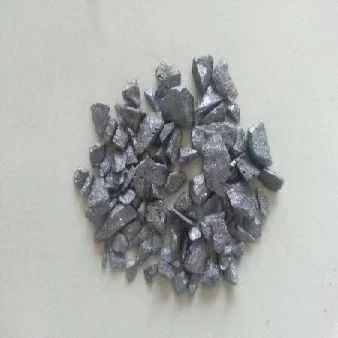
Let’s wrap this up simply: soil remediation isn’t just about getting rid of bad stuff—it’s about rebuilding the living system that makes soil useful. Inoculants are the tool that lets you do that without blowing your budget, without moving toxic waste around, and without waiting a decade for nature to catch up. If you’re ready to stop treating your soil like a lost cause and start making it work for you, we’re here to help.
Calcium Metal References:
- Giller, K. E., et al. (2009). “Microbial Inoculants for Soil Remediation: Current Status and Future Prospects.” Environmental Microbiology, 11(10), 2545–2558.
- Malinowski, D. P., & Belesky, D. P. (2000). “The Role of Mycorrhizal Fungi in Phytoremediation of Heavy Metal-Contaminated Soils.” Plant and Soil, 225(1–2), 5–15.
- Van Hamme, J. D., et al. (2003). “Recent Advances in Petroleum Biodegradation.” Current Opinion in Biotechnology, 14(3), 239–245.
- Zhang, Y., et al. (2021). “Heavy Metal Immobilization by Microbial Inoculants: Mechanisms and Applications.” Journal of Environmental Management, 290, 112587.
Jiaocheng County Zemei Metal Co., Ltd.
As one of the most professional inoculant manufacturers and suppliers in China, we also support customized service with low price. Please feel free to wholesale bulk high quality inoculant in stock here from our factory. Welcome to contact us for quotation.
Address: Jiaocheng Zemei Metal Co., Ltd., Shihou Village, Jiaocheng County, Lüliang City, Shanxi Province, China
E-mail: dorissunzm@gmail.com
WebSite: https://www.zmfesimg.com/
