Hey everyone, if you’ve ever dug into the world of abrasive blasting (like I do, every single day as a blast wheel supplier), you know it’s not just about cranking out a ton of grit and calling it a day. There’s a whole messy, science-driven relationship between the blast wheel you’re using and the type of abrasive you’re throwing at it—skip getting that right, and you’ll end up with wasted material, beat-up equipment, and a finish that’s nowhere close to what you need. I’ve seen it way too many times: a shop grabs whatever abrasive’s cheap that week, tosses it at their existing wheel, and wonders why their production rate drops and their maintenance bills skyrocket. Let’s break this down like we chat in the shop parking lot after a long shift, no fancy jargon or textbook fluff. Blast Wheel
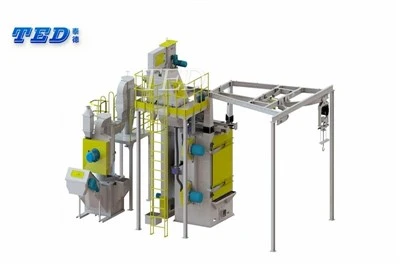
First, let’s cut the basic stuff short because I know you guys already know blast wheels (those centrifugal blasting units, not the weird demolition ones you see on TV). A blast wheel’s whole job is to accelerate abrasive to a consistent speed before it hits the part you’re cleaning, descaling, or prepping. It’s not like a pressure blaster that just shoves abrasive out with air—this is mechanical, spin-driven, so the wheel’s components (the blades, the impeller, the control cage, the blast house liner) are all working together to control that path. And here’s the kicker: every single abrasive type you use interacts differently with those moving parts, and if you mismatch ’em, you’re in for pain.
Let’s start with the most common abrasives and what they play nice (or not) with, because that’s what matters most for your shop. First up: steel shot and steel grit. These are the OG workhorses—super tough, angular or spherical depending on which variant you grab. Steel shot is round, steel grit is sharp, angular. Now, what wheel works best here? I’ll tell you straight: most standard blast wheels are built for these, but not all. Wait, why? Because steel abrasives are dense—way denser than, say, glass bead or aluminum oxide. They pack more punch when they hit, but they also create more wear and tear on the wheel’s blades and impeller. I remember a customer last year who used a cheap, thin-blade wheel with high-carbon steel grit. After three weeks, the blades were so worn down they were underperforming by 30%—they just couldn’t grip the dense grit enough to spin it to the right speed. Swapped to a wheel with thicker, hardened tool steel blades? Problem gone, and their wheel wear dropped by half. That’s not a fluke—it’s density matching wheel strength. Now, the shape of the abrasive matters here too: steel grit’s angular edges catch on those blade tips more than round shot, so a wheel with smoothly ground blades will reduce the amount of abrasive that gets nicked (and wasted) mid-spin. I always tell my customers: if you’re running steel shot/grit, go for a wheel with heat-treated blades—not just regular steel, because the dense abrasive will abrade weaker blades way faster.
Next, let’s talk about the “softer” abrasives—glass beads, plastic media, walnut shell grit. These are used for delicate jobs: aerospace parts that can’t handle heavy impact, antique furniture, food-grade equipment that needs zero contamination. Now, here’s where people mess up big time: they use the same blast wheel they run for steel on glass beads. Why’s that bad? Glass beads are lightweight—like, half the density of steel shot, sometimes less. Your standard blast wheel is calibrated to push dense stuff, right? If you toss light beads into a wheel built for steel, the impeller can’t get a consistent grip on them. They’ll spray unevenly, so you get patchy finishes, and you’re wasting 20-30% of the beads because they don’t make it to the blast house at full speed. A lot of new operators think “abrasive is abrasive” but nope—for light, low-density media, you need a wheel with a wider control cage and smaller blade spacing. Wait, why? The wider control cage lets the lighter beads feed evenly into the path of the blades, and smaller spacing means each blade catches more of the small, light stuff so it accelerates correctly. I had a small aircraft shop come to me last quarter—they’d been using a 10-year-old wheel for steel to blast turbine blades, and their bead finish was all streaky, plus they were going through beads like water. Swapped to our lightweight-media optimized wheel, and their bead usage dropped by 25% while their finish quality went up. Game changer. Also, these softer abrasives are way less abrasive to the wheel itself, so you don’t need super hardened blades here—saves you money, since you can use a lighter, more budget-friendly wheel build for delicate media.
Then there’s the middle ground—aluminum oxide, copper slag, garnet. These are go-tos for heavy-duty prep: removing rust from steel beams, surface prep for paint or coating that needs a super tough anchor pattern. Their density’s between steel and glass beads, so they’re tricky because they’re angular too—super sharp edges. I’ll be real: angular, medium-density abrasives chew through wheel parts faster than round stuff, because those edges catch and grind at the blades. So for garnet or aluminum oxide, you need a wheel that’s got wear-resistant liners, especially around the blast house and the control cage. Another customer story: a shipyard was using a standard wheel with garnet, and their blast house liner was gone in two months. We sold them a wheel with replaceable, cast manganese liners—now that liner’s lasted eight months, and their production rate actually went up because they didn’t have to shut down to replace parts as often. Also, with angular media, blade speed matters more than with round stuff—too slow, and the abrasive doesn’t hit hard enough; too fast, and the angular edges just chip away at the blades. Our wheels have variable speed settings now (not the fixed old ones) that let you dial that in for garnet vs. copper slag, which is a huge win.
Wait, let’s talk about the big mistake I see all the time: changing abrasive without adjusting wheel settings. Yeah, I get it—you might get a deal on a different grit, or switch jobs, but don’t just dump the new abrasive in and hit the go button. I had a guy last year who switched from steel shot to plastic media for a job cleaning old machinery, and he didn’t touch his wheel’s control cage. The plastic media was too light, so half of it was bouncing back out of the blast wheel instead of shooting at the part. He lost half a day of production because he didn’t think to tweak that one setting. So it’s not just the wheel’s build—it’s how you match its settings to the abrasive. For dense, angular abrasives, you widen the control cage opening to let more abrasive in at once, for light stuff you narrow it to keep the particles concentrated so they catch the blades properly. That’s the part most operators skip, and it’s the reason they blame the abrasive when it’s actually the wheel-abrasive mismatch.
Also, let’s touch on recyclability, because that’s a huge cost saver for everyone. If your wheel and abrasive are matched right, you get more recycle cycles out of the abrasive, which means less frequent buying and less waste. Steel shot runs 50-100 cycles in a well-matched wheel, but if you put it in the wrong wheel, you’re lucky to get 10 cycles before the shot gets too worn (round shot turns lumpy and less effective) and you have to throw it out. I worked with a construction company that was spending $12k a month on steel abrasive because their old wheel was causing so much waste. Switched to a wheel built for steel shot, and their monthly abrasive cost dropped by $4k. That’s not chump change— that’s a whole new part for their shop, or a raise for two guys, right there.
Now, I know some of you are thinking “I just need a wheel that works no matter what abrasive I use, don’t overcomplicate it.” But here’s the thing: there is no one-size-fits-all blast wheel. You can get a multi-use wheel, but it’ll never perform as well as a wheel optimized for your primary abrasive. If you’re running steel 90% of the time, invest in a wheel that’s built for dense, high-impact media—you’ll save money on maintenance and get better throughput. If you do a lot of delicate work, add a lightweight-media wheel to your lineup (or get a wheel with adjustable control cages, which we offer) instead of forcing steel-focused hardware to work with soft stuff.
Let’s wrap this up with a quick checklist I keep in my back pocket for every customer: 1) What’s your primary abrasive’s density and shape? (Round vs. angular is non-negotiable here) 2) What’s the maximum impact force you need for your parts? 3) How much downtime can you afford for wheel repairs? Answer those three, and picking a wheel that pairs with your abrasive becomes way easier than guessing.
I’ve been selling blast wheels for over 12 years, and I’ll tell you this: the best blasting jobs aren’t the ones with the newest, shiniest equipment. They’re the ones where the wheel and the abrasive are on the same page. Too many shops treat these two as separate pieces of the puzzle, but they’re two halves of the same whole—mess up one, and the whole thing breaks.
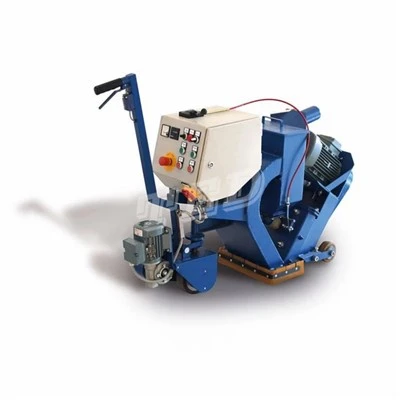
If you’re tired of paying too much for abrasive, dealing with constant wheel breakdowns, or getting finishes that just don’t cut it, let’s chat. I’ve helped hundreds of shops match their wheel to their abrasive, and I can help yours too. No pushy sales pitches, just straight talk about what’ll work for your specific jobs. Reach out to us to talk through your setup—we’ll figure out the right wheel-abrasive combo for you, no fine print or hidden fees.
Clay Sand Line References:
- ASTM International. (2021). Standard Guide for Abrasive Blasting Media and Equipment. ASTM E1174-21.
- The Society for Surface finishing Professionals. (2022). Blast Wheel Design and Abrasive Compatibility Handbook. SSP Publishing.
- Metal Treating Institute. (2020). Optimizing Centrifugal Blasting Systems for Different Abrasive Types. MTI Technical Bulletin 412.
Qingdao Taide Machinery Co., Ltd.
We are one of the most experienced blast wheel manufacturers and suppliers in China. With a professional production team, we offer a wide range of products with superior quality. Please rest assured to wholesale durable blast wheel for sale here from our factory.
Address: No.383, Zhaizi Mountain, Huangdao District, Qingdao Shandong China.
E-mail: krystal@qdtedmachine.com
WebSite: https://www.qdted-group.com/
