Let me start with a quick truth: for years, when I answered calls from customers asking about flanged drum capacity, I didn’t reach for a textbook first—I reached for my old notebook. The one I’ve had since I opened my doors as a flanged drum supplier in 2012, scrawled with notes from every project, every late-night call from a warehouse manager panicking about fitting 55 gallons of industrial sealant, every time I had to explain why “typical” is never just one number. If you’ve ever ordered these drums for a manufacturing line, a chemical lab, a recycling operation, or even a food processing plant, you know you don’t want a drum that’s too small (you’ll spill, slow your line, risk contamination) or too big (you’ll waste space, overpay for shipping, struggle to maneuver it). That’s why today, I’m breaking down what a flanged drum’s capacity really means, the science behind the numbers, and what we, as a supplier, do to make sure you get exactly what you need—no guesswork, no wrong sizing. Flanged Drum

First, let’s get the basics straight: what even is a flanged drum? For anyone new, it’s that heavy-duty steel or plastic container with a flat, reinforced rim (the flange) around the top opening, designed to fit a tight-sealing lid, a gasket, and often a locking ring to keep contents secure. Unlike standard open-top drums, which have a curved rim that’s easier to bend or seal improperly, the flange gives us a consistent, standardized connection point—critical for chemicals that need long-term containment, hazardous materials that can’t leak, or products that get stacked 10 high in a warehouse. The capacity is the maximum volume it can hold, but here’s the catch: it’s not just the internal size that matters. You have to differentiate between nominal capacity (the number you see on spec sheets) and working capacity (the actual amount you should safely put in, per industry standards). That’s a mistake I see customers make all the time, and it’s one of the first things I cover when I walk someone through their options.
Let’s start with the most common type: steel flanged drums. These are the workhorses—used for everything from storing lubricants to transporting industrial solvents. When someone says “typical steel flanged drum,” the nominal capacity is almost always 55 gallons (208 liters). But why is that the standard? Back in the 1950s, the U.S. Department of Transportation (DOT) and the International Organization for Standardization (ISO) settled on 55 gallons as a uniform size for industrial shipping, because it fit on standard pallet dimensions (48”x40”, for anyone who works with pallets) without wasting space. That’s why almost every steel flanged drum you see has a nominal capacity of 55 gallons. But here’s the working capacity: it’s not 55 gallons. DOT and ISO require a “headspace” for almost all bulk containers—about 5% of the nominal volume—for thermal expansion. If you’re storing or transporting liquids that expand when they get warm (like gasoline, chemicals, or even water in cold climates? Wait, no—water expands when frozen, but most of the time, thermal expansion is from heat), overfilling a drum can cause the lid to blow off, the seam to split, or the flange to bend. For a 55-gallon steel flanged drum, that means your safe working capacity is about 52.5 gallons (200 liters). I learned this the hard way early on. In 2013, a customer in the paint industry ordered 100 steel flanged drums, told us they could fill them to the rim, and when their forklift driver dropped a drum during loading, the lid blew off, covering three pallets of paint and delaying their shipment by two weeks. We replaced the drums at no cost, but I added a line to every spec sheet we send now: “Working capacity = nominal capacity minus 5% for thermal expansion. Never fill beyond this.” That’s not just a rule—it’s how we take care of our customers, not just sell them a drum.
Now, not all steel flanged drums are 55 gallons. We also supply smaller sizes, like 15-gallon (57-liter) drums for small batches of chemicals or lab use, 30-gallon (114-liter) drums for parts cleaning solutions, and even 85-gallon (322-liter) drums for bulk liquid storage. But the “typical” one people ask about is still 55 gallons. What about the dimensions? Let’s get specific, because capacity doesn’t exist in a vacuum. A standard 55-gallon steel flanged drum has an internal diameter of 22.5 inches and an internal height of 33.5 inches. When you calculate the volume of a cylinder (πr²h), that gives you roughly 55 gallons, right? But wait—thicker steel is common for heavy-duty drums. If a drum has a thicker steel wall (16 gauge vs. 18 gauge, for example), the internal diameter is slightly smaller, so the actual volume is a touch less, but the nominal capacity remains the same because that’s the industry standard. That’s why when you’re a supplier, you have to be transparent about gauge thickness affecting capacity—especially for customers that need precise volumes for blending or billing. For example, a food manufacturer blending ingredients by volume might notice a small difference if they use a 16-gauge drum vs. an 18-gauge one, so we always ask questions like, “What are you putting in this? Do you need a precise fill volume?” before we recommend a drum.
Now, plastic flanged drums—there’s a big misconception that these are just flimsy alternatives to steel, but they’re a huge part of our business, especially for food-grade applications and corrosive materials like acids or cleaning solutions. The typical nominal capacity here is also 55 gallons, but plastic drums have different dimensions and capacity rules. Most HDPE (high-density polyethylene) flanged drums have an internal diameter of 23 inches and a height of 35 inches? Wait no, let me get that right—wait, no, to fit the same pallets, they’re actually slightly wider and shorter than steel drums, so the volume still comes out to 55 gallons. The working capacity is the same, too—5% headspace—because plastic drums can also bulge if overfilled, especially when being stacked. I once had a customer in the agriculture industry use plastic drums for fertilizer liquid, and they overfilled 20 drums for a summer shipment. By the time the trucks arrived, the drums had bulged so much they couldn’t fit on the pallets, and they had to repack all of them at a cost of thousands of dollars. That’s when I started including a free capacity guide with every order, so customers can calculate exactly how much they should be putting in, regardless of drum material.
Wait, are there any exceptions to the “typical” 55-gallon rule? Absolutely. For example, in Europe, the standard is 200 liters (which is almost exactly 55 gallons, so that’s why they cross over), but some European suppliers use 60-gallon drums. But in North America, the typical flanged drum is 55 gallons nominal, 52.5 gallons working. For hazardous materials, DOT regulations actually require even more headspace—up to 7% for some flammable liquids, so working capacity drops to around 51 gallons for those drums. That’s a critical detail that many customers don’t know, and it’s why we never skip the regulatory documentation that comes with every flanged drum we ship. We don’t just send a drum—we send the proof that it’s been tested to meet DOT, ISO, and food-grade standards, depending on what the customer needs.
Another factor that affects capacity: the flange itself. Wait, the flange is the reinforced rim, right? How does that affect volume? Let’s think: when you pour a liquid into a drum, the flange sits at the top, so the area just below the flange is part of the internal volume. But if the flange is too thick, it takes up a little bit of space inside the opening—about 0.25 inches of height, which translates to less than a gallon of volume in a 55-gallon drum. That’s why we use uniform flange thickness across our standard lines: 2 inches for steel drums, 1.75 inches for plastic, to keep the internal volume consistent and avoid confusion. I’ve seen generic drums from big box suppliers with flanges that are thinner, which can bend if you’re putting heavy lids on, or thicker, which cuts into capacity—so as a supplier, we prioritize consistent, tested flanges that balance strength and usable volume.
Now, why does all this matter? Let’s put it in real terms for a customer. If you’re a warehouse manager ordering 100 flanged drums for a new cleaning solvent, ordering the wrong capacity can cost you: overpaying for drums that are too big, wasting storage space, facing fines for overfilling hazardous materials, or dealing with leaks that damage your product and your facility. I had a customer last year who ordered 150 generic flanged drums from a non-specialty supplier, thinking all 55-gallon drums are the same. When they tried to fill them with their specialty hydraulic fluid, they found the working capacity was only 50 gallons, not 52.5, so they had to go back and reorder 50 more drums mid-production, delaying their order to their own customer by three days and costing them $12,000 in rush fees. That’s the kind of problem we avoid at our business. We don’t just ship drums—we take the time to ask: What’s the product? Is it flammable? Food-grade? Hazardous? How will you transport or store it? That’s how we recommend the right capacity, the right material, and the right flange type for their specific use case.
Wait, what about smaller typical capacities for specialty uses? Like, for small parts or lab samples, 5-gallon flanged drums are common—nominal capacity 5 gallons, working 4.75 gallons. These use cases might have different flange designs, too: some have two bungs for pouring or a spigot, so their internal capacity is adjusted slightly to fit those, without changing the nominal number. For recycling operations, we often get requests for 30-gallon flanged drums for scrap metal, because they’re heavy-duty, stackable, and hold the right amount without being too bulky. But again, when someone asks “typical flanged drum,” 9 times out of 10, they mean the 55-gallon steel or HDPE drum.
Let’s also talk about how capacity is tested, because that’s where the science comes in. Every flanged drum we sell is tested to verify its capacity under industry standards. For steel drums, we fill them with water at 68 degrees Fahrenheit (the standard test temperature) and measure the volume, making sure it meets the nominal capacity within a 0.5% tolerance. That’s tight, because for customers that measure by volume for billing or blending, that half a gallon can add up over 100 drums. For HDPE drums, we test at a slightly higher temperature, because plastic expands more in heat—so when they’re in a warehouse in the desert, their actual capacity is a touch less than when they’re in our warehouse in Ohio, which is why we list working capacities at standard conditions.
Now, I know there’s a lot to unpack here, but the bottom line is: there’s no one-size-fits-all answer to “what’s the capacity of a typical flanged drum.” But for the most common application, the 55-gallon steel or HDPE flanged drum, the nominal capacity is 55 gallons (208 liters), and the safe working capacity is approximately 52.5 gallons (200 liters), with adjustments for regulatory requirements, material type, and specialty designs. That’s the number I’ve used in my notebook for the last 11 years, and it’s the number I verify with every customer that calls, because I’d rather answer a million questions than have someone show up with a drum that doesn’t work for them.
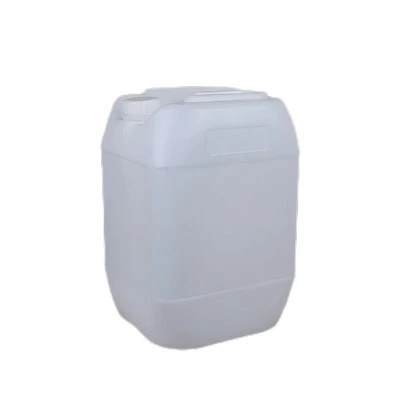
If you’re in the market for flanged drums—whether you need standard 55-gallon for storage, specialty sizes for hazardous materials, food-grade options for ingredients, or anything in between—we’re here to help. We don’t just send you a spec sheet and hope you order the right thing. We walk you through capacity calculations, regulatory requirements, material options, and even help you figure out how many drums you need for your specific volume. We’ve worked with manufacturing plants, chemical companies, food processors, agriculture operations, and more, so we know the ins and outs of every industry that relies on flanged drums. Don’t waste time, money, or product on generic drums that don’t fit your needs. Reach out to us today to discuss your requirements, and we’ll make sure you get exactly the right flanged drums for your business.
IBC Cap References
Department of Transportation (DOT) 49 CFR 173.201: Packagings for Hazardous Materials
International Organization for Standardization (ISO) 15750-1: Series 1 freight containers—Specification and testing—Part 1: General cargo containers for general purposes
Plastic Drum and Container Institute (PDCI) Standards for HDPE Industrial Containers
Steel Drum Manufacturers Association (SDMA) Steel Flanged Drum Specifications and Capacity Guidelines
Jiangsu Xinhuasheng Packaging New Materials Co., Ltd.
Jiangsu Xinhuasheng Packaging New Materials Co., Ltd. is one of the most professional flanged drum manufacturers and suppliers in China, featured by quality products and low price. Please rest assured to wholesale durable flanged drum in stock here and get quotation from our factory. Customized orders are welcome.
Address: No. 5 Tieta Road, Industrial Park, Guyang Town, Dantu District, Zhenjiang City, Jiangsu Province, China.
E-mail: manager@jsxhsgs.com
WebSite: https://www.xhsibc.com/
