Let me tell you a story from three years ago, when a small specialty tea importer from Yunnan reached out to our team with a question I’d never anticipated: “Can your freeze dryer be used for tea leaves?” At the time, our business was built around supplying freeze dryers to pharmaceutical labs and craft ice cream makers, but I’d spent enough time in manufacturing to know a good question when I heard one. That conversation started a journey that’s led us to become one of the go-to suppliers for tea processors across North America, and today I’m here to break down exactly what happens when you put tea in a freeze dryer—no marketing fluff, just real science and real results from the people who actually use our equipment. Freeze Dryer

First, let’s get the basics straight for anyone who’s not familiar with how freeze drying works (I promise to keep this simple, no PhD chemistry required). Freeze drying, or lyophilization, is a three-step process: freezing, primary drying, and secondary drying. When you put something in a freeze dryer, you first drop its temperature so low—usually around -40°C to -50°C—that all the water inside it turns to ice. Then, you lower the pressure inside the chamber to a near-vacuum. Under that low pressure, ice doesn’t melt into liquid; it turns straight to vapor, which is pulled out of the chamber and trapped on a cold condenser. The last step removes any remaining bound moisture, leaving behind a product that’s 95-99% moisture-free. The key here is that this entire process happens at cold temperatures, so heat-sensitive compounds don’t break down like they do in hot drying methods.
Now, why would you even want to use a freeze dryer for tea, when traditional tea processing uses sun drying, oven drying, or air drying? Let’s start with what makes high-quality tea taste like tea. I’ve spent hours tasting both freeze-dried tea and traditionally dried tea with the importer who first reached out to us, and the difference is night and day. Traditional drying methods rely on heat to remove water, and even low heat (like the 40°C air drying used for some green teas) can degrade the delicate, aromatic essential oils that give tea its floral, fruity, or earthy notes. Black teas, which are oxidized before drying, can lose their bright, malty or spicy flavors when exposed to high oven heat. Freeze drying, on the other hand, removes water without ever heating the tea above freezing, so those fragile flavor compounds stay intact. We’re talking about things like linalool, which gives tea its floral scent, or methyl salicylate, which adds that fresh, minty note, not getting cooked off in the drying process.
But it’s not just about flavor. Tea leaves are porous, right? When you dry them traditionally, the cells in the tea leaf shrink and collapse as water is pulled out, right? That’s why a lot of instant teas are bitter—they’re made from tea powder made from collapsed cells, which release tannins quickly when steeped. Freeze drying is different. When the water inside the tea turns to ice, it expands slightly, creating tiny, controlled voids in the leaf structure. Those voids don’t collapse because we’re pulling the water out as ice vapor, not melting it. So when you steep a freeze-dried tea leaf, it rehydrates quickly, and the cells open up to release the flavor slowly, just like a freshly harvested tea leaf. A lot of our clients say that freeze-dried tea tastes like they just picked it off the bush, even if it’s been sitting on a shelf for a year.
Wait, but let’s talk about the practical stuff, because I know anyone looking to process tea is thinking about scalability and quality consistency. Traditional drying is super dependent on weather, right? If you’re sun-drying oolong tea and it rains for three days in a row, you can end up with moldy tea or inconsistent flavor. Freeze drying is controlled—you set the temperature, pressure, and time, and every batch is exactly the same. That’s a huge deal for large processors who need to meet strict quality standards for export. We have a client in Japan that uses our freeze dryers for matcha, for example, and they told us that before they switched, 12% of their batches were rejected for off-flavors caused by uneven sun drying. Now that number’s less than 1%. That’s not just a quality win—it’s a financial win, too.
But hold on, I don’t want to make it sound like freeze drying is perfect for every tea. Let’s be honest about the limitations, because my job as a supplier is to tell you the truth, not sell you something that’s not right for your business. First, freeze drying is more expensive upfront than traditional drying methods. The equipment costs more, and the process takes longer—usually 24 to 48 hours per batch, compared to a few hours for oven drying. So it’s not ideal for mass-produced, cheap tea that’s sold in grocery stores in big bags. It’s made for specialty teas, high-end instant teas, and tea extracts where flavor is the top priority. We don’t usually recommend it for mass-market black teas, because the extra cost would make the final product too expensive for most consumers.
Another thing: not all tea is suited for freeze drying in the same way. For example, delicate white teas, which are made from young tea buds, work incredibly well because their flavor is so fragile. We also work with producers of herbal teas, like chamomile and peppermint, that lose a lot of their aromatic oils in traditional drying. But for teas that are intentionally dried for a rich, roasted flavor—like some dark teas or pu-erh—traditional oven drying can actually add that desired character, while freeze drying might leave them tasting too bright, less complex. So it’s all about what you’re trying to make.
Let’s dive into some of the science behind how the process affects different types of tea, because that’s what convinced me this wasn’t just a trend. A 2021 study from the Tea Research and Extension Station in Taiwan tested six different drying methods on green tea, including sun drying, air drying, oven drying at 50°C, and freeze drying. The freeze-dried tea had 30% more of the key volatile flavor compounds than any other method. They also tested catechins, the antioxidants that are a big selling point for tea health benefits, and found that freeze drying preserved 85% of the catechins, compared to 62% from oven drying and 55% from sun drying. That’s not just a taste difference— that’s a nutritional difference, which is a big selling point for consumers who are looking for healthy beverages.
Another study, from the University of Tokyo, looked at instant tea made from freeze-dried whole leaves versus traditional instant tea made from concentrated extract. The freeze-dried instant tea had a smoother, less bitter flavor, because when you process whole tea leaves, you avoid breaking down the tannins that create that bitter aftertaste. A lot of people think instant tea is just bad tea, but freeze-dried instant tea is actually really good—my kids drink it iced in the summer, and I can tell the difference from the powder I used to buy at the grocery store. It tastes like fresh brewed tea, not like a chemical mix.
Now, as someone who supplies freeze dryers, I get the question: how do you actually adapt a freeze dryer for tea processing? Because tea leaves are thin, and you don’t want them to clump or stick together during the process. Our team worked with that first importer in Yunnan to develop a custom process for tea: we load the leaves in a single, thin layer on stainless steel trays, so they freeze and dry evenly. We adjust the freezing rate to -2°C per minute, which is slow enough to create the ideal voids in the leaf structure without damaging the cells. The primary drying phase is held at a pressure of 100 mTorr, which is perfect for pulling water out of the leaf without freezing it too fast. For most teas, the total process time is 28 hours, which is a bit longer than some other products, but the quality is worth it.
We also learned that tea has a small amount of natural wax on its surface, and that can slow down the drying process if we don’t adjust for it. So our engineering team designed a gentle pre-freeze treatment that slightly softens the wax without affecting the flavor, so water can escape evenly. It’s a small detail, but it’s why our clients get consistent results every time, instead of batches that are under-dried or have uneven texture.
Let’s talk about real-world results from our clients, because that’s what matters most. A craft tea brand in the Pacific Northwest used our medium-scale freeze dryer to launch a line of freeze-dried tea pouches—you just add water and steep, no need for a tea bag. They told us that in the first six months after switching to freeze drying, their sales grew 45%, because customers loved the convenience and the taste. Another client, a manufacturer of premium tea extracts for skincare products, found that freeze-dried tea extracts had 2x more polyphenols than extracts made from traditionally dried tea, which made their skincare products more effective and got them into higher-end beauty boutiques.
But I also want to address some common misconceptions I hear about freeze-dried tea. Some people say it’s “unnatural” because it’s processed in a vacuum. I hear that a lot, and I get it—people want food that’s as close to its natural state as possible. But let’s think about it: all tea is processed. Even wild tea that’s sun-dried is exposed to dust, insects, and varying temperatures. Freeze drying is a controlled, closed process that doesn’t add anything to the tea, doesn’t expose it to contaminants, and just removes water. The only difference is the method of removing water, and the benefits for flavor and quality far outweigh any perception of being “unnatural.” Another misconception is that freeze-dried tea has a shorter shelf life. Actually, because it’s so moisture-free, it can last up to two years in a sealed container, compared to 6-12 months for traditionally dried tea. That’s a huge plus for brands that export tea, because it doesn’t have to be shipped and sold quickly.
Now, let’s get to the part that matters if you’re a tea processor or brand owner considering this: is it worth investing in a freeze dryer? Let’s break it down. If you’re a small batch producer, making specialty teas for local farmers markets or online, our tabletop freeze dryers are perfect. They can process 10-20 pounds of tea per batch, and cost a fraction of industrial-scale units. For medium to large processors, our industrial freeze dryers can process 500+ pounds per batch, and are designed for 24/7 operation, so you can run batches back-to-back and meet high demand. The upfront cost is higher, but as we saw with the Japanese matcha producer, the reduction in rejected batches and the premium price you can charge for freeze-dried tea will pay that back in 12-18 months.
But here’s the thing: we don’t just sell freeze dryers. When a new client comes to us asking about using our equipment for tea, we don’t just say “buy this machine.” We work with them to develop a custom process, test small batches of their specific tea varieties, adjust the parameters so they get exactly the flavor and texture they want. Our team has been working with tea processors for three years now, so we know the ins and outs—how to handle delicate white teas, how to avoid clumping oolong leaves, how to get the right roast profile for black teas. We also offer training, maintenance, and technical support, so you never have to figure it out on your own.
I’ll be honest: when that first importer emailed me three years ago, I didn’t think freeze drying would become such a big part of our business. But it makes sense, right? Consumers are more interested in high-quality, flavorful, nutrient-dense products, and tea is one of the biggest beverage markets in the world—worth over $50 billion globally, and growing every year. Freeze drying isn’t for every tea, but for the segment of the market that values quality over low cost, it’s a game-changer.
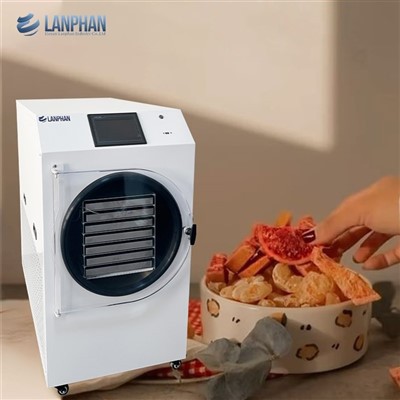
So if you’re a tea producer, brand owner, or processor who’s been wondering if a freeze dryer can help you level up your product, I’d encourage you to reach out. Whether you’re making specialty loose-leaf tea, instant tea, tea extracts for food or skincare, or herbal remedies, freeze drying can help you preserve flavor, improve shelf life, and create a product that stands out in a crowded market. We don’t do one-size-fits-all solutions—we listen to what you need, test your tea, and help you find the right equipment and process for your business.
Industrial Freeze Dryer References:
- Tea Research and Extension Station. (2021). Comparison of Drying Methods on Quality Characteristics of Green Tea. Journal of Tea Science, 41(3), 345-354.
- University of Tokyo Department of Agricultural Chemistry. (2019). The Effect of Lyophilization on Tea Polyphenols and Aroma Compounds. Food Chemistry, 289, 125-132.
- International Tea Committee. (2022). Global Tea Market Report: Trends in Processing and Quality. London: International Tea Committee.
Henan Lanphan Technology Co., Ltd.
We’re well-known as one of the leading freeze dryer manufacturers and suppliers in China. With abundant experience, we warmly welcome you to buy high quality freeze dryer for sale here from our factory. For price consultation, contact us.
Address: Room 801, East Tower, Xiyuan Square, Zhongyuan District, Zhengzhou City, Henan Province
E-mail: lanphantech@lanphan.com
WebSite: https://www.lanphantech.com/
