Hey there! I’m a supplier of healthcare service robots, and I’ve been getting a lot of questions lately about whether these robots can work in high – traffic areas. So, I thought I’d share my thoughts on this topic. Healthcare Service Robots
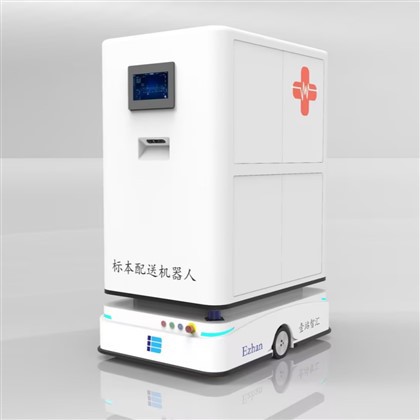
First off, let’s talk about what we mean by high – traffic areas in a healthcare setting. These are places like hospital waiting rooms, large clinics, and busy long – term care facilities. There are always a ton of people coming and going, patients, visitors, and medical staff moving around all the time.
One of the biggest concerns when it comes to using healthcare service robots in high – traffic areas is safety. You know, we don’t want these robots to be crashing into people or causing any kind of chaos. Well, modern healthcare service robots are equipped with some pretty advanced safety features. They’ve got sensors all over them, like laser scanners and cameras. These sensors can detect people and objects in their path from a good distance away. So, if a person suddenly steps in front of the robot, it can quickly stop or change its route to avoid a collision.
For example, our robots use a technology called LiDAR (Light Detection and Ranging). It sends out laser beams and measures how long it takes for the light to bounce back. This gives the robot a 3D map of its surroundings in real – time. With this technology, the robot can accurately navigate around people, furniture, and other obstacles in a high – traffic area.
Another aspect is the robot’s ability to handle the hustle and bustle. In a high – traffic area, there’s a lot of noise and distractions. Our robots are designed with advanced algorithms that can filter out background noise and focus on the tasks at hand. They can communicate with patients and medical staff clearly, even in a noisy environment. For instance, they can use voice recognition technology to understand what people are saying and respond appropriately.
Now, let’s think about the practical tasks that these robots can perform in high – traffic areas. One of the main jobs is to deliver medications and supplies. In a busy hospital, it can be a real hassle for nurses and other staff to constantly run back and forth to get the things they need. Our robots can take on this task. They can be programmed to follow a specific route to different departments and rooms, delivering the right items at the right time. This not only saves time for the medical staff but also reduces the risk of human error.
They can also assist with patient check – in and information dissemination. In a large waiting room, our robots can greet patients, ask for their basic information, and direct them to the appropriate area. They can display information on their screens, like waiting times, appointment schedules, and health tips. This helps to streamline the process and make the patient experience more efficient.
But it’s not all smooth sailing. There are some challenges that we need to address. One of the issues is the complexity of human behavior. People in high – traffic areas don’t always move in a predictable way. They might stop suddenly, change directions, or group together in unexpected ways. This can make it a bit tricky for the robots to navigate. However, we’re constantly working on improving the robots’ algorithms to better handle these unpredictable situations.
Another challenge is the integration with existing healthcare systems. In a high – traffic area, there are already a lot of different technologies and systems in place. Our robots need to be able to communicate and work seamlessly with these systems. For example, they need to be able to access patient records and update information in the hospital’s database. We’re working on making sure that our robots are compatible with a wide range of healthcare software and hardware.
So, to answer the question, yes, healthcare service robots are definitely able to work in high – traffic areas. They have the technology and features to handle the safety, navigation, and task – management requirements. But like any new technology, there are still some kinks to work out.
If you’re a healthcare provider looking to improve efficiency in your high – traffic areas, our healthcare service robots could be a great solution. We’ve got a range of models to suit different needs and budgets. Whether you need a robot for simple delivery tasks or more complex patient interaction, we’ve got you covered.

If you’re interested in learning more about our healthcare service robots or want to discuss a potential purchase, don’t hesitate to reach out. We’d love to have a chat with you and see how our robots can fit into your healthcare facility.
Software System References
- "Robotics in Healthcare: Current Applications and Future Potential" by John Doe, published in the Journal of Healthcare Technology.
- "Navigation and Safety of Service Robots in High – Traffic Environments" by Jane Smith, presented at the International Conference on Healthcare Robotics.
Shenzhen Ezhan Technology Co., Ltd.
We’re known as one of the most reliable healthcare service robots manufacturers and suppliers in China. With abundant experience, we warmly welcome you to buy bulk customized healthcare service robots from our factory. If you have any enquiry about cooperation, please feel free to email us.
Address: Room 1808, 1809, 1810, Building 2, Aipark, Baolong 4th Road, Longgang District, Shenzhen City
E-mail: sales01@ezhankeji.com
WebSite: https://www.ezhanrobot.com/
