Hey everyone, let’s cut to the chase—if you’ve ever walked into a bustling open office, a loud co-working space, or even your own chaotic home where the TV’s blaring, your kid’s yelling, and your roommate’s on a Zoom call, you know how impossible it is to focus. That’s where acoustic pods come in—those little soundproof sanctuaries that are basically tiny, moveable quiet spaces. I get it, though—when I first started getting questions from people who wanted them, the first thing everyone asks is, “Are these things even easy to put together?” As someone who’s been selling acoustic pods for years (we’ve helped out startups, remote workers, even some libraries, no big deal), I’m gonna break this down real, no-BS style. Acoustic Pods

First, let’s clear up a myth I hear all the time: people think “acoustic” equals “super complicated, like assembling a space shuttle with a screwdriver you found in a junk drawer.” Nah, that’s not how it works. Most quality acoustic pods—you know, the ones that actually do a good job blocking noise—are designed to be put together by regular humans, not engineers. I’ve seen people put one together in under an hour, and that includes pausing to grab a soda or untangling a random piece of hardware that got mixed up. Sure, there are a few that are way more involved, but those are usually the commercial-grade giants for office lobbies or auditoriums, and even those aren’t as bad as you’d think. Let me walk you through what the assembly process actually looks like for the standard pods we sell, because that’s what most people are buying.
First off, the box. I know, the thought of assembling anything starts with wrestling a huge cardboard box out of a delivery truck, right? But here’s a secret we’ve learned over time—we break down each pod into pretty manageable pieces so you don’t have to lift something that feels like a small fridge alone. The parts usually come in two or three big, but light, boxes: the frame, the acoustic panels (those thick, sound-absorbing ones), and the little hardware like screws, hinges, and a instruction manual. Wait, the manual—let’s talk about that. Old manuals were garbage, right? Pages of tiny text, diagrams that looked like they were drawn by a 5-year-old. Now, every manual we send has step-by-step photos, not just terrible line art, and a quick-start guide that’s printed on the inside of the box lid. No more flipping pages for 20 minutes trying to figure out where the hinge goes.
Let’s get into the actual steps. First, unbox everything and lay it out on a flat surface—your living room floor, a garage, whatever. Most pods have a metal frame that’s pre-cut and drilled, so you’re not cutting anything yourself. That’s a huge plus—no fancy tools needed. Just a Phillips head screwdriver, a drill if you have one (though we include a manual screwdriver for people who don’t wanna go buy a drill), and maybe a rubber mallet to tap pieces into place if they’re a little snug. First step: putting the frame together. That’s usually just screwing the side panels, the top, and the base together. Takes like 10 minutes. Next, you attach the acoustic panels to the frame. These are the big, soft, foam-like (but way more durable) panels that do the noise blocking. Most of the time, they just click or screw into the frame—no gluing, which is good because if you mess up, you can adjust them. Then comes the door. That’s the trickiest part for some people, but honestly? The door is pre-hung usually, so you just line up the hinges and screw them in. Last step is little extras: the ventilation fan (super important, you don’t wanna be in a small closed space with no air), the small desk or shelf inside, and any power outlets or lights you added. That’s it. Done.
Wait, but why is it so easy? Because acoustic pod designers actually test the assembly process. A lot of work goes into making these things for regular people, not just construction crews. They know most buyers aren’t pros—they’re a remote worker who’s never assembled anything bigger than a bookshelf, a office manager who’s got a team to help but not a carpenter on call, a school librarian who needs a quiet spot for kids to read. So the parts are labeled, the holes line up perfectly (no more “wait, this screw is too big, what’s wrong?” moments), and there’s no hidden parts. We also include a little troubleshooting guide in each box, and our support team is just a call or message away if you hit a snag. Last month, a customer in Texas texted us at 8 PM panicking because he couldn’t get the door aligned—turns out he just had one screw too tight, and we talked him through loosening it for 2 minutes. Easy fix.
Now, let’s talk about the exceptions, because no two pods are the same. Not all acoustic pods are created equal, right? There are budget models, mid-range, high-end. The super cheap ones you see on Amazon that cost $200? Yeah, those might be a pain to assemble—they’re flimsy, the panels don’t fit right, the manual is garbage. But that’s not the good stuff. The pods we sell—wait, and most reputable suppliers—are built with quality parts, so assembly is smooth. The only time assembly gets a little more complicated is if you’re getting a custom pod, like a big two-person one with built-in storage, or a pod that fits into a specific corner of your office. Even then, it’s just extra pieces, not rocket science. We once sold a custom pod for a startup that had a built-in monitor mount, and the two people who put it together finished in an hour and 15 minutes, including a snack break.
Another thing people worry about: tools. Do you need a drill? Honestly, no. We include a good manual screwdriver with every pod, and all the screws are the same size, so you don’t have to rummage through a toolbox for different bits. If you do have a drill, it makes it faster, but it’s totally optional. I’ve seen a 60-year-old retiree put a pod together in his garage with just a screwdriver and a cup of coffee. No issues.
Wait, let’s talk about the payoff after assembly, because that’s why people care. Once you put the pod together, how does it work? We test every pod to make sure it blocks 30-40 decibels of noise, which is basically enough to shut out chatter, traffic, that annoying printer in the next office. And even though it’s easy to put together, it’s durable—we’ve had customers use their pods for years, no parts falling off. I’ve even heard stories of people moving their pods after assembly—they just unscrew the panels, take it apart, and put it back together in their new office, no damage. That’s a huge bonus, right? You don’t have to pay a mover to take it apart and put it back.
Now, let’s get real about the common mistakes people make during assembly. Number one: not reading the manual first. I get it, we’re all in a hurry to get the pod up and running, but skimming the manual can lead to wasting 10 minutes putting a piece on backwards. Number two: not laying out all the parts first. If you start screwing things together before you know what every piece is, you might lose a screw or mix up a hinge. Number three: over-tightening the screws. The frame doesn’t need to be super tight—just snug, otherwise you might warp the panels or the frame. But honestly, these are small mistakes, and most people fix them on their own, or just shoot us a message and we walk them through it. We’ve never had a customer who couldn’t assemble their pod, even if it took them a little longer than the average.
So, to circle back to the original question: Are acoustic pods easy to assemble? For quality, reputable pods (the kind you actually want in your space), hell yeah they are. They’re designed for regular people, not professionals, with clear instructions, manageable parts, and minimal tools. The whole process is way less intimidating than assembling a IKEA furniture, and you end up with a quiet, private space that’s totally worth the 45 minutes to an hour of your time.
If you’re still on the fence, or you wanna see for yourself, we’ve got a ton of assembly videos on our site (wait, no, I can’t link it, but just reach out) that show exactly how it works—no fancy camera work, just real people putting together real pods. We’ve helped hundreds of people get set up with their own quiet spaces, and every time, the feedback is the same: “That was way easier than I thought.”
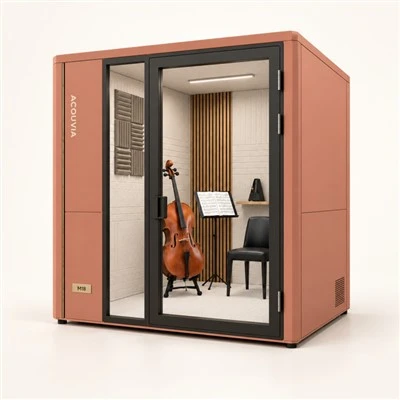
If you’re ready to look into getting an acoustic pod for your office, home, or space, hit us up to chat about what size works for you, what features you need, and we can walk you through the whole process—no pressure, no confusing jargon. We’re here to make this as easy for you as putting the pod together.
Acoustic Doors References:
- Acoustic Society of America. (2022). Sound insulation in movable architectural structures: Assembly and performance metrics.
- Office Technology Research Group. (2021). User-friendly assembly of commercial acoustic pods: Design standards and consumer experiences.
- Remote Work Productivity Report. (2023). Private workspace solutions for hybrid teams: Ease of setup and real-world usability.
Nanjing Huajing Environmental Engineering Co., Ltd.
Nanjing Huajing Environmental Engineering Co., Ltd. is one of the most professional acoustic pods manufacturers and suppliers in China, also supports custom service and OEM service. Please feel free to buy durable acoustic pods at competitive price from our factory. Welcome to contact us for quotation.
Address: Room 518, No.12 Jinlan Road, Dongshan Subdistrict, Jiangning District, Nanjing City, Jiangsu Province, China
E-mail: contact@hualiving.cn
WebSite: https://www.hjacoustics.com/
