If you’ve ever spent any time on tech forums or DIY home security groups, you’ve probably seen folks arguing about which connectors work for CCTV cameras. As someone who’s been selling F connectors (you know, those coaxial ones with the screw-on center pin and hexagonal nut) for 8 years, I get asked this question nonstop: “Are F connectors actually used for CCTV?” The short answer? Sometimes, but not always—and the line between when they do and don’t work is way messier than most people think. Let’s break it down like I would with a customer who walked into my warehouse last week asking the same thing. F Connector
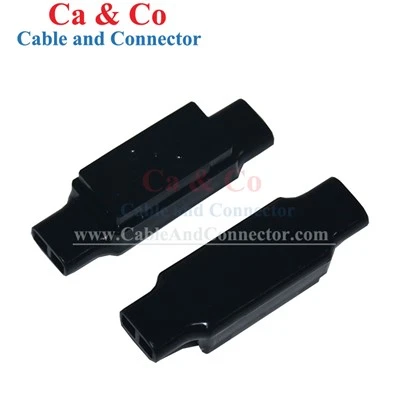
First, let’s level set on what F connectors are, in plain terms. They’re the ones you see on satellite TV cables (like DirecTV or Dish Network), right? The kind that twist tight onto a coaxial cable, no crimping tools needed if you get the right ones. They’re cheap, easy to install, and super common in residential video distribution setups. But CCTV is a whole other world—you’ve got analog cameras, IP cameras, NVRs, long runs of cable in weird, outdoor environments. So why would anyone mix F connectors into that?
Let’s start with the cases where F connectors do work for CCTV. A lot of people don’t realize that basic analog CCTV systems (the older style, not the fancy 4K IP ones) often use coaxial cable—specifically RG-59 or RG-6. That’s the same cable that F connectors are made for. If you’re running a small, local system—say, a 4-camera setup for a small shop or your backyard—you might use RG-6 cable for longer runs (RG-59 starts to lose signal after like 500 feet, RG-6 can go twice that). And if you’re using coaxial for analog, swapping in F connectors instead of the older BNC connectors (which are the big, twist-lock ones you see on old VCRs) is totally fine. Wait, don’t get me wrong—BNC is still the standard for most analog CCTV, but for small installs where you already have F connectors lying around, it works as a budget hack. I’ve had a dozen customers buy F connectors last month just to test a 2-camera setup for their garage, no complaints.
But here’s the catch: most modern CCTV systems don’t use F connectors at all, and for good reason. Let’s talk about IP cameras, which are now the most common type of CCTV sold. IP cameras run on Ethernet cables, not coaxial—they use RJ45 connectors, same as your laptop. So F connectors are basically irrelevant there. Even the hybrid systems that have some analog and some IP cameras usually only use F connectors for the analog parts. That’s a big point I try to make to new customers: if your CCTV has an Ethernet port, F connectors won’t work at all.
Another big issue: environmental durability. A lot of CCTV cameras are installed outdoors, in rain, snow, direct sunlight. F connectors are designed for indoor satellite use, mostly. They’re not sealed very well—if water gets inside the connector, it can short out the signal or even damage the camera. BNC connectors, on the other hand, are often weather-sealed specifically for outdoor CCTV. I once had a customer who tried to use regular F connectors for his outdoor cameras during a rainstorm—two of them fried within a week because water seeped into the screw-on end. That’s not a problem with the connector itself, but F connectors just aren’t built for that harsh environment, which is a big deal for most CCTV installs.
Then there’s signal quality, which I know is a big one for anyone setting up security. For short runs (under 100 feet), F connectors work fine with analog CCTV—you won’t notice a difference in picture quality. But when you get to longer runs, or 4K analog signals, F connectors can cause a tiny bit more signal loss than BNC, especially if they’re not crimped on properly. Wait, side note: a lot of people think F connectors are no-crimp, but that’s only if you buy the push-on ones, which are way less reliable. The screw-on F connectors still need to be crimped onto the cable end to get a tight seal, same as BNC. If you skip that, you’ll get fuzzy footage or signal dropouts, and that’s on the user, not the connector type.
Let’s also clear up a common mix-up between RG-59 and RG-6 cables. A lot of CCTV installers will tell you to use RG-59 for basic systems, RG-6 for longer runs. F connectors work with both, but if you’re running 4K analog (which is starting to pop up for commercial CCTV), RG-6 is a must, and F connectors work here too, though BNC is still preferred. I had a commercial client last quarter who switched to F connectors for their 4-camera office setup because they already had a bulk order of RG-6 left over from a satellite job—saved them like $200, so it’s a solid budget move for the right setup.
Now, let’s talk about when you should never use F connectors for CCTV. If you’re running a system with more than 4 cameras, or if the runs are longer than 500 feet, stick to BNC. If it’s an IP camera system, RJ45 only—no exceptions. If the cameras are going to be exposed to extreme weather (like coastal areas where salt air is a thing), get weather-sealed BNC connectors, not F. I’ve seen way too many people try to cut corners with F connectors on outdoor commercial installs, and it always ends up with them buying replacements 6 months later. It’s not that F connectors are bad—they’re just not the right tool for every job.
So what’s the takeaway if you’re out there setting up a CCTV system right now? First, figure out what type of cameras you have. If they’re analog coaxial, small install, indoor or sheltered outdoor runs, F connectors can work as a cost-effective alternative. If they’re IP, or large commercial installs, or harsh environments, go with BNC or RJ45. That’s the rule of thumb I give every customer, and 9 times out of 10, that’s what they go with.
As an F connector supplier, I’ll be honest with you: we don’t push F connectors for CCTV all the time, but we do stock them specifically for people who are doing those small, DIY analog setups. A lot of big connector companies only make BNC for CCTV, but we’ve seen a gap there—people who already have F connectors, or who want to save money, don’t want to buy a whole new batch of BNC connectors. So we make F connectors that are crimpable, weather-resistant (wait, we actually sell a weather-sealed F connector now for outdoor use, which solves that water issue I mentioned earlier) for exactly that use case. It’s not our top-selling product, but it’s a steady seller because it fills that niche.
If you’re still on the fence, here’s a quick test: grab a camera cable, look at the end. If it’s a round coaxial cable with a single center pin, check if your connector is a screw-on type. If it’s not a BNC, F will work for basic analog, but do a quick test run before installing all of them—hook one up to a camera, check the picture, run a little water over it if it’s going outdoors. That’s what I tell people, and it’s saved a lot of them from making a mistake.
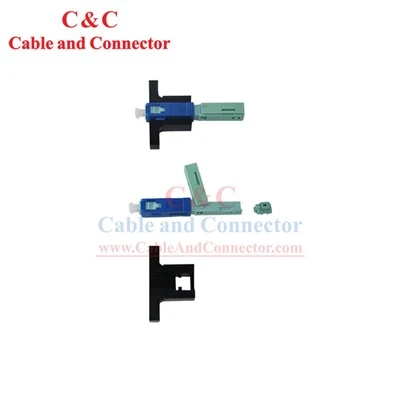
At the end of the day, F connectors aren’t “used for CCTV” as a general rule, but they’re absolutely a valid option for specific, small-scale setups. The key is knowing your system, your environment, and what you need. If you’re looking to set up a CCTV system and are considering F connectors for your cable runs, we can help you pick the right type, whether that’s the basic indoor crimp style or our new weather-sealed version for outdoor use. Don’t waste time guessing which connector is right—reach out to us to chat through your setup, and we’ll point you in the direction that works best for your needs.
Feeder Cable References
- Federal Communications Commission. (2021). Coaxial Cable Standards for Residential Video Distribution.
- Security Industry Association. (2022). CCTV Connector Best Practices for Small to Medium Installations.
- RG Cable & Connector Tech. (2023). Signal Loss Comparison: F Connectors vs. BNC for Coaxial CCTV.
- National Electrical Code. (2022). Outdoor Coaxial Connector Durability Requirements.
Zhejiang Cable and Connector Optic Co., Ltd.
As one of the most professional f connector manufacturers and suppliers in China, we have world-leading production equipment and strong manufacturing capabilities. Please rest assured to wholesale custom made f connector at competitive price from our factory.
Address: 1517 East Communications Building, No.398, Wensan Road, Xihu District, Hangzhou City, Zhejiang Province, China.
E-mail: Sales@CableAndConnector.com
WebSite: https://www.zjcableandconnector.com/
