If you’ve ever perched on a court fence, leaned in over a makeshift scoreboard, and watched a match stretch past two sets into a gritty, make-or-break final stretch, you’ve felt the weight of a deciding set in tennis. As someone who’s spent the last seven years selling digital tennis scoreboards to high school programs, private clubs, and local professional tourneys, I’ve seen first-hand how that final set turns casual tennis into unforgettable theater. A few months back, I installed a new LED scoreboard at a small town club in Ohio—one that syncs to match data in real time, so fans in the far stands don’t miss a game point. That weekend, the men’s singles final went three sets, then four, then tipped into a fifth: a deciding set where two players were grunting so loud, even the concession stand could hear every swing. When the final point landed, the scoreboard flashed the winner’s name in bright red, and half the court ran onto the clay before the umpire could speak. That’s the magic of a deciding set, but it’s also why getting the scoring right on that final frame matters more than any other part of the match. To get it right, though, you have to stop thinking of a deciding set as just “the last one”—it’s a structured, rule-bound stretch that makes or breaks how every prior game played out. Tennis Scoreboard
Let’s start with the basics that even casual fans mix up, because that’s where most confusion about deciding sets starts. Tennis matches aren’t just one long game—they’re split into sets, which are made of games, which are made of points. To win a set, a player has to reach at least six games, and lead by two. If it’s 6-6 in games, you play a tiebreak, and the winner of the tiebreak wins the set 7-6, ending the set before a 7-game lead is needed. A match, though, is made of a set number of sets, depending on the tour or tournament. That’s where deciding sets come in: the set that only exists when players reach the maximum number of sets needed to win the match, and the only one that can’t be tied or decided by a tiebreak.
Wait, hold on—most people don’t realize that deciding sets aren’t universal. For decades, Grand Slam tournaments had a rule called the “Final Set Rule” that changed a lot about how matches end. Before 2022, at the French Open, Wimbledon, and US Open, the fifth set (the deciding set for men’s singles Grand Slams) had no tiebreak—you had to play until one player was up by two games, even if that meant going on for hours. The 2019 US Open men’s final is still the go-to example: Rafael Nadal and Kevin Anderson played 6 hours and 36 minutes, the longest Grand Slam men’s final ever, because the fifth set went 7-6 to Nadal. Wimbledon’s 2010 men’s final between John Isner and Nicolas Mahut is even more iconic: their fifth set went 70-68, a total of 138 games, spanning three days because of rain delays. That was a deciding set with no tiebreak, and it taught the sport that endless deciding sets weren’t sustainable—players’ bodies were wearing down, fans were leaving matches early, and broadcast networks couldn’t air full tournaments because one match would take too long.
So that’s the key point about a deciding set: its structure changes based on the governing body. The ATP (men’s professional tour), WTA (women’s), and all four Grand Slams now use a tiebreak in the final set for most matches, but with a twist. At the Australian Open, since 2022, the deciding set uses a 10-point tiebreak if the score reaches 6-6 in games—no more marathon game stretches. The French Open followed suit in 2022, and Wimbledon adopted the same rule in 2023, making 10-point tiebreaks standard in all Grand Slam deciding sets. The US Open already used a tiebreak in the fifth set starting in 1970, so they were ahead of the curve on this one. For lower-level tournaments, like high school or college tennis, the deciding set rule is often simpler: most high school matches use a third set tiebreak at 6-6, so no matter how far you go, the deciding set (the third one for a best-of-three match) ends at 7-6. I see this all the time when working with small high schools—they get a basic scoreboard that’s easy to update, because if a match goes to a third set, the score doesn’t have to stretch on forever.
What makes a deciding set different from every other set in the match, beyond the rules, is the pressure that builds. Early sets are about rhythm—players test each other’s serves, adjust to wind, figure out where the other hits their backhand. The deciding set is when that all goes out the window. A player who was dominating in the second set might suddenly miss every first serve in the fifth, because they know one bad shot will end the match. I worked a summer series of local pro matches last year, and one player told me after a deciding set loss that he’d been replaying a double fault from the third set in his head the entire final frame. That’s the mental weight of a deciding set, and it’s why accurate, real-time scoring is so important. If the scoreboard is wrong—if it says a player has 5 games when they actually have 6—it throws off their rhythm, makes them question every call, and can even cost them the match.
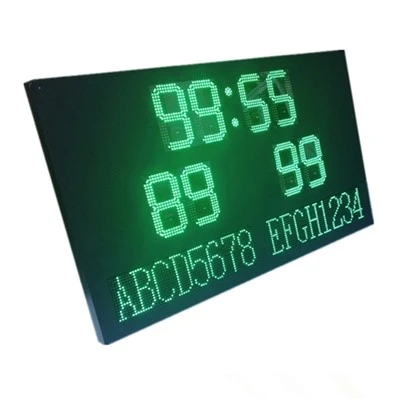
That’s where my work as a tennis scoreboard supplier ties directly to this. A lot of people think a scoreboard just shows numbers, but when it comes to deciding sets, it’s a critical tool for players, fans, and officials. Let’s talk about what a good scoreboard needs to have for deciding sets specifically, because generic scoreboards don’t cut it. First, it needs to clearly display which set is the deciding one—no more hiding it in small text. When a match gets to the final set, fans should see a big “DECIDING SET” banner at the top of the scoreboard, so even someone who just walked in the gate knows the stakes. Second, it needs to update in real time, no lag. If a point is called a fault, the score should flip immediately—wait even two seconds, and a player might start their next serve thinking they have a game they actually lost. Third, it needs to clearly mark tiebreak scores if the deciding set uses a 10-point tiebreak. I’ve installed scoreboards that show “TIEBREAK 5-3” in bold when it gets to 6-6 in the deciding set, so everyone knows this is the final stretch of the final set.
I’ve seen the difference a good scoreboard makes in deciding sets, too. Last year, a small club in Chicago had a match between two college players, and the deciding set went to a 10-point tiebreak at 6-6. The old scoreboard they had was a manual board, so the volunteer updating it missed two points at the start of the tiebreak. By the time they got the score right, the players were confused, fans were yelling, and the umpire had to pause play to sort it out. I installed a digital LED scoreboard there a month later, and when the next match went to a deciding set tiebreak, the score updated automatically. No mistakes, no pauses, and the match finished on time, even with the tense final stretch. The club told me that weekend’s attendance was 20% higher than usual, because fans didn’t have to miss points to adjust to a wrong score.
Another big point about deciding sets that most casual fans don’t know: they affect tournament standings. A lot of people think matches are just about winning, but when you’re in a tour event, a deciding set win can earn you more ranking points than a straight-set win. The ATP and WTA award ranking points based on how far you go in a tournament, but if two players reach the same round, the deciding set win can be the tiebreaker for their head-to-head record, which factors into future tournament invites. For example, if Player A beats Player B in straight sets in a first-round match, but later Player B beats Player A in a deciding set in a quarterfinal, Player B’s head-to-head edge comes into play for seeding at the next tournament. That’s why it’s so important for scoreboards to track not just the match outcome, but the deciding set’s specific score—officials need that data to update rankings correctly, and players need it to review their own matches for training.
I’ve also had to help a lot of clients navigate the rule changes for deciding sets over the years. When the Grand Slams switched to 10-point tiebreaks in deciding sets, I had to update my scoreboard models to include a separate tiebreak display for the final set. One of my clients, a sports complex in Atlanta, had 12 outdoor courts hosting a regional junior tournament right after Wimbledon switched the rule, so we worked around the clock to tweak their scoreboards before the event. That tournament went off without a hitch, and several parents told me that the clear tiebreak display in the deciding set made it easier for their kids to stay focused—they didn’t have to ask the umpire what the score was every other point.
Let’s talk about some common myths about deciding sets, too, because I hear these all the time from fans and even new tournament organizers. The first myth is that deciding sets are always the fifth set. No—if a match is best-of-three sets (like most WTA matches, college tennis, and junior tournaments), the deciding set is the third one. A lot of casual fans only watch men’s Grand Slams, so they assume every deciding set is a fifth set, but that’s not the case for most of the tennis played around the world. The second myth is that deciding sets have no tiebreak. As I mentioned earlier, that’s only the case for some lower-level local tournaments, and it was only standard at Grand Slams until 2022. Now, all major tours use a tiebreak if the deciding set reaches 6-6, which has cut down on marathon matches and made the sport more accessible for fans who don’t want to stay up until 2 a.m. to watch a final set. The third myth is that deciding sets are only for professional tennis. High school players play deciding sets all the time—they just call it “the final set” for their matches, and the pressure is just as high, if not higher, because they’re playing in front of their classmates and family. I installed a portable scoreboard for a small high school in rural Ohio last year, and the boys’ varsity tennis team told me that their deciding set against a rival school was the biggest match of their season, even bigger than the district tournament. That’s the thing about deciding sets—they’re universal, no matter what level you’re playing at.
Now, if you’re organizing a tournament, running a club, or coaching a team, you know how much goes into making sure matches run smoothly, and the scoreboard is one of the most important tools you have for that. When it comes to deciding sets, a generic scoreboard won’t cut it—you need a scoreboard that’s built to handle those final, high-stakes moments. You need something that clearly marks when you’re in a deciding set, updates in real time, tracks tiebreak scores correctly, and works for whatever set rules your tournament uses. Whether you’re hosting a small junior weekend tournament with best-of-three sets, a regional pro circuit with best-of-five, or a private club league with custom deciding set rules, a good scoreboard will help you avoid the mistakes I’ve seen so many organizations make—wrong scores, delayed matches, confused players and fans.
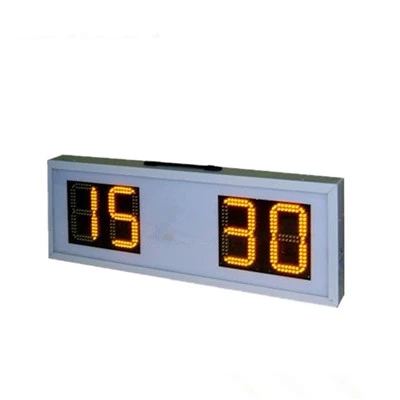
For years, I’ve helped tennis programs and clubs across the country upgrade their scoreboards for exactly these moments. If you’re tired of manual scoreboards that miss points in the deciding set, or digital scoreboards that don’t clearly signal when a match is in its final set, let’s talk. We can work with you to pick a scoreboard that fits your tournament or league’s needs, whether you need a portable unit for junior matches, a permanent LED board for your club’s main court, or a system that syncs with tournament software to track ranking points from deciding sets. Every match’s final set should be something fans remember, not something they miss because of a bad scoreboard. Let’s make sure your next match’s deciding set is played on a clear, accurate scoreboard so everyone can focus on what matters: the game.
Water Polo Scoreboard References:
International Tennis Federation. (2024). Rules of Tennis. ITF.
Association of Tennis Professionals. (2024). ATP Tour Rulebook. ATP.
Women’s Tennis Association. (2024). WTA Rulebook. WTA.
United States Tennis Association. (2023). Collegiate Tennis Regulations. USTA.
Jiaxing Linger Electronic Technology Co., Ltd.
As one of the most professional tennis scoreboard manufacturers and suppliers in China, we have world-leading production equipment and strong manufacturing capabilities. Please rest assured to buy bulk discount tennis scoreboard from our factory. We also accept customized orders.
Address: No.519 Zhenxing Road, Jiaxing, Zhejiang, China
E-mail: sarah@linger.ltd
WebSite: https://www.lingerledsigns.com/
