If you’ve ever picked up a water bottle that cracks when you drop it on concrete, or noticed how a plastic packaging bag stretches before it seals shut, you’ve encountered the kind of real-world performance that makes mechanical testing for plastics non-negotiable. As a supplier of mechanical testing equipment, I’ve spent the last 12 years standing next to engineers in labs, on production floors, and in startup garages, watching them ask the same question over and over: “How do we know this plastic will hold up when it matters?” That’s the core of mechanical testing for plastics—it’s not just checking numbers on a screen; it’s translating the flexible, often counterintuitive behavior of plastic into something manufacturers can trust to keep their products safe, functional, and compliant with rules. Mechanical Testers
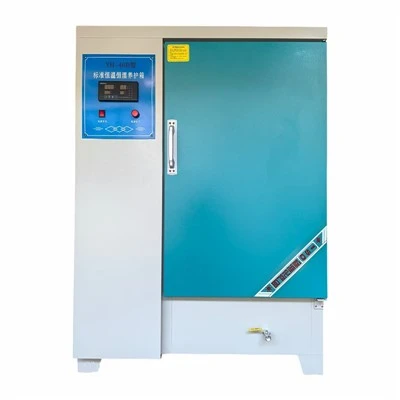
Let’s start with why plastics are uniquely tricky to test. Unlike metals, which tend to react to stress in predictable, linear ways, plastics are viscoelastic—meaning their response to force depends on temperature, how fast you apply that force, and how long you leave the force on them. A plastic toy that’s stiff enough for a 3-year-old to chew on at room temperature might become soft and pliable on a hot summer day in a parked car, or brittle enough to shatter if dropped in cold weather. That variability isn’t a flaw in the plastic—it’s a feature of the material, and it’s exactly what mechanical testing is designed to untangle.
The foundation of all plastic mechanical testing is measuring how a material deforms when force is applied, and how it recovers (or doesn’t) once that force is removed. Think of it like a stress test for a plastic: we apply controlled amounts of force, or stretch, or bend, and we record exactly how the material responds. For example, tensile testing—one of the most common tests we run at our lab facilities—stretches a plastic sample (think: a dog-bone-shaped piece cut from a sheet or molded part) at a set speed until it breaks. The data we get from this test tells us two critical things: tensile strength (the maximum force the plastic can take before snapping) and elongation at break (how much it stretches before breaking). A food packaging manufacturer, for instance, might use tensile test data to make sure their film stretches enough to wrap a turkey breast without tearing, but not so much that it loses its ability to block air and keep the meat fresh.
But tensile testing only scratches the surface. Different products require different types of stress, so we use a whole suite of tests to cover every real-world scenario a plastic might face. Take impact testing, which is all about sudden, one-time forces—like a cell phone dropping from a user’s hand, or a luggage wheel hitting a curb. The Charpy test and Izod test are the two most common here. In the Izod test, we clamp a plastic sample in place, then swing a weighted pendulum at it; the energy the pendulum loses when it hits the sample tells us how much impact the plastic can absorb. Last year, I worked with a maker of reusable plastic water bottles who came to us because their first prototype shattered when dropped from shoulder height. We ran Izod tests on samples made from different plastic grades, and helped them identify a blend that absorbed impact energy without becoming too stiff or heavy. That one test didn’t just fix a broken prototype—it saved them from a recall of 10,000 units.
Then there’s flexural testing, which simulates bending stress—like when a plastic chair leg supports a person’s weight, or a plastic tray is stacked with heavy produce. This test bends a sample across two points, applying force to the center until it deflects (bends) a set amount or breaks. The key data here is flexural modulus, which tells us how stiff the plastic is under bending. A medical device manufacturer making a plastic surgical tray, for example, needs a flexural modulus high enough that the tray doesn’t sag and spill instruments when lifted, but not so high that it’s too rigid to autoclave (steam sterilize) without cracking.
For parts that need to hold a load over months or years—like a plastic pipe carrying water, or a plastic gear in a washing machine—we use creep and stress relaxation testing. Creep testing applies a constant load to a sample for hours, days, or even years, and tracks how much it deforms over time. Stress relaxation testing, on the other hand, holds the sample at a set deformation and measures how much the force (stress) drops over time. A plumbing manufacturer we partner with recently had an issue where their plastic pipes would bend slightly under constant water pressure after a few months, leading to leaks. We ran creep tests on their pipe samples at different pressure levels and temperatures, and determined that a slight adjustment to their molding process cut creep deformation by 30%—stopping the leaks before they reached the market.
Temperature also plays a huge role in plastic performance, so many of these tests are run in temperature-controlled chambers to simulate real-world extremes. A lawn furniture made from polyethylene that works fine in a 70°F showroom might warp in 120°F summer heat, or become brittle in a 0°F winter. We run tests at both high and low temperatures to capture that variability, which is why so many of our clients use data from these tests to set their product’s use temperature limits.
Compliance is another big reason mechanical testing matters. Many industries have strict regulations that require specific mechanical properties for plastic parts. For example, medical plastics have to meet ISO 10993 standards for biocompatibility and mechanical performance, automotive plastics have to comply with SAE J standards for impact resistance at different temperatures, and food contact plastics need to meet FDA guidelines for tensile strength and elongation to ensure they don’t break or leach chemicals. Without standardized mechanical testing, manufacturers can’t prove their parts meet these rules—and they can’t sell their products in these markets.
What I’ve noticed in my 12 years in this business is that a lot of manufacturers, especially smaller ones, see mechanical testing as a cost center, not an investment. They think, “We can just guess which plastic grade works for our part.” But guesswork leads to failed prototypes, costly recalls, and lost customers. Last year, a startup making children’s plastic toys came to us after their first batch of toys cracked during shipping. They’d picked a cheap plastic grade because it fit their budget, but it had a low impact strength at room temperature (and even lower at the cold temperatures the toys were shipped in during winter). We ran a series of tests, helped them switch to a slightly more expensive but impact-resistant plastic, and adjusted their molding process to reduce stress in the parts. That small investment in testing saved them from a recall of 5,000 toys and built their reputation for safe, durable products.
Another common mistake I see is manufacturers only testing once, when the product is almost done. The best approach is to test at every step: when you’re choosing a plastic grade, when you’re designing the part, when you’re setting up production, and during quality control. For example, when a manufacturer is choosing between two similar plastic grades, testing their tensile, impact, and flexural properties side-by-side can show which one is better suited for their product before they spend money on tooling. During production, regular mechanical testing of parts ensures that molding conditions (like temperature, pressure, and cooling time) aren’t causing defects that would hurt performance.
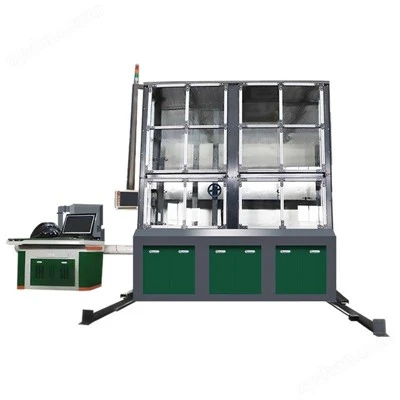
At our company, we don’t just sell testing machines—we work with our clients to design testing plans that fit their specific products. A food packaging company needs high-speed tensile testing for their film, while an automotive parts maker needs temperature-controlled impact testing for interior trim. We offer both benchtop machines for small labs and floor-standing systems for production floors, and our team of engineers helps clients interpret test data to solve real problems, not just generate numbers.
If you’re a manufacturer working with plastics, I know you’re focused on two things: making a product that works, and making it profitable. Mechanical testing isn’t a roadblock to that—it’s the tool that lets you confidently choose the right plastic, design parts that perform, and avoid costly mistakes. Whether you’re making packaging, toys, medical devices, automotive parts, or any other plastic product, mechanical testing is how you turn a sheet of plastic resin into a reliable, marketable product.
Cement Testing Instrument I’ve seen too many companies skip testing and end up paying for it later. But I’ve also seen how a good test can turn a flawed prototype into a best-selling product. If you’re ready to talk about how mechanical testing can improve your plastic parts—whether you’re just starting out, troubleshooting a current product, or looking to streamline your quality control process—reach out. We can work together to build a testing plan that fits your needs, your budget, and your timeline.
References
- ASTM International. (2022). Standard Test Methods for Tensile Properties of Plastics (D638). ASTM International.
- ISO. (2019). Plastics – Determination of Tensile Properties (ISO 527). International Organization for Standardization.
- Ward, I. M., & Hadley, D. W. (2013). An Introduction to the Mechanical Properties of Solid Polymers (3rd ed.). Wiley.
- SAE International. (2021). Plastics Materials for Automotive Applications – Mechanical Properties and Test Methods (SAE J211). SAE International.
- American Society for Testing and Materials. (2020). Standard Test Methods for Impact Resistance of Plastics and Electrical Insulating Materials (Izod Test) (D256). ASTM International.
Hebei Wanluda Testing Instrument Equipment Co., Ltd.
As one of the most professional mechanical testers manufacturers and suppliers in China, we have world-leading production equipment and strong manufacturing capabilities. Please rest assured to buy advanced mechanical testers made in China here from our factory.
Address: Zhouguantun Village, Xian County, Cangzhou City, Hebei Province, P.R.China
E-mail: wldinstrument@163.com
WebSite: https://www.wldinstrument.com/
