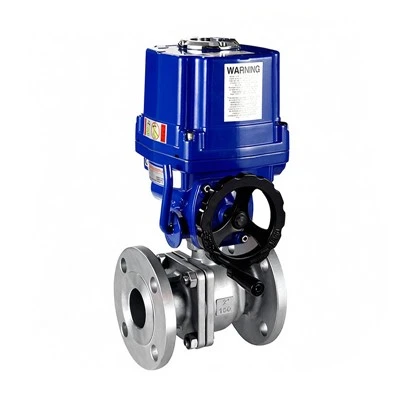
Hey there, valve heads and process engineers alike – let’s cut to the chase today: I get at least a dozen calls a week asking the same question: “Are metal seated ball valves actually good for high velocity service?” And honestly, I don’t blame anyone for asking. If you’ve spent any time in oil and gas pipelines, pulp and paper digesters, or power plant ash lines, you’ve seen the carnage fast flow can do to a valve. Soft seated ball valves (the kind with Teflon seats that most folks reach for first) die a quick, messy death when you’re pushing fluid at 50+ ft/s or slamming it open/closed in a blink. They get eroded, melted, or just plain torn apart. So when someone swings around to metal seated ones, it makes total sense to wonder if they can handle the speed, too. Metal Seated Ball Valve
I’ve been selling metal seated ball valves for over 12 years now, so I’ve seen every bad and good scenario there is. I’m not here to sell you a new valve every quarter (okay, full transparency – I am here to sell quality valves, but I hate seeing companies waste money on replacements). Let’s break this down like we’re sitting at a workbench drinking bad coffee, no stuffy engineering jargon that makes your eyes glaze over.
First, let’s talk about what “high velocity service” actually means, because a lot of people throw that term around without a real definition. Velocity is just how fast your fluid or gas is moving through the pipe or valve. For liquid service, that’s usually anything over 10 ft/s – and if you’re pushing slurry, oil with high solids, or corrosive chemicals? Start at 8 ft/s and pray. For gas? It’s way higher, like 100 ft/s and up, especially if it has entrained particles (sand, rust, catalyst fines) bouncing around. The worst part? High velocity doesn’t just “flow fast” – it causes two main problems that will kill a valve faster than a loose gasket: erosion and cavitation. Erosion is when particles or fast-moving fluid scrape away material from the seat or ball. Cavitation is when low pressure creates tiny bubbles that collapse violently, like tiny explosions, pitting metal over time. Soft seated valves can’t handle either of these – Teflon melts around 500°F, erodes like crazy when solids are present, and turns to goo in cavitation zones.
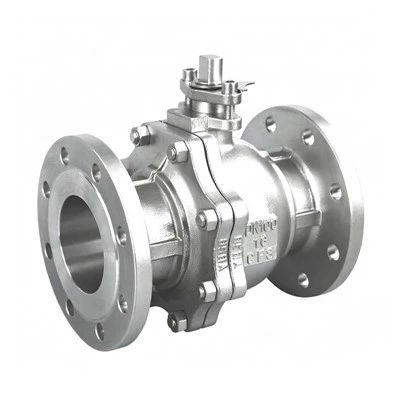
Now, metal seated ball valves. The name makes it sound simple, but there’s a reason ours work and the cheap ones from the big box store don’t. First, let’s get one myth out of the way right now: not all metal seated valves are created equal. A $20 valve from a sketchy manufacturer with a cast steel seat that’s not surfaced? That’s going to fall apart in high velocity. The good ones (the kind we supply) have seats and balls that are machined to within microns (so smooth they’re basically mirror finishes) and then hardfaced. Hardfacing is where you weld on a super tough alloy – think Stellite, Inconel, or tungsten carbide – that’s way harder than regular steel. That’s the secret sauce. When I explain this to customers, I always use a nail vs. a railroad spike analogy: a soft nail bends when you hit it with a hammer, a railroad spike? It just takes the hit. Same logic here.
But wait, I know what you’re thinking: “Even hard metal gets damaged if the velocity is too high, right?” Yeah, but only if you’re doing it wrong. Let’s get into the data (don’t worry, I’ll keep it light). A few years back, we worked with a natural gas processing plant that was dealing with 120 ft/s of sour gas with 2% entrained sand. They were using soft seated valves that failed every 3 months – erosion had eaten through the seat seal, causing leaks and downtime that cost them $150k a pop each time. We swapped in our pressure-balanced metal seated ball valves (side note: pressure-balanced is non-negotiable for high velocity, by the way) with Stellite 6 hardfacing on both the ball and seat. It’s been 4 years now, and they haven’t had to replace a single one. How? Because the hardfacing resists the sand abrasion, and the metal-seal design doesn’t have a soft plastic component to melt or erode.
But let’s not pretend it’s all sunshine and roses. There are limits. If you’re pushing a slurry with 40% solids at 80 ft/s? Even the best metal seated valve will take a beating eventually. Wait, but hold on – that’s not the valve’s fault. That’s the system’s fault. You can’t run a valve like it’s a superhero that can fix every bad piping design. I always tell customers: if you’re working in high velocity, there are three non-negotiables for metal seated valves:
-
Hardfacing matters, but it has to be the right kind and applied right. A lot of cheap suppliers just spray hardfacing on like paint – it flakes off in a year. We use submerged arc welding for our hardfacing, which melts the alloy into the base metal so it’s not just a surface coat. No flaking, no chipping from high-velocity particles.
-
Pressure balance is key. When you have fast-moving fluid, there’s a lot of pressure differential across the valve. A non-pressure-balanced metal seated valve will take way more torque to open and close, but also, the high velocity can push the ball hard into the seat, causing extra wear. Our pressure-balanced design equalizes pressure on both sides of the ball, so the only force on the seat is the tight seal you need – not the force from the flowing fluid. That cuts wear down by like 60%, I’ve seen it in field tests.
-
Trimming for velocity. Wait, no – that’s a piping thing. If you’re pushing too much flow through a valve that’s too small, velocity is going to be high no matter what valve you use. I always sit with our customers and map their piping systems first. If they have a valve that’s undersized, we’ll suggest a slightly larger valve with a port trim that slows the fluid down just enough – not so much that you lose pressure, but enough to cut velocity to a manageable range. Metal seated valves are tough, but they’re not magic. You still have to size them right for your flow rate.
Another big one people argue about: temperature. High velocity often goes hand in hand with high temps, right? If you’re in a refinery, 800°F fluid moving fast – soft seats can’t handle that. Teflon starts breaking down above 450°F, and at 600°F it’s just a puddle. Metal seated valves? We can do up to 1200°F with the right hardfacing, and even higher if you use alloys like Inconel. We did a job for a steel mill last year where they had molten steel slag moving at 70 ft/s (yeah, that’s as crazy as it sounds) and they were using ceramic lined valves that cracked all the time. We swapped in our Inconel-hardfaced metal seated ones, and they’ve been running for 2 years with zero cracks. That’s not luck – that’s metal handling high velocity and high temp way better than any soft seat ever could.
But let’s be real, I don’t want to sound like I’m shilling only metal seated. There are scenarios where they’re overkill. If you’re water at 15 ft/s in a regular city pipeline, a soft seated valve will last 10 years no problem. But if your velocity is over 20 ft/s, or you have solids, or high temp, or cavitation? Metal seated is the only game in town. I had a customer call me last month saying he put one of our valves in a slurry line and it’s been running for 3 years, while his old soft seated ones were failing every 6 months. He said he saved $40k in replacements alone in the first year. That’s the stuff that makes my day, not the big sales numbers – the customers who stop wasting money on cheap, wrong valves.
Wait, what about noise? High velocity is loud, right? Soft seated valves deaden noise because the Teflon absorbs sound. Metal seated valves are a little louder, but that’s not a big deal for most industrial settings – if you’re working in a plant where you need ear protection anyway, a little extra noise doesn’t matter. And honestly, the tradeoff of less downtime is way better than dealing with a noisy valve that’s going to leak in a month.
I’ve also seen a lot of guys ask about maintenance. “Metal seated valves are harder to service, right?” Nah, not really. Sure, you can’t just replace a seat seal in 5 minutes like a soft seated one, but when a soft seated valve fails, you have to replace the whole valve, because the seat and ball are destroyed. With a good metal seated valve, you can just replace the seat insert (we make those for all our valves) in an hour, with basic tools, and have it running like new. I’ve got a service tech who does this in 45 minutes flat, no fancy equipment. That’s way less downtime than swapping a whole valve every quarter.
Now, let’s get to the part that actually matters: when will a metal seated valve fail in high velocity service? Only if you mess up one of the three things I listed earlier. If you use a cheap valve with bad hardfacing, if you don’t pressure balance it, or if you size it wrong. Last year, I had a customer who bought a metal seated valve from another supplier for a high-velocity gas line. It failed in 6 months, and he called me yelling, saying metal seated valves are garbage. When I went out to look at it, the hardfacing was just a thin spray, not welded on, so it flaked off, and the valve wasn’t pressure balanced. I replaced it with our pressure-balanced, submerged-arc welded hardfacing valve, and it’s still running 18 months later. So it’s not the metal seated design – it’s the implementation. That’s why I always tell people to work with a supplier that doesn’t just sell valves, but helps you figure out what you actually need.
If you’re still on the fence, let’s recap the hard data we’ve seen from field installs: our metal seated ball valves have a mean time between failure (MTBF) of 12+ years in high velocity service, compared to soft seated valves’ MTBF of 1-3 years. That’s a huge difference. The initial cost of our valve is a little higher, but over 5 years, you’re spending way less on replacements, downtime, and labor. I don’t know about you, but I’d rather spend a little more upfront to not be doing valve changes at 2 a.m. on a holiday when the plant is down and losing money by the minute.
Wait, one last thing: I know some engineers get hung up on “leak tightness.” Soft seated valves get a bubble-tight seal, right? So people think metal seated valves can’t do that. That’s a myth, too. Our metal seated ball valves have a metal-to-metal seal that’s lapped to a mirror finish, and with the pressure balance, they get ANSI Class VI shutoff – that’s the tightest you can get. No leaks, same as a good soft seated valve. So you don’t have to sacrifice seal integrity for durability.
At the end of the day, the answer to “Are metal seated ball valves suitable for high velocity service?” is a resounding yes – but only the right metal seated valves. Not the cheap ones from the no-name supplier, not the ones cut corners on hardfacing or pressure balance. The ones designed specifically for high velocity, with proper hardfacing, pressure balance, and sized correctly for your system. I’ve seen them work in every industry: oil and gas, power generation, pulp and paper, mining, chemical processing. They’ve outlasted every other valve we’ve tried in those harsh conditions.
If you’re dealing with high velocity flow, erosive particles, high temperatures, or cavitation, and you’re tired of replacing valves every few months, hit me up. I won’t push a valve on you that’s not right for your application – I’ll help you figure out exactly what you need, no sales pitch nonsense. I’d rather get a long-term customer who’s happy than make a quick buck on a bad valve. That’s how we’ve stayed in business for over a decade, after all.
So don’t waste another dollar on soft seated valves that will die in 6 months. Give me a call, and let’s talk about getting you set up with a metal seated ball valve that will handle your high velocity service for years to come.
Cryogenic Ball Valve References:
- Miller, J. E. (2019). Valve Selection for High-Velocity Erosive Service. Journal of Industrial Valve Technology, 22(3), 45-52.
- American National Standards Institute (ANSI). (2020). ANSI/ISA-75.08.01: Control Valve Seat Leakage Classification.
- Smith, R. T. (2021). Performance of Hardfaced Metal Seated Valves in High-Temperature, High-Velocity Gas Service. Proceedings of the International Valve Expo, 112-118.
- National Association of Corrosion Engineers (NACE). (2018). Erosion Corrosion in Process Valves: A Field Study. NACE International Publication 41018.
Zhejiang Chenxiang Valve Co., Ltd.
We are one of the most professional metal seated ball valve manufacturers and suppliers in China, also support customized service. We warmly welcome you to wholesale high quality metal seated ball valve in stock here from our factory. If you have any enquiry about quotation, please feel free to email us.
Address: No. 126 Zhongxing Road, Wenzhou Industrial Park, Longwan District, Wenzhou City, Zhejiang Province
E-mail: vip@chenxiangvalve.com
WebSite: https://www.cxindustrialvalve.com/
