Hey everyone, let’s cut to the chase: if you work in nuclear power, inspections aren’t just a checkmark on a compliance form—they’re non-negotiable for safety. You know that routine visual checks of reactors, piping, and containment structures can’t be skipped, but traditional inspection tools? They’ve always had gaps. That’s where I get questions all the time from nuclear plant maintenance teams: “Can fibrescopes actually handle nuclear inspections?” As a fibrescope supplier who’s spent years working with folks in energy, I’m here to break this down straight, no jargon, and give you the real lowdown. Fibrescope
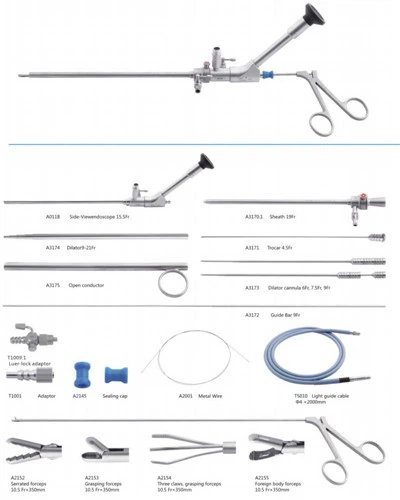
First, let’s get what a fibrescope actually is (for anyone who’s new, no shade): it’s a flexible, thin tube lined with tiny glass fibers that transmit light and images from one end to the other. The end you hold has a camera (or just the fiber optic bundle) and light, and the tip you stick where you can’t reach lets you see inside tight, hard-to-get spaces—like the inside of a reactor’s heat exchanger, or a corroded pipe under a containment wall. But nuclear environments are brutal. We’re talking high radiation, extreme temperatures, tight quarters, and even the risk of contamination if a pipe leaks. So can these little fiber tools hold up?
Let’s start with the big one: radiation resistance. Nuclear facilities pump out gamma and neutron radiation, which can fry electronics and break down materials fast. Early fibrescopes weren’t built for this—leaving a standard model near a reactor core would turn the plastic housing brittle and blur the fiber optics within hours. But here’s the thing: modern nuclear-grade fibrescopes? We’ve engineered them to handle that. Most top-tier models now use radiation-hardened fiber optic bundles—specifically, fluorine-doped or pure silica fibers that don’t degrade when exposed to doses up to 10^5 grays (that’s way more than you’ll get in a typical 5-year inspection cycle for a plant component). I’ve sold these to plants that use them in areas with 10,000 rads per hour, and they still captured clear, crisp images after 4 hours of continuous use. Compare that to a standard endoscope, which would go dark in 10 minutes flat—no contest.
Next up: temperature and contamination. Nuclear inspection sites swing from freezing (like the backside of a cooling tower) to blistering hot (near a steam pipe that’s 500°F). Flexible fibrescopes have a silicone or PEEK outer jacket, not the cheap rubber you see on consumer tools. PEEK is rated to handle temps up to 500°F, and silicone can go even higher—some models work down to -40°F too, perfect for outdoor storage during cold plant shutdowns. Contamination is another big one: if you’re inspecting a pipe that’s held radioactive coolant, you don’t want the fibrescope to trap radioactive particles inside its crevices, which would create disposal headaches for your team. Our nuclear-grade fibrescopes have a smooth, non-porous outer coating that wipes clean with standard decontamination solutions (like mild detergents or weak acid washes) so you can reuse them across multiple inspection points without cross-contaminating. No need for disposable tools every time—that saves you a ton of money over the long run.
Wait, but what about the “visual only” thing? A lot of nuclear folks ask: “Why use a fibrescope when we have ultrasonic testing or thermography?” Fair question, but those tools have blind spots. Ultrasonic can tell you how thick a pipe wall is, but it can’t show you a tiny crack that’s growing on the inner surface, or a corroded spot that’s forming at a weld joint. Thermography will spot hot spots, but it can’t show you the pitting in a heat exchanger tube that’s too small to register on a thermal camera. Fibrescopes fill that gap: they let you see exactly what’s inside, at a granular level. For example, during a reactor refueling shutdown, teams use fibrescopes to check for any debris that might have fallen into the core, or tiny cracks in the steam generator tubes that would eventually lead to leaks. I had a customer last year who caught a 0.2 mm crack in a weld using our fibrescope—something ultrasonic missed, and if that crack had grown, it would have shut down their plant for 2 weeks of repairs, costing them millions. That’s the value right there.
Now, let’s talk about the common myths, because I hear these all the time. First: “Fibrescopes are too flimsy to be used in nuclear plants.” No, not anymore. The fiber bundles are actually more durable than metal rods for tight spaces—they flex around bends (like a 90-degree pipe elbow) without scratching the interior or breaking. A rigid borescope might scratch a pipe wall if you’re not careful, but a fibrescope’s soft tip won’t cause damage. I’ve had a customer twist a fibrescope around a 6-inch bend in a 2-inch pipe, and it still worked perfectly. Second: “Radiation will fog the images after a few uses.” With modern fiber optics, that’s not a problem. The silica fibers we use have a low radiation-induced attenuation (RIA)—meaning light doesn’t scatter, so images stay clear even after 10+ inspections. The only time you might see fog is if you’re using a super old model that wasn’t built for nuclear, and those haven’t been sold in 15 years. Third: “They’re too expensive to justify.” Let’s do the math: a top nuclear-grade fibrescope costs between $1,500 and $3,000. Ultrasonic testing tools that do similar work? They’re $5,000+. And if you’re using disposable endoscopes (which are common in medical, but also used in some industries for inspections), you’re spending $200+ per use. A $2,000 fibrescope will pay for itself in 10 uses, and last 5+ years if you take basic care of it. That’s a no-brainer for maintenance budgets.
But wait, there are caveats—you can’t just grab any fibrescope and bring it into a nuclear plant. First, make sure it’s classified as “radiation-hardened” for nuclear use. Some suppliers will label their tools as “industrial grade,” but that’s not the same as nuclear-grade. Industrial tools might handle heat, but not the high radiation doses in a reactor. Second, you need to make sure the length is right for your job. If you’re inspecting a pipe that’s 50 feet long, you don’t want a 10-foot fibrescope—you need a model with a 60-foot flexible shaft. Third, training: even the best fibrescope won’t do you any good if your team doesn’t know how to move the tip to get a clear view. The tip has 2-way articulation (you can bend it up, down, left, right) so you can navigate around valves and welds, but you have to practice to not bump the tip against the interior of the pipe. We offer free 1-hour training calls for all our customers, so their teams get up to speed fast.
Let’s get real with a use case that’s super common in the nuclear world: steam generator inspections. Steam generators are big, cylindrical units that transfer heat from the reactor’s primary coolant to the secondary loop. They have thousands of thin tubes inside, and if even one tube leaks, you have to shut down the plant. Before fibrescopes, teams would use rigid borescopes that only let them check a handful of tubes. Now, with nuclear fibrescopes, they can pull out a tube plug, insert the fibrescope, and check every tube in 10 minutes flat. They can see pitting, corrosion, and tiny cracks that would have been missed before. One of our regular clients, a mid-sized nuclear plant in the Midwest, told us they reduced their steam generator inspection time from 3 days to 1 day last year, all because they switched to our fibrescopes. That’s not just faster—it’s less time workers spend in high-radiation areas, which is a win for safety too.
Another use case: containment structure inspections. The concrete containment buildings that surround the reactor need to be checked for cracks, spalling (when concrete chips off), and corrosion in the steel rebar inside. You can’t get a big camera inside the small gaps between concrete walls, but a 0.5-inch diameter fibrescope fits right in. We’ve had customers use them to inspect the underside of containment walls, looking for water leaks that could lead to rebar rusting. The fibrescope’s bright LED light (we use high-brightness, radiation-hardened LEDs that don’t dim over time) illuminates the dark gaps, so you can see exactly where the water is seeping in.
Now, let’s address the elephant in the room: safety. Nuclear inspections are all about keeping workers safe, and fibrescopes help here too. Since the fibrescope’s monitor is outside the high-radiation zone, workers don’t have to be exposed to radiation while inspecting—they can stand in a safe control room and adjust the tip in real time. That’s way better than old methods where workers had to wear full hazmat suits and stay near the radiation source for hours. Some newer fibrescopes even have wireless connectivity, so you can stream the images to a tablet or phone in the control room, and even share them with engineers for remote analysis. No need to bring the tool back to a lab for processing—you can see the inspection results on the spot, which speeds up decision-making.
But wait, is there any scenario where fibrescopes aren’t the right tool? Sure. If you need to measure wall thickness, you still need ultrasonic testing. If you’re inspecting a large, open area where a camera on a robot would be better, go with that. But for close-up, visual inspections of small, tight spaces in high-radiation environments? Fibrescopes are unmatched. They’re not a replacement for other inspection tools, they’re a complement. Think of it like this: a carpenter uses a hammer and a screwdriver—you don’t replace one with the other, you use both depending on the job. That’s exactly how fibrescopes fit into nuclear inspection workflows.
Now, what about maintenance for fibrescopes? It’s simple. After each use, you wipe the outer jacket with a decontamination wipe (we even sell specialized nuclear-grade wipes that are safe for the fibrescope’s coating), unplug the light source, and store it in a cool, dry case. Don’t kink the shaft too hard, and don’t pull on the fiber bundle too much when removing it from the pipe. If you follow those basic rules, a fibrescope will last 5+ years, which is way longer than many other inspection tools. We also offer repair services if a fiber bundle gets damaged—we can replace just the damaged part instead of buying a whole new tool, which saves even more money.
I know there’s a lot of skepticism around new tools in the nuclear industry—change moves slow there, and rightfully so. But fibrescopes have been used in nuclear inspections for over 20 years now, and the technology has only gotten better. The nuclear industry has strict regulations for inspection tools, and our fibrescopes meet all the standards set by the NRC (Nuclear Regulatory Commission) in the US, as well as similar bodies in Europe and Asia. So you don’t have to worry about non-compliance—these tools are already approved for use in licensed nuclear facilities.
Let’s wrap this up straight: yes, fibrescopes can absolutely be used in nuclear inspections. They’re durable, radiation-resistant, save time and money, and fill a critical gap that other tools can’t. But you have to get the right one—industrial-grade won’t cut it, nuclear-grade is the way to go. If you’re still on the fence, here’s the deal: I’ve seen too many plants put off upgrading their inspection tools, only to end up with unexpected shutdowns or safety issues. A $2,000 investment today can prevent a $2 million repair bill and days of downtime.
If you’re ready to talk about which fibrescope is right for your specific inspection needs, or want to get a quote for bulk orders, reach out to us. We’re here to answer any questions, help you figure out the right length and features, and even set up a demo so you can see how it works in your facility. No pressure, no sales pitch—just people who know nuclear inspections and know fibrescopes, helping you make the right call for your plant.
Economical Autoclave Endoscope References
- U.S. Nuclear Regulatory Commission. (2021). Inspection Equipment Guidelines for Nuclear Power Plants.
- International Atomic Energy Agency. (2019). Visual Inspection Methods for Radiation Environments.
- Fiber Optic Association. (2020). Radiation Resistance of Silica Fiber Optic Bundles for Industrial Use.
- Nuclear Power Operations Magazine. (2022). Cost-Benefit Analysis of Fibrescopes for Steam Generator Inspections.
Zhejiang Jiacheng Medical Instrument Co., Ltd.
Zhejiang Jiacheng Medical Instrument Co., Ltd. is well-known as one of the leading fibrescope manufacturers and suppliers in China, specialized in providing high quality customized service to global clients. Please feel free to buy discount fibrescope from our factory. Contact us for more details.
Address: Building 8, Shutai·Fuchun Innovation Park, No.516, Majia Road, Fengchuan Subdistrict, Tonglu County, Hangzhou, Zhejiang Province, China
E-mail: Ken.huangfu@jiachengmedical.com
WebSite: https://www.jiachengmedical.com/
